


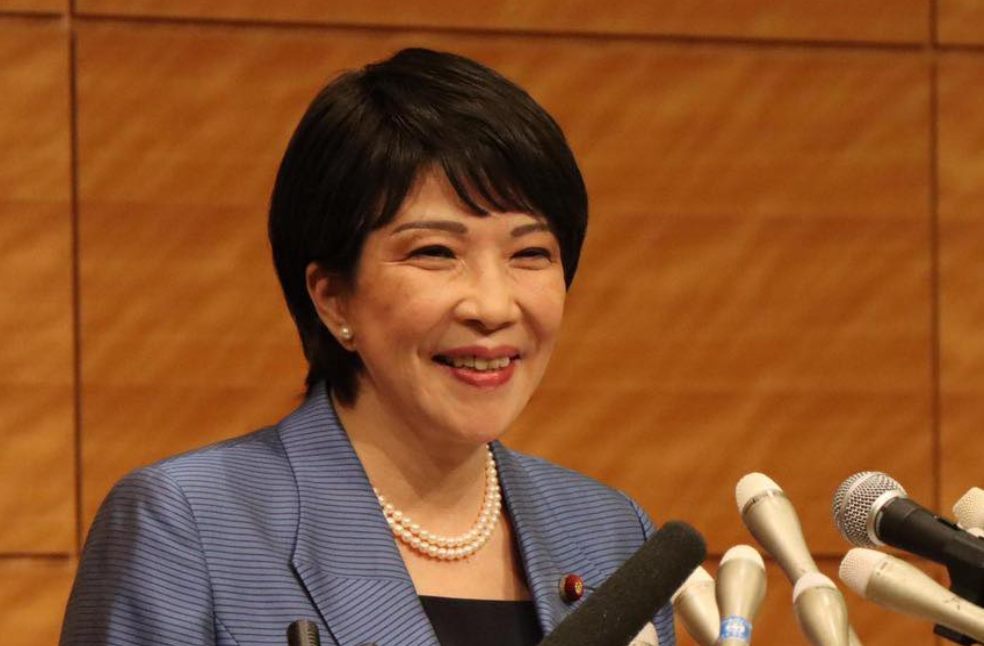
Tokyo: A decisive election result has given Sanae Takaichi a strong mandate after the governing Liberal Democratic Party secured a landslide victory in Japan’s lower house. Preliminary counts have shown the party winning 316 seats, comfortably exceeding the 261 required for an absolute majority in the 465-seat chamber.
The outcome has marked a historic moment for the ruling party, representing its strongest performance since its founding in 1955 and surpassing a previous record set in 1986. The result has allowed Sanae Takaichi to consolidate leadership only months after taking office as Japan’s first female prime minister.
The victory has provided the government with the parliamentary strength to advance economic and defence policies aimed at strengthening Japan’s global position. Despite lacking a majority in the upper house, the scale of gains in the lower chamber has enabled the administration to pursue legislative priorities more effectively.
Sanae Takaichi has indicated readiness to push forward policy goals while seeking support from opposition parties where possible. Analysts have noted that strong public approval ratings and personal popularity have played a key role in the election outcome. Support has also been driven by campaign messaging centred on tax cuts, subsidies and national security.

The election has followed a period of political turbulence for the ruling party, including fundraising and religious scandals that affected public trust. Calling an early vote has been viewed as a calculated risk designed to capitalise on the prime minister’s popularity. The strategy has paid off with a decisive majority that has reshaped the political landscape.
Opposition parties have struggled to mount a unified challenge despite forming alliances ahead of the vote. The fragmented opposition has been unable to match the ruling party’s momentum. Analysts have suggested that the result provides political stability and the capacity for the government to implement pro-business and defence-oriented policies without major legislative obstacles.
Financial markets across Asia have responded positively to the election outcome, with gains recorded in regional stock indices. Investors have viewed the result as a sign of stability for one of Asia’s largest economies. Observers have noted that expectations of stronger economic policy direction in Japan could have wider regional effects.
Sanae Takaichi has emerged from the election with strengthened authority and a clear parliamentary mandate, positioning the government to shape Japan’s economic and foreign policy direction in the coming years.
RELATED POST | Japan election sees voters decide on snap poll gamble
