


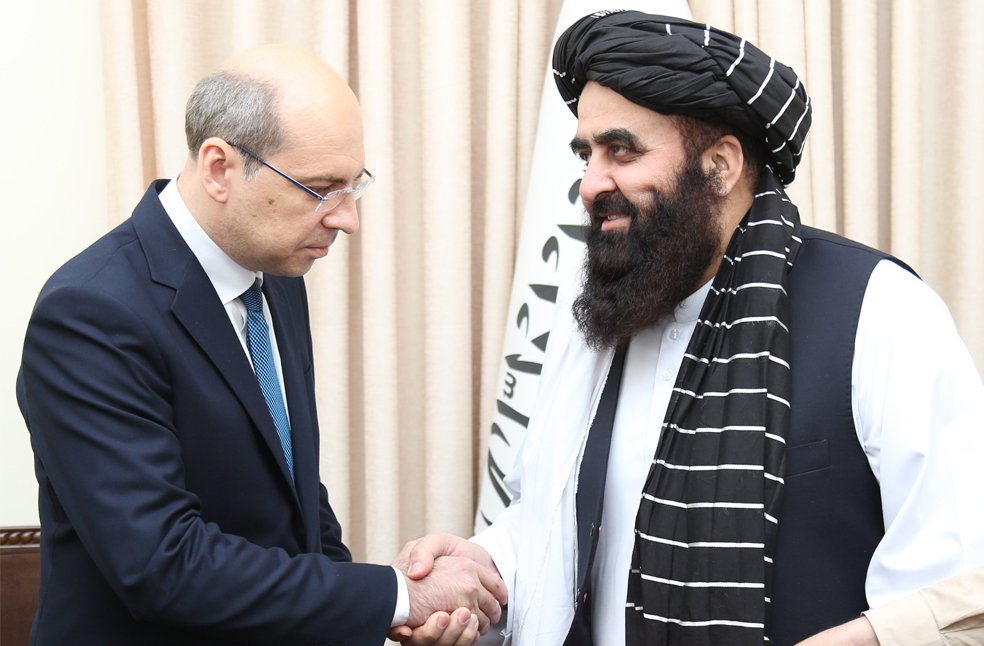
Moscow: Russia has officially become the first country in the world to formally recognise the Taliban-led government of Afghanistan since the group returned to power in August 2021.
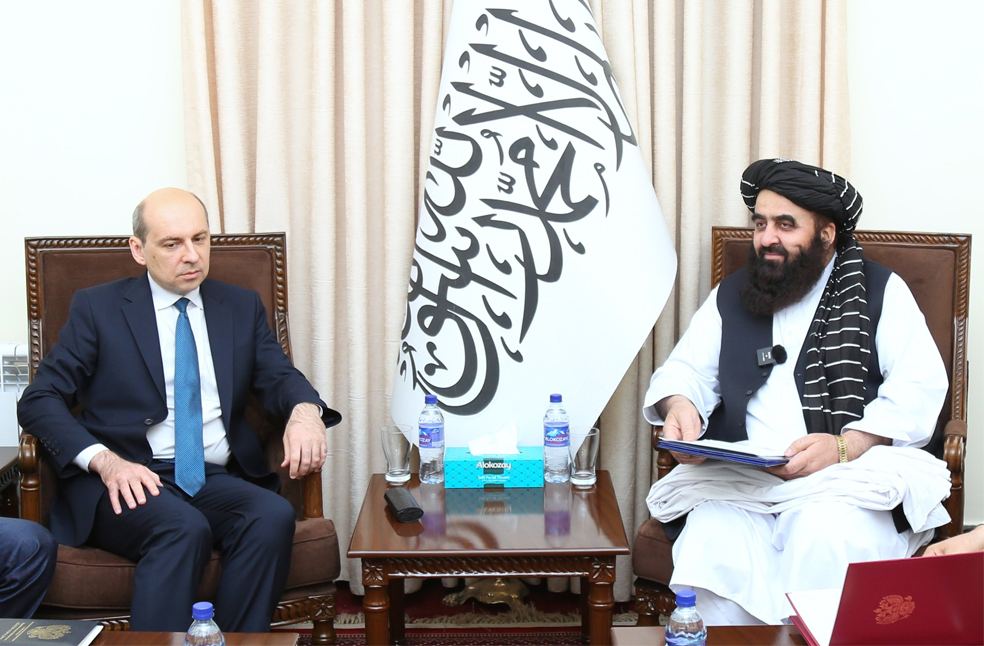
The announcement was made during a meeting in Kabul, where Russian Ambassador Dmitry Zhirnov conveyed the decision directly to Afghan Foreign Minister Amir Khan Muttaqi.
Calling the move ‘courageous,’ Muttaqi hailed it as the start of a ‘new phase of positive relations, mutual respect, and constructive engagement, suggesting it could serve as an example for other nations still reluctant to legitimise the Taliban administration.
Since regaining power, the Taliban has actively sought international recognition and foreign investment, despite ongoing reports of widespread human rights abuses.
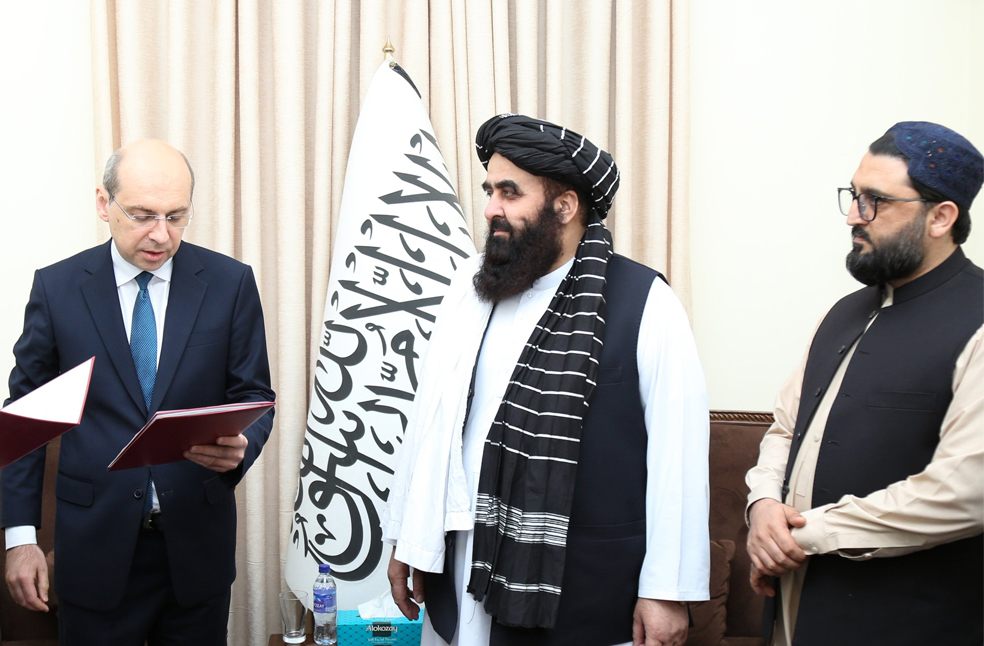
In a formal statement, Russia’s foreign ministry said it believed official recognition would help foster ‘productive bilateral cooperation’ and open opportunities in energy, transportation, agriculture, and infrastructure sectors. Moscow also pledged to support Afghanistan in tackling terrorism and drug trafficking, two persistent issues facing the region.
Russia had already taken multiple steps toward closer ties with the Taliban before this formal recognition. It was one of the few countries that did not close its embassy in Kabul during the chaotic power transition in 2021, and in 2022, it became the first country to sign an international economic deal with the Taliban, agreeing to supply oil, gas, and wheat.
In April 2025, Russia removed the Taliban from its list of terrorist organisations, a deliberate move to pave the way for a ‘full-fledged partnership,’ according to the foreign ministry. Russian President Vladimir Putin has previously referred to the Taliban as an ‘ally’ in counterterrorism efforts, and representatives of the group have visited Moscow as early as 2018 for diplomatic discussions.
The two countries share a long and complicated history. The Soviet Union invaded Afghanistan in 1979, installing a pro-Moscow regime and sparking a war that lasted nearly a decade. The conflict, which killed over 15,000 Soviet troops, ended with the USSR’s withdrawal in February 1989, and significantly damaged Moscow’s international reputation.
Russia’s current stance sharply contrasts with that of Western governments and international humanitarian organisations, which continue to condemn the Taliban for its authoritarian rule and regressive policies, particularly those targeting women and girls.
Since 2021, the Taliban has banned females from attending secondary schools and universities, prohibited them from leaving home without a male escort, and enforced strict dress codes. New ‘virtue laws’ have gone so far as to ban women from speaking outside their homes. The UN has described the situation as ‘gender apartheid’ and has reported incidents of public floggings and violent reprisals against former Afghan officials.
In response to the Taliban’s governance, the UN Security Council imposed strict sanctions in 2021, including the freezing of around $9 billion in Afghan assets. These sanctions remain in place, limiting the Taliban’s access to foreign funding and international systems.
While China, the UAE, Pakistan, and Uzbekistan have all appointed ambassadors to Kabul, Russia now stands alone as the first and only country to officially recognise the Taliban government since its return to power nearly four years ago.
MOST READ | Wildfire rages in Crete’s Ierapetra; Forces mass evacuations
