


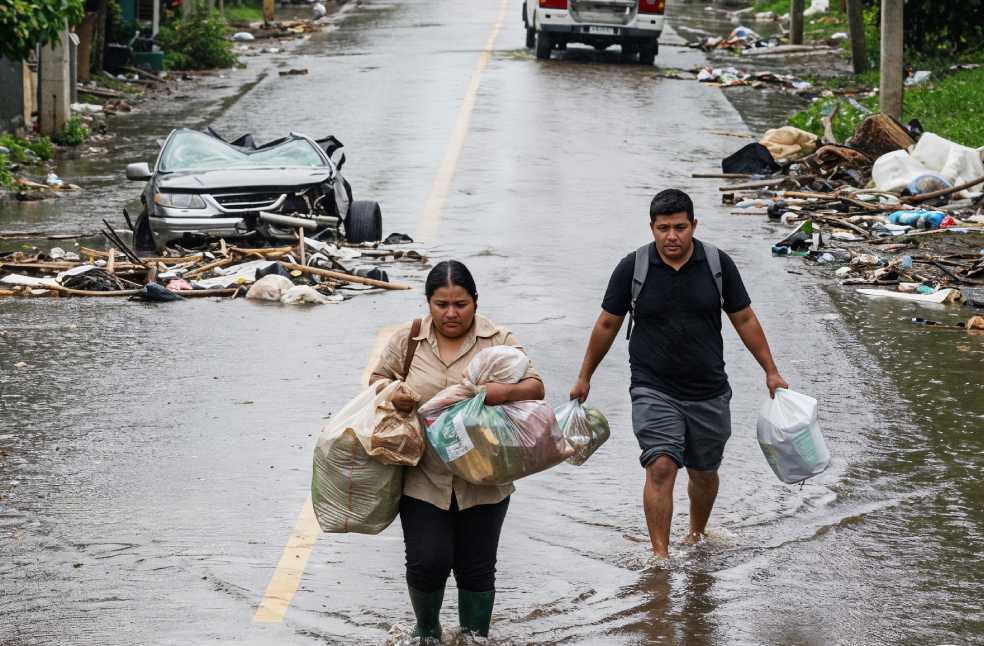
Vietnam: Relentless flooding across central Vietnam has killed at least 41 people, while rescue teams continue to search for nine others still missing, according to state media.
The disaster follows days of torrential rainfall that have submerged more than 52,000 homes and left over 500,000 households and businesses without power. Authorities say tens of thousands have been evacuated as floodwaters swept through multiple provinces, with rainfall exceeding 1.5 metres in several areas over just 72 hours, surpassing the catastrophic 1993 peak of 5.2 metres in some localities.
The coastal tourist hubs of Hoi An and Nha Trang are among the worst-hit, with images showing residents wading through chest-deep waters, stranded on rooftops, and clinging to makeshift rafts. Vietnam’s central highlands, home to the country’s largest robusta coffee belt have also suffered extensive damage.
In Dak Lak province, tens of thousands of homes were flooded, further delaying a harvest already crippled by consecutive storms earlier this year. Vietnam is one of the world’s top robusta exporters, and experts warn that prolonged flooding could disrupt global supply chains.

The government estimates that natural disasters have caused more than $2 billion (₹1.5 billion) in losses between January and October, amid an unprecedented spell of extreme weather. Two typhoons, Kalmaegi and Bualoi left dozens dead in September and November, compounding the humanitarian and economic crisis.
Emergency response operations have intensified, with military and police forces deployed to set up shelters and relocate residents. A state of emergency has been declared in multiple provinces after landslides wiped out key transportation routes. Traffic came to a standstill when a section of the Mimosa Pass leading to Da Lat collapsed into a ravine, narrowly missing a passing bus.
Local media footage shows a suspension bridge in Lam Dong province being ripped from its anchors as floodwaters surged. In Nha Trang, restaurants and businesses remain underwater. Meteorologists warn that harsh weather conditions will persist, increasing the risk of further flooding and landslides.
Experts say climate change is intensifying typhoons across Southeast Asia, making storms more powerful and more frequent.
TOP PICKS | Miss Mexico Fatima Bosch crowned Miss Universe 2025
