



Digital detox is becoming something many of us ache for, often quietly, in the background of busy days. There are moments when the phone lights up for the tenth time in a minute, and you feel something inside you sink a little.
A digital detox is that small whisper telling you it’s okay to put the phone down… even for a while. It feels like giving yourself permission to breathe again. And in those softer moments, Chris Hemsworth’s words land with surprising clarity that, “It’s crucial to step back and remember that we are not defined by our online presence.” Somehow, that is exactly what every digital detox tries to remind us.
More people are now trying the weekend digital detox, turning everything off from Friday night until Sunday morning. At first, the silence feels strange. You reach for your phone automatically, only to realise there’s nothing waiting.
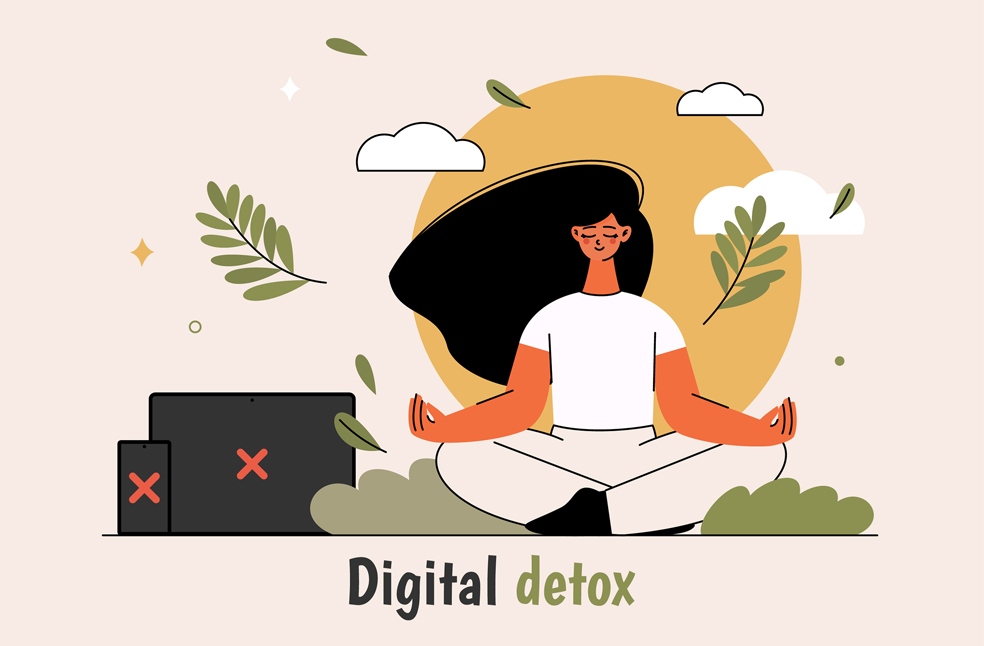
But slowly, something gentler takes its place: you taste your breakfast, you look at people’s faces properly, you talk without rushing, you laugh without checking the time. Families who try small digital detox habits, like tech-free dinners or evenings where devices stay in another room, often find that these become the warmest parts of their week.
A digital detox also gives the mind something it rarely gets anymore: stillness. When the notifications stop, the mind stops racing. Thoughts feel less tangled. It becomes easier to read a page, to focus on a task, to sit with yourself without feeling pulled in a hundred directions. Even a short digital detox can feel like clearing a cluttered room inside your head.
Nature gently completes the experience. A walk outside, the sound of leaves, a patch of sunlight, these simple moments become grounding in a way no screen can ever match. Nature has a quiet way of saying, ‘You’re here. Slow down.’ It naturally supports every digital detox by reminding us of a world that doesn’t need charging or updating.

People often rediscover old joys during their digital detox time, journaling with messy handwriting, sketching something imperfect, cooking slowly, flipping through a real book, or simply sitting with their thoughts. These small activities feel like reconnecting with parts of ourselves we didn’t realise we’d misplaced.
Sleep improves too. A nightly digital detox, putting screens away before bed, gives the mind room to settle. Nights stop feeling rushed. Mornings feel softer. Rest becomes something you actually feel rather than just hope for. Even a tiny change, like leaving your phone outside the bedroom, can shift the entire rhythm of your night.
In the end, a digital detox isn’t really about escaping technology. It’s about returning to yourself. It’s about noticing small things again, the way someone smiles, the colour of the sky, the quiet in your own thoughts. A digital detox reminds us that life doesn’t only happen on a screen. It happens in the pauses, the breaths, the moments we allow ourselves to actually live.
MOST READ | Instagram starts locking out teens; Australia’s age ban looms
