


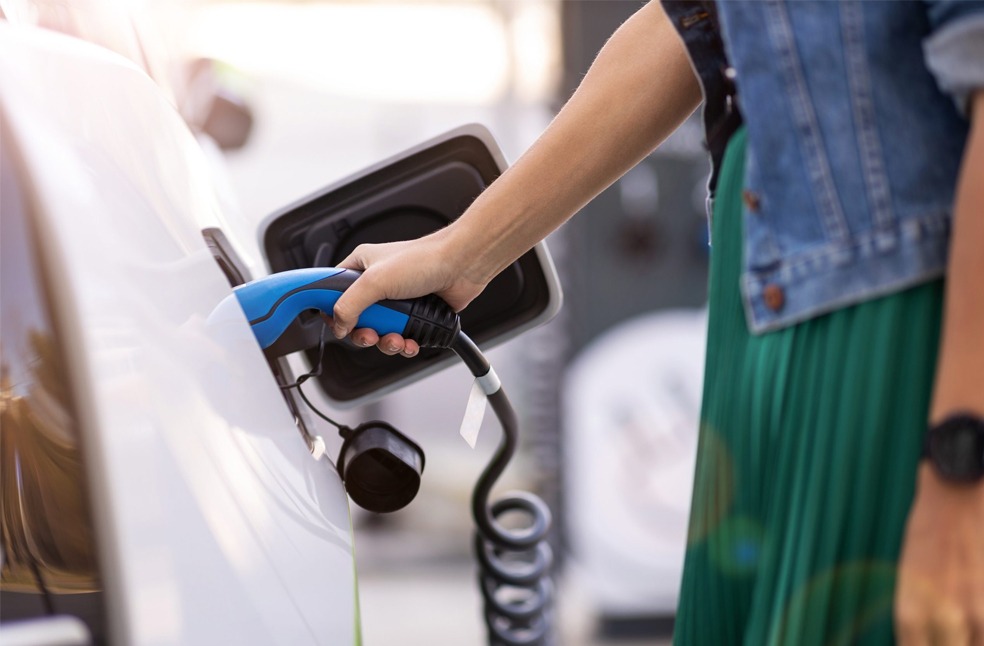
London: Plug-in hybrid electric vehicles (PHEVs) release nearly five times more planet-heating emissions than official data indicates, a report by Transport and Environment has revealed.
These vehicles, which run on both electric batteries and combustion engines, have been promoted by European automakers as a way to cover long distances without fully relying on petrol or diesel, while still reducing emissions.
However, the analysis found that PHEVs emit just 19 percent less CO2 than conventional petrol and diesel cars, far below the 75 percent reduction suggested under laboratory testing.
The study examined data from the onboard fuel consumption meters of 800,000 European cars registered between 2021 and 2023. It revealed that in 2023, real-world CO2 emissions from PHEVs were 4.9 times higher than laboratory estimates, up from 3.5 times higher in 2021.
“Real-world emissions are going up, while official emissions are going down. The gap is worsening, and PHEVs pollute almost as much as petrol cars,” said Sofía Navas Gohlke, co-author of the report and researcher at Transport and Environment.
The discrepancy is largely due to overestimates of the ‘utility factor,’ the proportion of miles driven in electric mode. In reality, only 27 percent of driving was electric, compared with the 84 percent assumed in official figures. Even when in electric mode, PHEVs burned fossil fuels for nearly one-third of the distance, as their electric motors were not powerful enough to operate alone.
Patrick Plötz, Head of energy economics at the Fraunhofer Institute for Systems and Innovation Research, described the study as a ‘very useful contribution,’ noting that the real-world gap for PHEVs is much larger than for conventional petrol or diesel cars. Plötz emphasized that policy decisions regarding PHEVs must take this data into account.
Hybrid cars have also become a focus in political debates, as automakers lobby the EU to weaken CO2 targets ahead of a 2035 ban on new combustion engine vehicles.

German Chancellor Friedrich Merz said that he would do ‘everything in [his] power’ to prevent a drastic cut in 2035, and other German officials have suggested plug-in hybrids as a possible ‘flexibility’ option for legislation.
The researchers calculated that the underestimation of PHEV emissions allowed four major carmaker groups to avoid over €5bn (£4.3bn) in fines between 2021 and 2023 by artificially meeting EU fleet-average CO2 targets. Additionally, drivers of PHEVs are paying roughly €500 more per year in fuel costs than suggested by lab tests.
Colin Walker, a transport analyst at the Energy and Climate Intelligence Unit, remarked that, “The bold claims made by manufacturers about PHEVs are clearly overstated. Consumers are being misled into thinking they are helping the environment and saving money. In reality, PHEVs are little better than petrol and diesel cars in fuel consumption, CO2 emissions, and running costs.”
The report highlights the urgent need for accurate real-world emissions data and calls for careful policymaking to ensure PHEVs deliver on environmental promises rather than misleading consumers.
ALSO READ | India’s top court allows ‘Green Firecrackers’ for Diwali
