


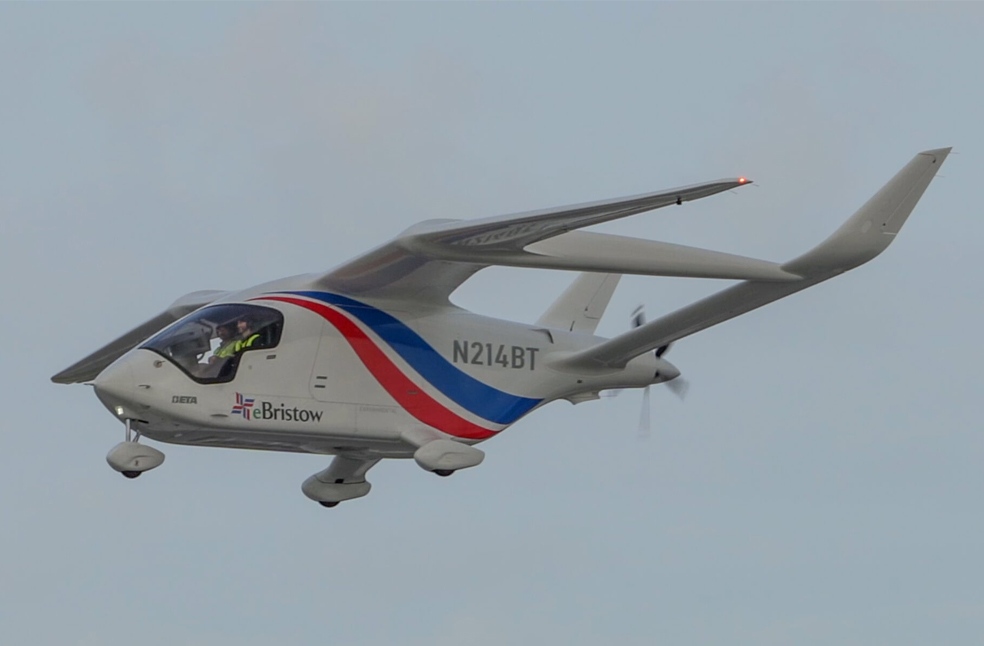
Oslo, Norway: Earlier this month, aviation enthusiasts in Bergen, Norway’s second-largest city, witnessed a historic moment when Alia, an all-electric aircraft developed by US aerospace company Beta Technologies, touched down after a 100-mile (160km) journey completed in 55 minutes on battery power alone.
The demonstration flight simulated a cargo route between Stavanger and Bergen, showcasing Alia’s ability to carry up to 560kg (half a tonne) of cargo. Pilot Jeremy Degagne, who led the test, highlighted its efficiency: “If you do the drive, it’s four and a half hours. And we did the flight in 52 minutes.”
According to Karianne Helland Strand, director at Avinor, Norway’s airport operator, “It is an important milestone for Norway as an international test arena.” Over the next few months, further test flights will be conducted to support the country’s strategy of advancing low-emission aviation.
European showcase
The Bergen test comes after a European tour that began in Ireland and included Alia’s appearances at the Farnborough and Paris Air Shows, as well as stops in Germany and Denmark.
Alia can travel 400km (250 miles) per charge and be recharged in less than 40 minutes, much like an electric car. The aircraft can be adapted for cargo, medical transport, or as a five-seat passenger plane. Notably, in June 2025, it completed the first electric passenger demonstration flight into New York’s JFK Airport.
Backed by investors like Amazon and customers such as UPS, Beta aims to achieve US certification in 2025. “I’m convinced that the next major breakthrough in aerospace will come on the back of electric propulsion,” said Shawn Hall, Beta’s Chief Revenue Officer and a former fighter pilot. “We’re now able to significantly lower the operating cost and it’s environmentally beneficial from a carbon perspective.”
Industry challenges
Despite such advances, electric aviation faces steep challenges. Aviation accounts for about 3 percent of global greenhouse gas emissions, making decarbonization critical. But battery technology remains the main limitation.
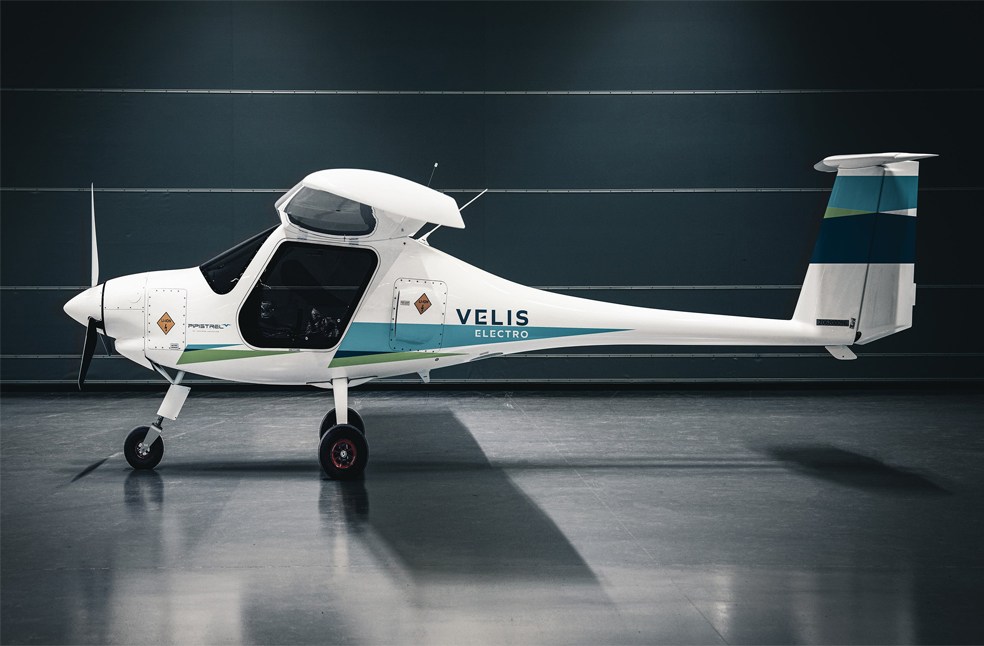
Currently, Slovenia’s Pipistrel Velis Electro is the only electric plane fully certified in Europe, with a 185km range and 50 minutes of endurance, restricted to training purposes. High-profile setbacks have occurred too, including Airbus’s suspension of its CityAirbus electric aircraft project in January 2025.
According to Prof. Guy Gratton of Cranfield University, lithium-ion batteries have ‘not improved significantly’ in two decades, and only a ‘revolution in battery chemistry’ can make long-range electric flight commercially viable.
Hybrid solutions emerging
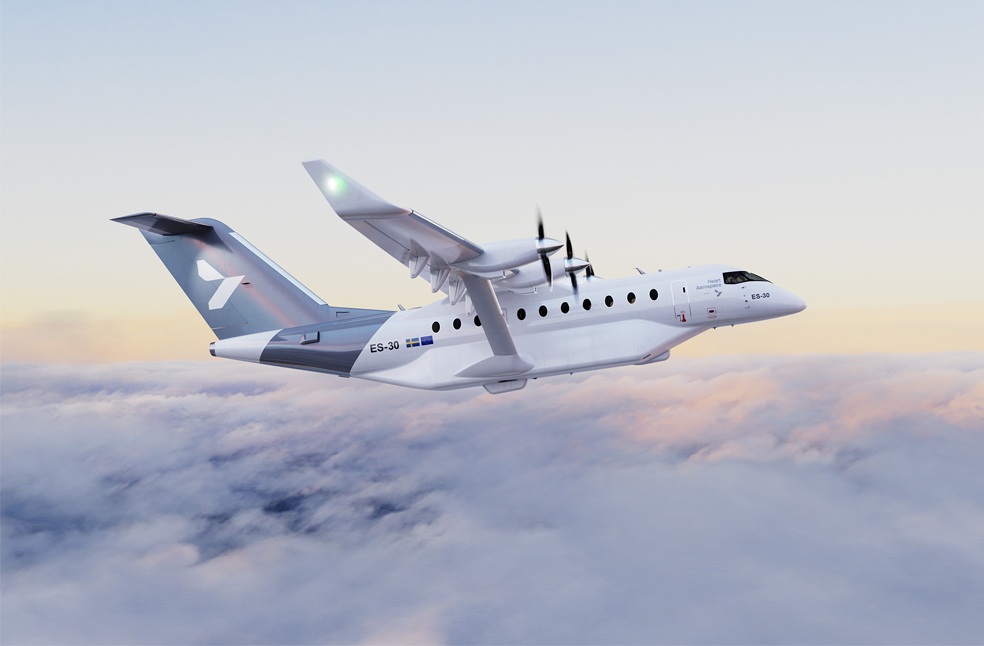
As a bridge, companies are pivoting to hybrid aircraft. Heart Aerospace, which recently shifted operations from Sweden to the US to be closer to clients like Mesa Airlines and United Airlines, has developed the X1, a 30-seat prototype carrying two tons of batteries. If successful in test flights, it will be the largest battery-powered aircraft ever to fly.
For real-world operations, Heart is prioritizing a hybrid design, allowing 200km on electric power alone and up to 800km in hybrid mode with 25 passengers. Chief Technology Officer Benjamin Stabler explained that, “For a normal route, it would fly all-electric from takeoff to landing. If you want to go a longer distance, or if there’s a diversion, you can switch over to the turbines.”
Prof. Gratton supports this approach, noting that aviation requires robust energy reserves, “Public transport flying, quite rightly, requires a significant amount of energy reserve. So hybridisation and the use of conventional fuels to carry safety reserves makes good sense.”
Other players are also active. US-based Electra plans to debut a nine-seat hybrid plane by 2029, and Beta itself is developing hybrid and autonomous aircraft for both civilian and defense use, with its first hybrid model built in 2023. “Are we excited about hybrid? 100 percent. It’s a way to get longer ranges today, and you still get a lot of the environmental benefit,” said Hall.
Future pathways
While hybrid aircraft offer reduced emissions and quieter urban operations, other green technologies such as sustainable aviation fuel (SAF) and hydrogen propulsion systems are also under development. All, however, must prove both commercial feasibility and safety before mainstream adoption.
As Stabler summarized, “This is a really challenging thing to do, electrifying aviation and removing the carbon.”
ALSO READ | Burberry’s revival faces test at London Fashion Week
