


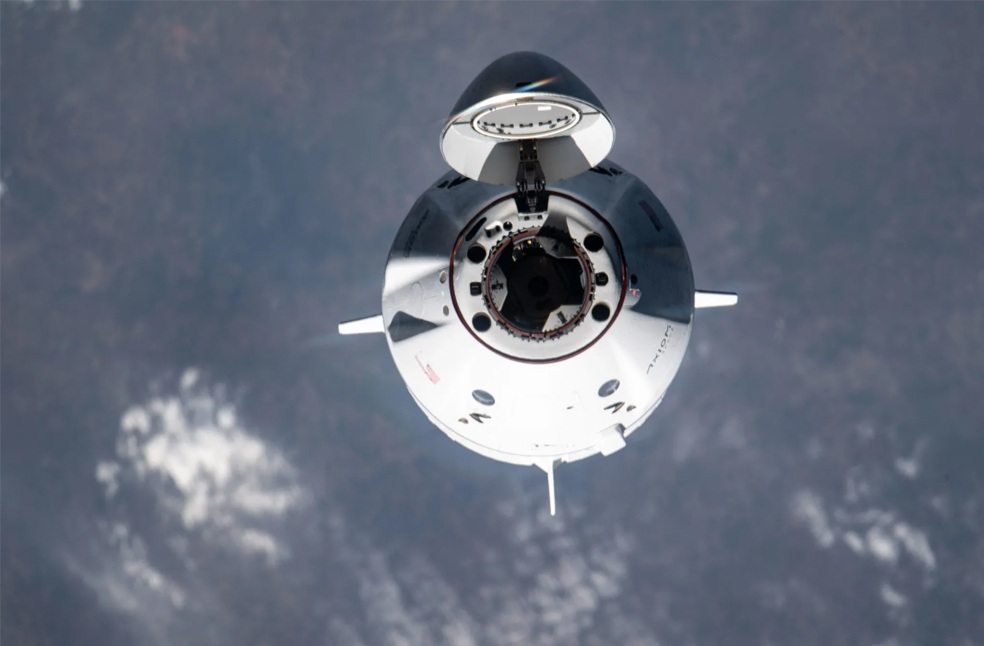
Kennedy Space Center, Florida: NASA, in collaboration with Axiom Space and SpaceX, is targeting 2:31 am EDT, June 25, for the launch of Axiom Mission 4 (Ax-4), the fourth private astronaut mission to the International Space Station (ISS).
The launch will take place from Launch Complex 39A at NASA’s Kennedy Space Center in Florida, with the crew traveling to the ISS aboard a new SpaceX Dragon spacecraft, launched by a Falcon 9 rocket. Docking is expected around 7 am, June 26.
The launch schedule was finalized after NASA and Roscosmos officials assessed recent repair work in the transfer tunnel at the aft segment of the Zvezda service module. Based on their evaluations, both agencies agreed to further reduce pressure in the tunnel to 100 millimeters of mercury, ensuring crew safety remains a top priority. Continuous assessments will follow as the mission progresses.
Watch Falcon 9 launch Dragon and @Axiom_Space's Ax-4 mission to the @Space_Station https://t.co/OJYRpM5JCF
— SpaceX (@SpaceX) June 25, 2025
Janet Petro, Acting NASA Administrator, emphasized the strong cooperative history between NASA and Roscosmos, which enabled both agencies to arrive at a shared technical path forward.
“NASA and Roscosmos have a long history of cooperation and collaboration on the International Space Station,” Petro said. “This professional working relationship has allowed the agencies to arrive at a shared technical approach, and now Axiom Mission 4 launch and docking will proceed.”
For this mission, NASA is responsible for integrated operations from the Dragon spacecraft’s approach to the ISS, through the astronauts’ stay on the orbiting lab, and ending with their departure. The Ax-4 crew will conduct various science, education, and commercial activities during their time aboard.
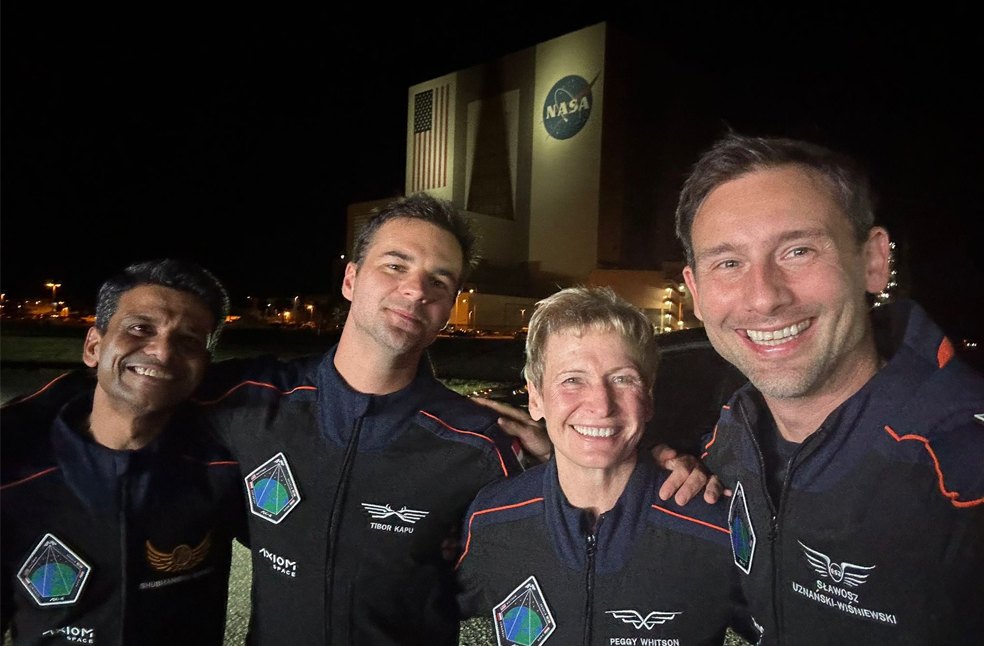
The mission is led by Peggy Whitson, a former NASA astronaut and now Director of Human Spaceflight at Axiom Space, who will serve as the mission commander. The pilot is Shubhanshu Shukla, representing ISRO (Indian Space Research Organisation), marking the first ISRO astronaut mission to the ISS.
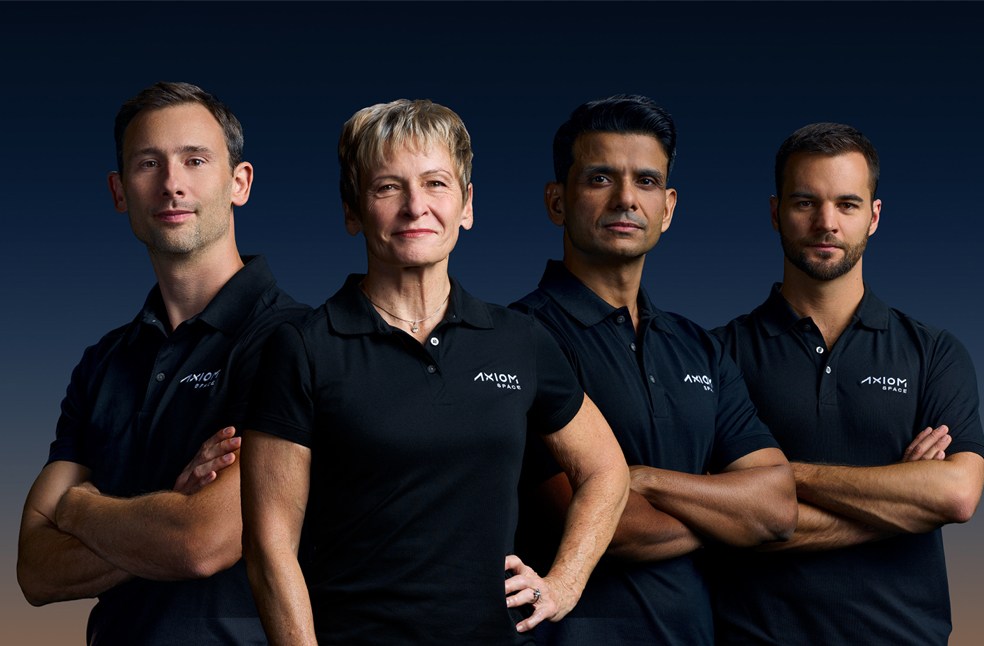
This historic collaboration reflects a bilateral commitment made by President Donald Trump and Indian Prime Minister Narendra Modi, and includes five joint scientific experiments and two STEM demonstrations in orbit.
The two mission specialists are Sławosz Uznański-Wiśniewski, a Polish project astronaut from ESA (European Space Agency), and Tibor Kapu, representing HUNOR (Hungarian to Orbit). Ax-4 will be the first-time astronauts from Poland and Hungary will stay aboard the ISS, further expanding international participation in space exploration.
Once docked, the Ax-4 astronauts will spend approximately two weeks aboard the ISS, conducting a mix of scientific investigations, outreach activities, and commercial experiments.
Live mission coverage will be available on NASA+, with launch and docking activities streamed across NASA, Axiom Space, and SpaceX platforms. Here is the broadcast schedule (in Eastern Time, subject to change based on real-time operations):
Wednesday, June 25
- 12:30 am– Axiom Space and SpaceX launch coverage begins
- 1:40 am– NASA joins the live coverage on NASA+
- 2:31 am– Scheduled launch
NASA will end its coverage roughly 15 minutes after liftoff, following the spacecraft’s orbital insertion. As this is a commercial launch, no clean feed will be provided through NASA channels.
Thursday, June 26
- 5:00 am– Arrival coverage resumes across platforms
- 7:00 am– Targeted docking to the space-facing port of the Harmony module. Coverage will continue through the hatch opening and welcome remarks.
All scheduled times may be adjusted based on real-time operational decisions. For ongoing updates, NASA encourages following the space station blog. NASA views the ISS as a foundation for building a robust low Earth orbit (LEO) economy, where the agency can purchase services from commercial providers as one of many customers.
This strategy enables cost-effective, safe operations in microgravity while allowing NASA to focus on Artemis missions to the Moon and eventual crewed missions to Mars. Low Earth orbit remains a critical training ground for deep space exploration, and missions like Ax-4 represent a major step in realizing a sustainable commercial presence in space.
MOST READ | OpenAI takes down Ive deal content after trademark complaint
