


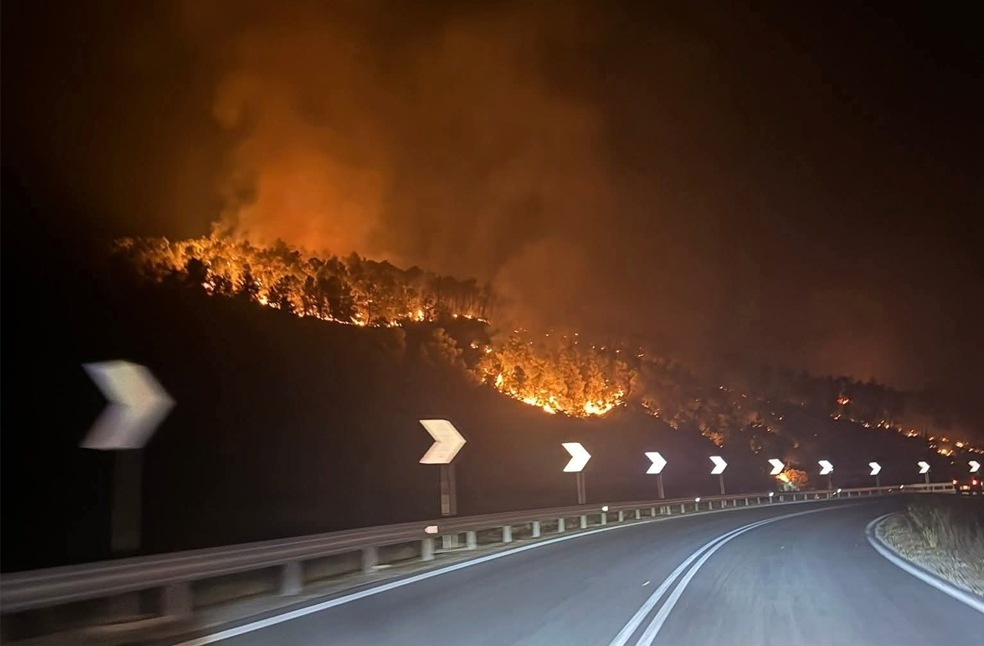
Athens, Greece: Greece is facing a critical emergency as five major wildfires rage across the country, with evacuations in progress and firefighting resources under immense pressure. The crisis unfolds amid an intense heatwave, with temperatures expected to reach 44°C on July 27 and remain high through the weekend.
One of the worst-affected areas lies just 30 kilometers north of Athens, where the smell of burning wood has drifted into the city center, prompting Greece to request assistance from the European Union to help combat the expanding fires.
The country has officially activated the EU Civil Protection Mechanism to secure six additional firefighting aircraft as high winds and extreme heat continue to fuel the blazes. In the Attica region, a fire that began in Afidnes on July 26 spread rapidly to Drosopigi, Kryoneri, and Agios Stefanos, forcing residents to flee their homes.
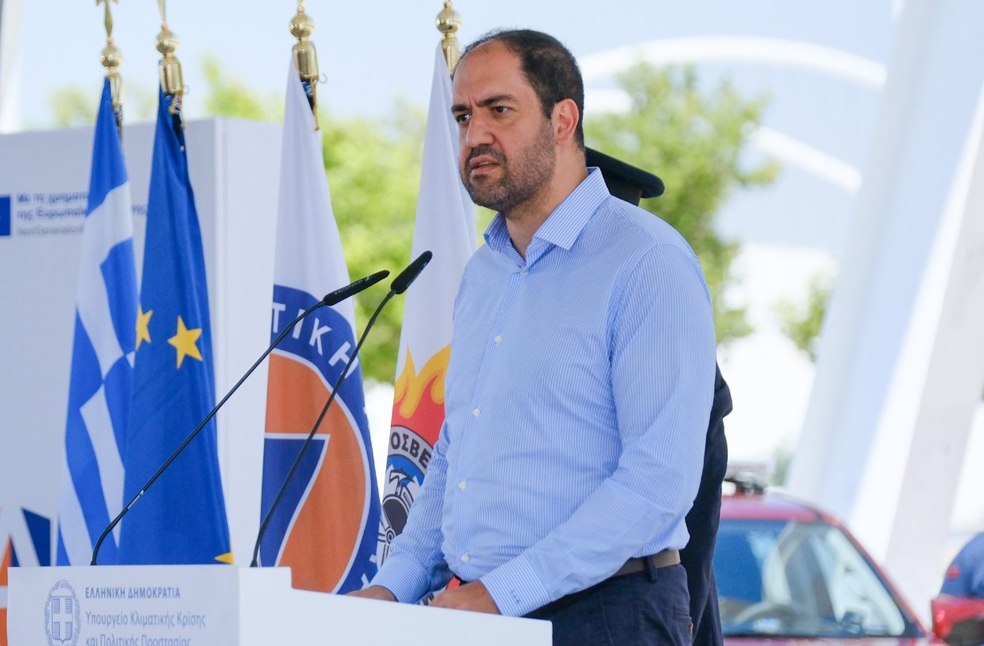
Although the main front of the fire has been contained, scattered hotspots persist, with over 200 firefighters, helicopters, and water-bombing planes still engaged in efforts to suppress the flames. Greece’s Climate Crisis and Civil Protection Minister Giannis Kefalogiannis confirmed the seriousness of the situation, noting that firefighters have been injured, lives put at risk, properties destroyed, and large forest areas lost.
Multiple wildfires across Greece
On the island of Evia, a second fire near Pissona has escalated beyond control, advancing quickly toward Afrati. Flames have damaged power infrastructure, leaving several villages, including Pournos and Mistros, without electricity.
At least six firefighters have been hospitalized with burns and smoke inhalation, as 115 personnel remain on the ground fighting the blaze. Dirfyon-Messapion mayor Giorgos Psathas described the scale of the damage as ‘incalculable.’
In Kythira, a third wildfire is sweeping across a large part of the island. Several settlements have been evacuated, and residents described the situation as one of ‘total destruction.’
The coastguard, supported by private boats, rescued 139 people from Limnionas beach, transporting them safely to the port of Kapsali. Meanwhile, in Messinia, a fourth wildfire broke out July 26 morning in the Polithea area of Trifylia and intensified later in the day. Firefighting efforts are hampered by strong winds, with 84 personnel, 30 vehicles, and seven aircraft deployed to the scene.
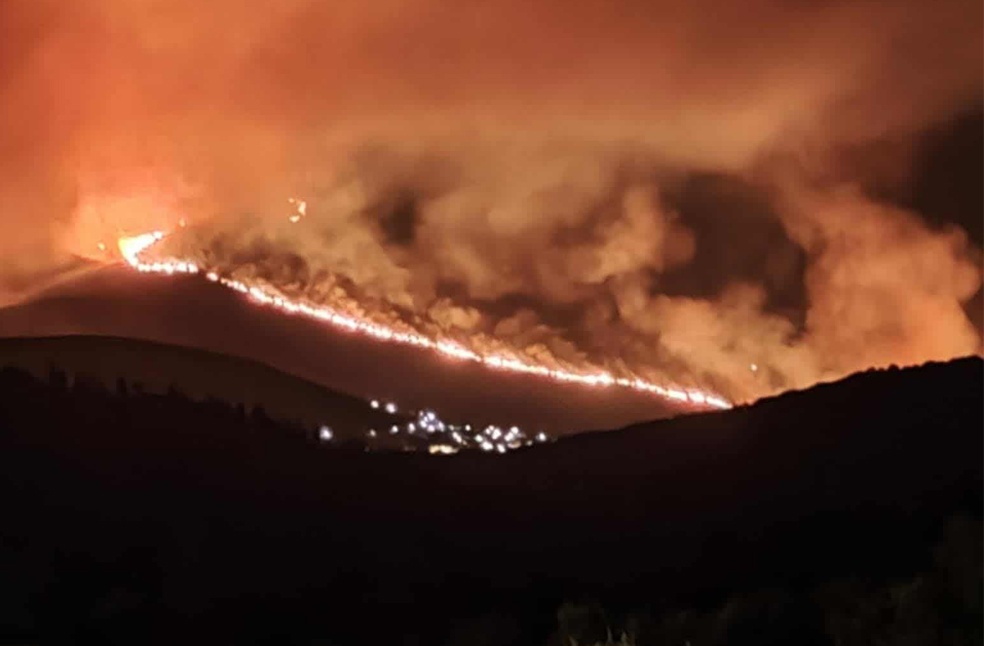
A fifth wildfire erupted in Temenia, located in Crete’s Chania region. It began in two separate areas and spread quickly, destroying at least two homes. Greek emergency services have issued five evacuation alerts via the country’s 112 system, urging residents to flee from at-risk areas.
Officials have also warned that the wildfire threat remains dangerously high in many regions, including the Ionian Islands, Western and Central Greece, the Peloponnese, Attica, Epirus, Western Macedonia including Florina, Kastoria, and Kozani, Eastern Macedonia and Thrace including Evros, Thessaly including Magnesia, Larisa, and Trikala, as well as the South Aegean such as Rhodes and parts of Crete.
This latest wildfire emergency follows a series of devastating incidents this summer. Just last month, a fire on Chios, Greece’s fifth-largest island, scorched 4,700 hectares (11,600 acres) of land. In early July, a separate wildfire on Crete forced the evacuation of 5,000 tourists.
As firefighting forces continue to battle the relentless blazes, Greek authorities are urging vigilance, international cooperation, and public caution as the nation endures one of its most destructive wildfire seasons in recent years.
ALSO READ | Wildfire rages in Crete’s Ierapetra; Forces mass evacuations
