


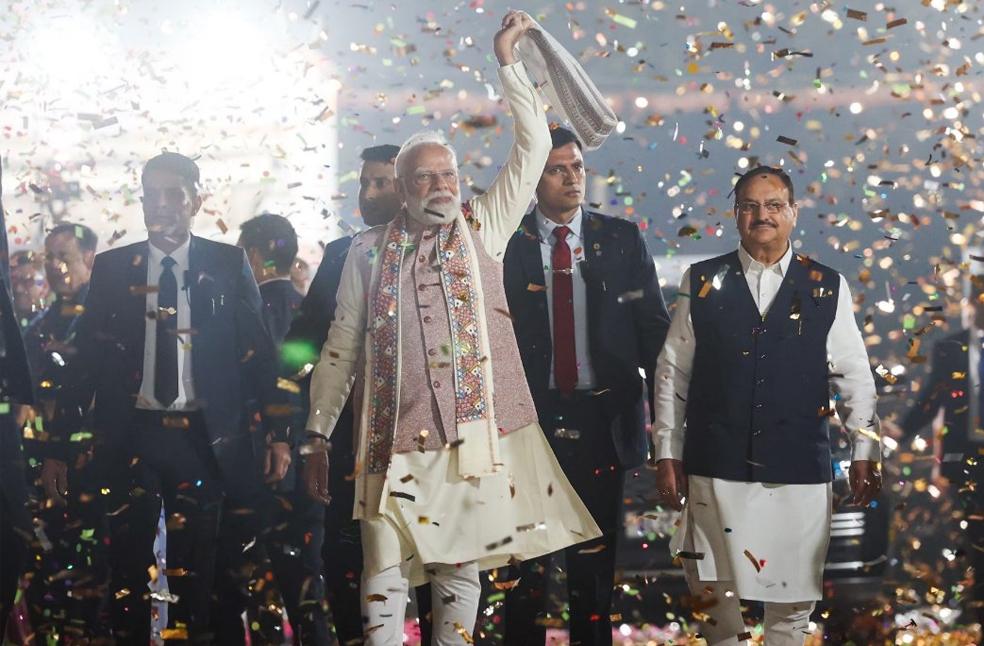
Patna, Bihar: Supporters of Indian Prime Minister Narendra Modi’s Bharatiya Janata Party (BJP) are celebrating a record-breaking win in Bihar, as the party-led alliance secured 202 out of 243 seats in the northern state’s assembly elections. Modi described the result as a victory not just for his coalition, but ‘for democracy itself.’
The elections were conducted on November 6 and 11, 2025, following a controversial revision of voter lists, which the opposition alleged would exclude genuine voters and favor the BJP. The party and the Election Commission of India denied these claims. Bihar recorded a 66.91 percent voter turnout, the highest since the state’s first elections in 1951.
Several exit polls had predicted a BJP-led victory. The ruling alliance, comprising the BJP and Janata Dal (United) [JD(U)], has governed the state together, with JD(U) leader Nitish Kumar serving as the outgoing chief minister. Their main rival coalition included the Congress Party, the regional Rashtriya Janata Dal (RJD), and several smaller parties.
बिहार के प्रचंड जनादेश को हृदय से आभार!
यह जीत जनता के अटूट विश्वास और सुशासन की विजय है। मोदी जी का ‘बिहार-स्टाइल’ सेलिब्रेशन जनता के भरोसे की गूंज है, जो एक बार फिर NDA के साथ खड़ी है।#NDA_कहे_आभार_बिहार pic.twitter.com/xoaw2hSErQ— BJP Bihar (@BJP4Bihar) November 14, 2025
Record female voters
Bihar, India’s youngest state with a median age of 22, is also one of the country’s poorest, with millions migrating to other states in search of employment. Despite the BJP’s strong national presence, it has rarely formed a government in Bihar independently.
Analysts attribute the alliance’s success to a combination of factors, particularly the record female voter turnout of 71.6 percent. Women comprise nearly half of the electorate, and the steady increase in their participation, along with welfare schemes introduced by Nitish Kumar and financial incentives offered by both alliances, reportedly helped swing the results.
The elections also marked significant attention on the voter list revision carried out by the Election Commission, which removed 4.7 million names from the final voter list of 74.2 million voters. The revision, now part of a broader initiative in 12 states and federal territories, faced criticism from the opposition for allegedly targeting minority voters, particularly Muslims. Both the BJP and the Election Commission rejected such allegations.
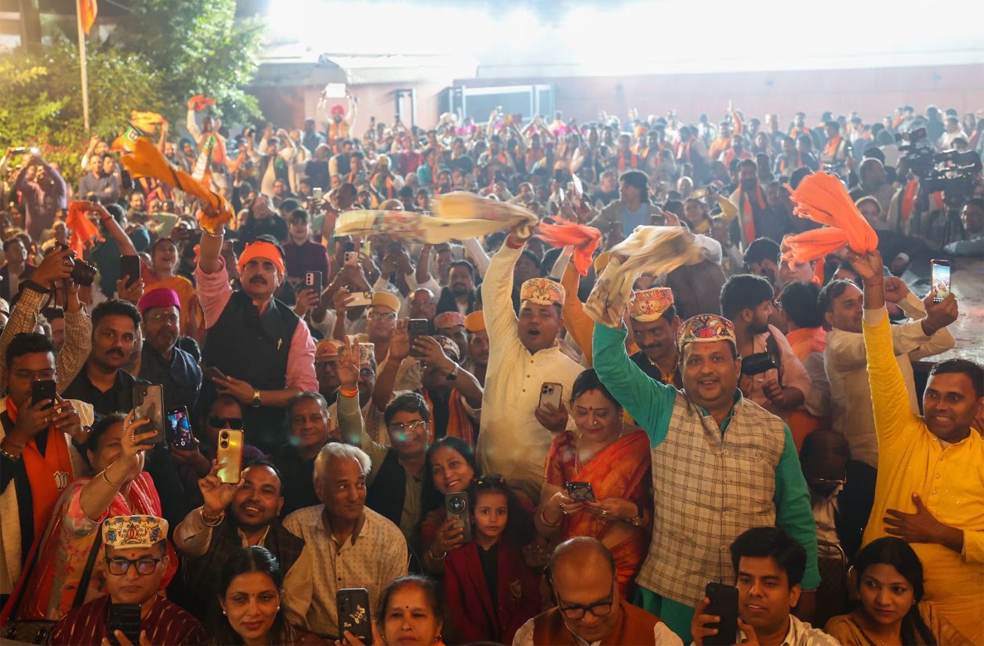
Observers also noted that these elections may be the last to see active participation from two of Bihar’s long-standing political figures: Nitish Kumar (JD(U)) and Lalu Prasad Yadav (RJD), both in their 70s and in poor health.
Kumar has been a dominant force in state politics for nearly two decades, while Yadav, who served as Bihar’s Chief Minister, is currently out on bail after corruption convictions. His son, Tejashwi Yadav, was the opposition’s projected Chief Ministerial candidate.
The Bihar polls are widely viewed as a precursor to upcoming state elections in West Bengal, Kerala, and Tamil Nadu, where the BJP faces tougher competition. The landslide win is being hailed by the BJP and its top leaders, who thanked voters for their support, while the opposition has not yet issued a statement.
ALSO READ | Health emergency in Cuba as mosquito-borne diseases spike
