


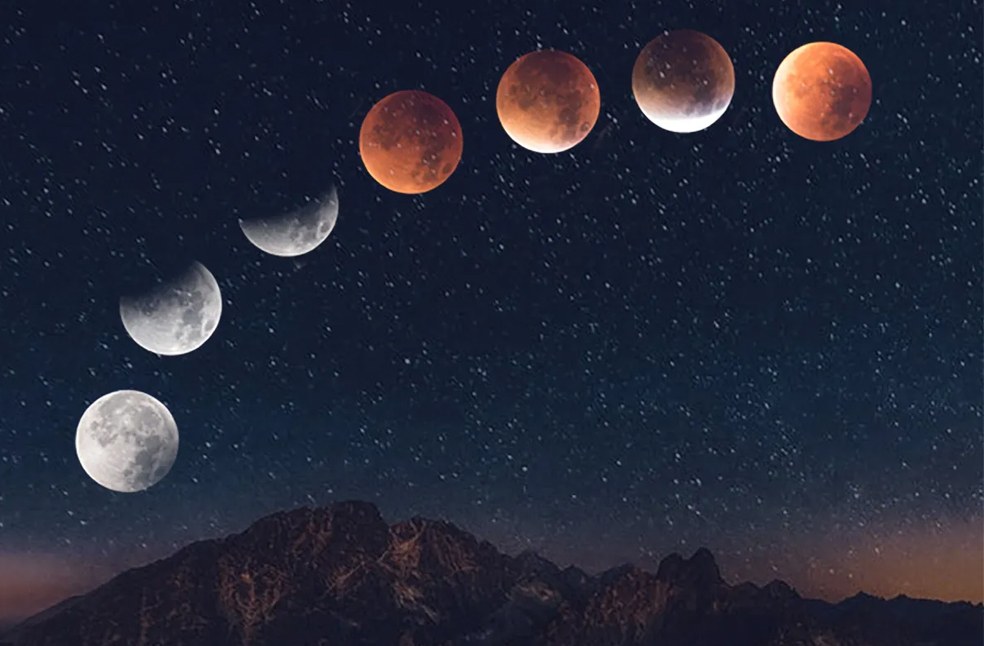
Sydney, Australia: North America, Australia, and New Zealand will witness a rare total lunar eclipse on March 3, known as a ‘blood moon.’
During this event, the full moon will pass into Earth’s shadow, taking on a deep, copper-red color, explains astrophysicist Dr. Rebecca Allen of Swinburne University. This will be the last opportunity to see this phenomenon for nearly three years.
What is a blood moon?
A lunar eclipse occurs when the Earth aligns between the Sun and the Moon, blocking direct sunlight from reaching the lunar surface. However, some sunlight passes indirectly through Earth’s atmosphere, giving the moon its reddish hue, described by Allen as a ‘sunset palette.’
Dr. Brad Tucker, an astrophysicist at the Australian National University, adds that sunlight ‘skims’ Earth’s atmosphere, similar to a sunrise or sunset, refracting light to produce the orange-red color on the moon.
For the best viewing, Allen recommends finding a dark location away from city lights and allowing 10–15 minutes for the eyes to adjust. Jupiter will also be visible in the sky, offering what she calls ‘a great pairing.’

Viewing times in Australia:
- Sydney, Canberra, Melbourne, Hobart – 10:04 pm to 11:02 pm
- Brisbane – 9:04 pm to 10:02 pm
- Adelaide – 9:34 pm to 10:32 pm
- Darwin – 8:34 pm to 9:32 pm
- Perth – 7:04 pm to 8:02 pm
Viewing times in New Zealand:
The eclipse will reach its deepest point shortly after midnight, when the moon is high in the sky, according to Prof. Richard Easther, a physics professor at the University of Auckland. Easther confirms that it will be visible everywhere in the country for anyone who can see the moon.
Viewing times in North America:
The total lunar eclipse will be visible in the early morning hours of March 3, though some regions may only see part of the eclipse if the moon sets before it ends. Suggested viewing times:
- New York, Washington DC – 3:44 am to ~6:30 am
- Detroit – 3:44 am to 7:06 am
- New Orleans, Chicago – 2:44 am to ~6:24 am
- San Francisco, Los Angeles – 12:44 am to ~6:23 am
Other major cities internationally:
- Tokyo – 5:44 pm to 11:23 pm
- Beijing – 6:00 pm to 10:23 pm
- Manila – 5:57 pm to 10:23 pm
- Jakarta – 6:06 pm to 9:23 pm
Next total lunar eclipses
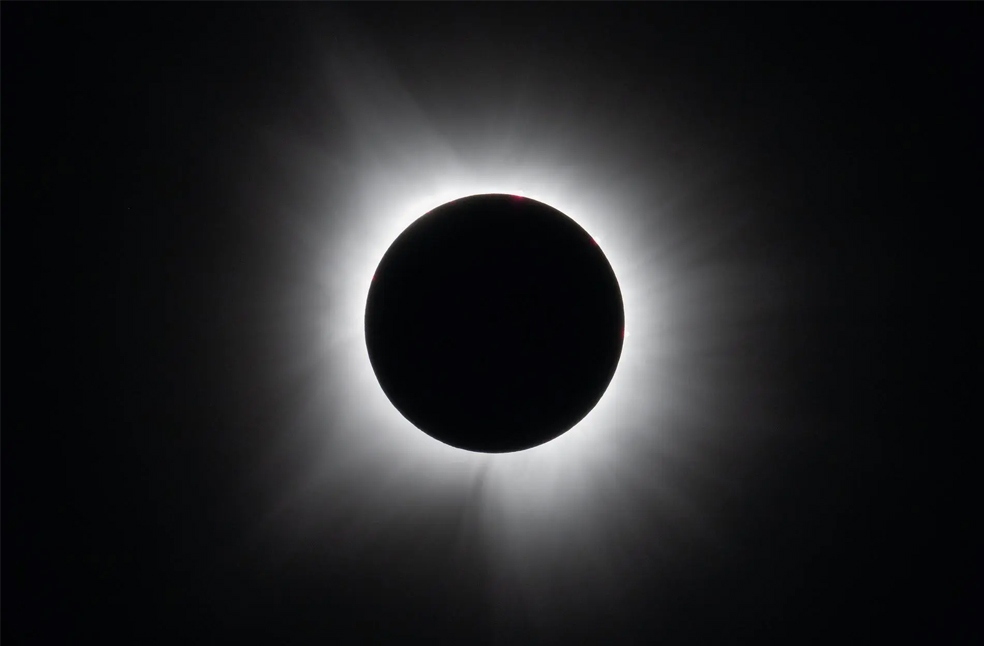
Total lunar eclipses occur every 18 months to three years. The next total eclipse visible globally will be on New Year’s Eve 2028, viewable across Europe, Asia, Australia, and Africa, but not the Americas.
The next total eclipse visible in North America will occur in June 2029. A partial eclipse is expected on August 28, 2026, best seen from the Americas and Africa, but mostly invisible from Australia and New Zealand.
Cultural significance
Today, a blood moon is an awe-inspiring astronomical event, reminding us of Earth’s dynamic place in the solar system. In ancient times, however, blood moons were often seen as ominous. The Inca interpreted the red moon as a jaguar attacking the moon.
In Mesopotamia, eclipses were considered assaults on kings. The Luiseño Native American tribes of California sang and chanted healing songs to a ‘wounded’ moon. More recently, the 2013 book Four Blood Moons promoted an apocalyptic ‘blood moon prophecy.’
The March full moon is also called the ‘worm moon’ in the Northern Hemisphere, as the warming soil begins to reveal early signs of life, according to the Farmer’s Almanac.
ALSO READ | Charity shops grow in UK despite rising cost pressures
