


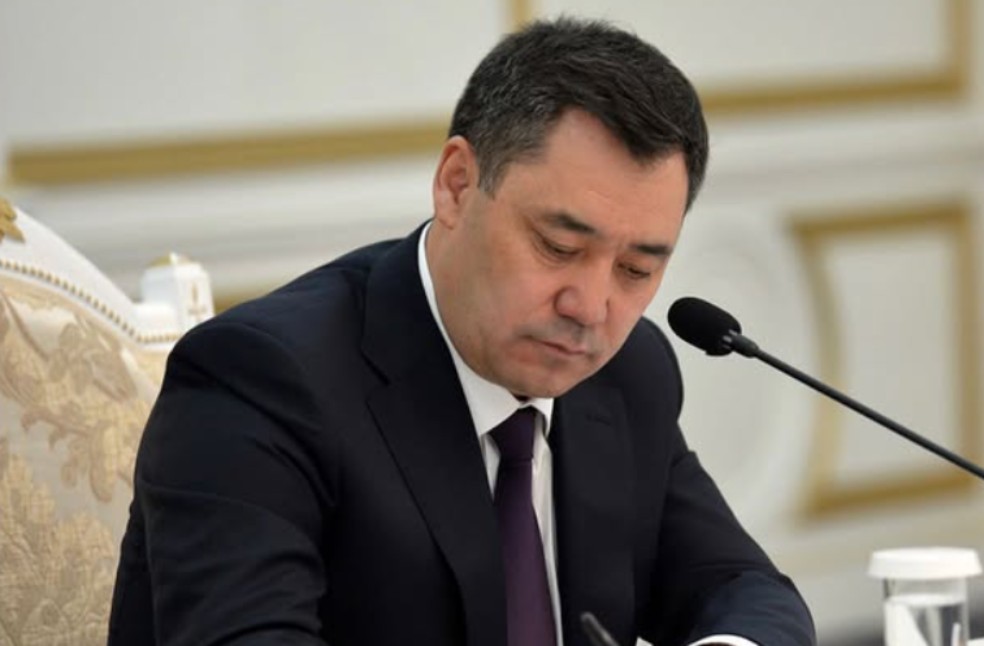
Bishkek: Polling is underway in Kyrgyzstan’s snap parliamentary elections, where allies of President Sadyr Japarov are widely expected to secure a dominant victory, further consolidating the leader’s hold on power.
The vote takes place in a political landscape devoid of formal parties or organised opposition, marking a sharp departure from Kyrgyzstan’s once-vibrant democratic tradition. Analysts say the result is likely to cement Japarov’s influence ahead of the 2027 presidential election, in which he is expected to seek another term.
Once regarded as Central Asia’s most democratic state, Kyrgyzstan has experienced three uprisings since its independence from the Soviet Union in 1991. Protests in 2005, 2010 and 2020 toppled leaders accused of manipulating election results. For decades, the country’s media environment was considered the freest in the region.
But since rising to power after the 2020 protests, Japarov has tightened control, moving against the media and opposition groups. Independent journalists have been labelled ‘extremists’, and dissenting voices have been increasingly sidelined. In September, the outgoing parliament moved to dissolve itself, triggering the early vote that was originally scheduled for late 2026.
Edil Baisalov, deputy prime minister and a close ally of Japarov, defended the government’s approach. Edil Baisalov argued that earlier attempts to model Kyrgyzstan’s institutions on Western parliamentary democracies had not delivered economic progress or stability.

Baisalov also said the media crackdown was necessary to protect the country from what he described as harmful narratives circulating on foreign platforms. Opposition candidate Bolot Ibragimov, running in Bishkek, said he expects around 80 percent of incumbent lawmakers, most aligned with Japarov, to return to parliament.
Despite public frustration over inflation and electricity shortages, strong economic growth has bolstered the government’s standing. Kyrgyzstan currently has the fastest-growing economy in Central Asia, a surge that experts attribute largely to its role as a key transit hub for goods headed to Russia via sanctions-affected routes.
However, this boom has drawn scrutiny. Western governments have sanctioned several Kyrgyz banks and cryptocurrency firms for allegedly helping Russia evade international restrictions. In the days leading up to the vote, Japarov has strengthened ties with Moscow.
Russia maintains military bases in the country and remains a major destination for Kyrgyz migrant workers. Russian President Vladimir Putin visited Bishkek last week, with his image appearing prominently on billboards across the capital.
As polls continue, observers say the outcome appears largely predetermined, reinforcing Japarov’s centralised governance and reshaping Kyrgyzstan’s political trajectory for years to come.
TOP PICKS | White House launches webpage targeting biased media
