


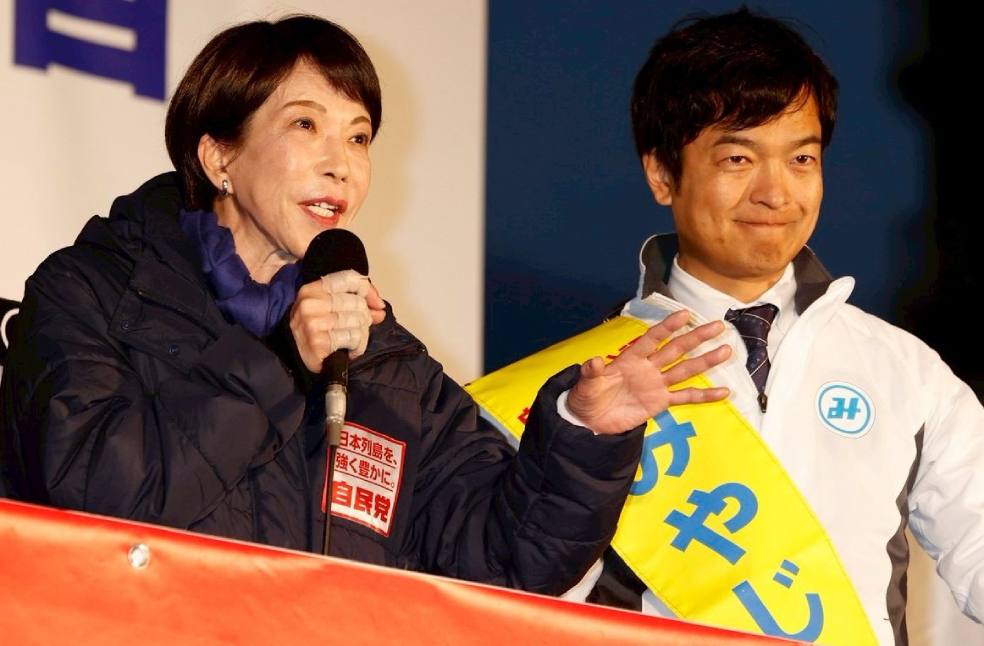
Tokyo: Japan’s political landscape has shifted as Sanae Takaichi has led a resurgence in support for the long-ruling Liberal Democratic party ahead of the lower house election.
The prime minister has become the driving force behind the party’s improved polling, with projections suggesting the ruling coalition could secure a commanding parliamentary majority.
The Liberal Democratic party had faced a difficult period just months earlier, losing a parliamentary majority and confronting a funding scandal that affected several lawmakers. Former prime minister Shigeru Ishiba had also faced internal party pressure.
The leadership contest that followed saw many observers expecting Shinjiro Koizumi to succeed Ishiba, but the party instead chose Sanae Takaichi, marking the appointment of Japan’s first female prime minister.
Since taking office, Takaichi has engaged with global leaders including United States President Donald Trump, China’s President Xi Jinping and South Korea’s President Lee Jae Myung. Diplomatic activity has coincided with domestic debate over economic policy and foreign relations, including tensions linked to Taiwan and scrutiny of political ties with the Unification church.

Despite policy debates and market concerns over proposed tax cuts, Sanae Takaichi has maintained strong public visibility and has developed a notable following among supporters. Public interest has extended beyond policy positions to personal style, public appearances and campaign messaging.
Analysts have observed that the prime minister’s presence has reshaped the Liberal Democratic party’s public image at a time when voters have been seeking alternatives to traditional political figures.
Opinion polls have indicated that the Liberal Democratic party and its coalition partner could win more than 300 seats in the 465-member lower house, enough for a two-thirds majority. The main opposition alliance has been preparing for significant losses if projections hold.
Takaichi has been known for conservative positions on social and institutional issues, including views on family naming conventions and the role of women within traditional structures. At the same time, the prime minister has attracted younger voters through messaging that highlights a non-hereditary political background and a departure from established political norms.
With voting day approaching, the ruling party has appeared positioned for a significant electoral recovery, and Sanae Takaichi has remained central to that momentum as the campaign enters its final stage.
TRENDING | India considers Social media age limits for children
