


Tokyo: Japan’s cabinet has approved a record defence budget proposal exceeding $58 billion (9 trillion yen) for the next fiscal year, signalling a continued push to strengthen the country’s military and coastal defences with escalating security concerns in East Asia.
The proposal, which still requires parliamentary approval by March, forms part of a wider $784 billion (122.3 trillion yen) national budget for the fiscal year beginning in April 2026. It marks the fourth consecutive year of Japan’s five-year plan to raise defence spending to 2 percent of gross domestic product, a target long encouraged by its ally, the United States.
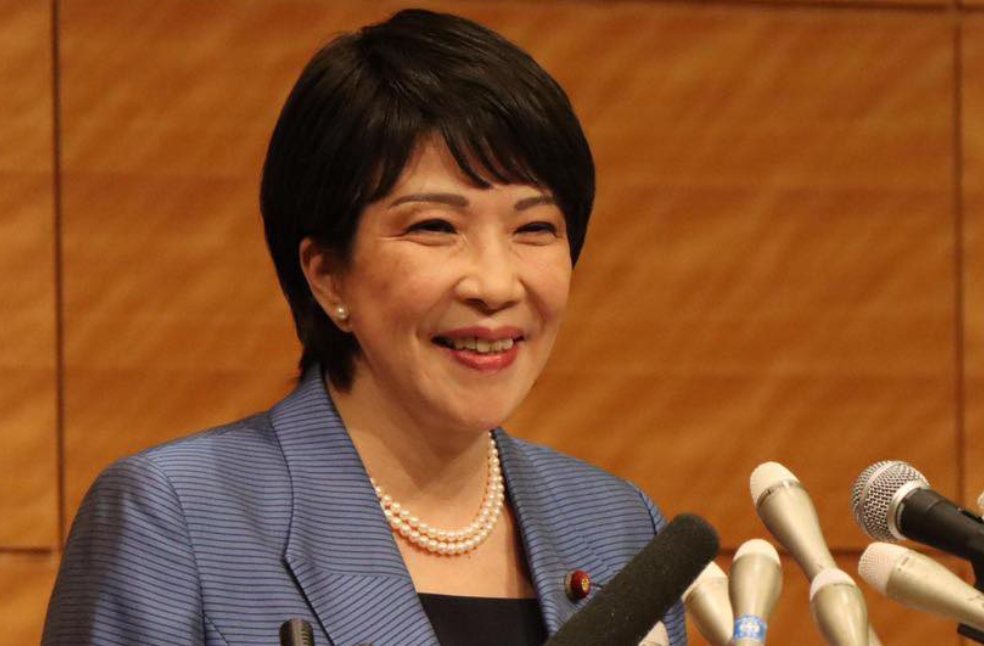
Prime Minister Sanae Takaichi’s government has accelerated defence investment as worries grow over China’s expanding military presence in the region. In November, Takaichi said Japan could become involved in a conflict if China were to take action against Taiwan, comments that drew strong criticism from Beijing and were followed by diplomatic and economic retaliation.
Under the ongoing defence build-up, Japan is on track to become the world’s third-largest military spender after the United States and China. The Finance Ministry said the country is expected to meet the 2 percent of GDP benchmark by March, two years earlier than originally planned.

A key focus of the new budget is enhancing long-range strike capabilities, a significant shift from Japan’s post-World War II defence posture, which limited the use of force strictly to self-defence. More than $6.2 billion (970 billion yen) has been allocated to strengthen standoff missile capabilities, including $1.13 billion (177 billion yen) for upgraded, domestically produced Type-12 surface-to-ship missiles with an estimated range of about 1,000 kilometres.
The government is also prioritising unmanned systems to address challenges posed by an ageing and shrinking population. Around $640 million (100 billion yen) will be spent on deploying large numbers of aerial, surface and underwater drones for coastal surveillance and defence. The system, known as ‘SHIELD,’ is expected to become operational by March 2028, with Japan initially relying on imported equipment from countries such as Türkiye or Israel to speed up deployment.
Relations with China have further deteriorated in recent months. Tokyo lodged a formal protest after Chinese aircraft carrier drills near southwestern Japan, alleging that Chinese aircraft locked radar onto Japanese planes, an action viewed as a potential prelude to missile targeting. In response, Japan’s Defence Ministry plans to establish a new office dedicated to studying Chinese military operations and capabilities in the Pacific.
Japan is also seeking to revitalise its domestic defence industry by expanding international cooperation and boosting arms exports, following a relaxation of export restrictions. The 2026 budget includes more than $1 billion (160 billion yen) for the joint development of a next-generation fighter jet with Britain and Italy, with deployment targeted for 2035. Additional funds have been set aside to support defence manufacturing and overseas sales.
The latest budget decision underscores Japan’s determination to play a more assertive role in regional security, even as it balances constitutional constraints, domestic debate and growing geopolitical pressure in the Asia-Pacific.
TRENDING | Brazil’s Supreme Court orders Bolsonaro to begin 27-year prison term
