


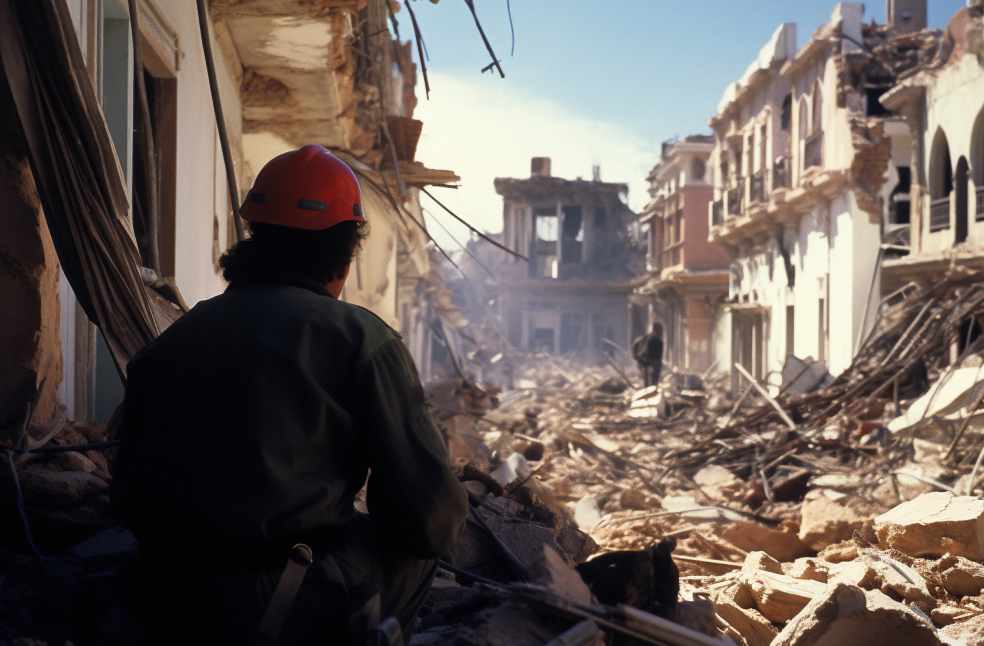
Geneva: Iran has declared it will not resume nuclear talks while under attack, following a series of escalating strikes between Tehran and Tel Aviv that threaten to ignite a wider regional conflict.
Foreign Minister Abbas Araghchi announced after meeting European diplomats in Geneva, rejecting renewed calls to engage in dialogue with the United States over Iran’s nuclear programme. His remarks came just hours after Israeli Defence Minister Eyal Zamir warned of a ‘prolonged campaign’ against the Islamic Republic.
Ruled by an extremist regime, Iran threatens global security with its nuclear ambitions and desire for regional domination.
They must be stopped. pic.twitter.com/mR0YP7dEdr
— Israel Defense Forces (@IDF) June 21, 2025
As diplomatic efforts falter, fighting has intensified across multiple fronts. The Israeli military announced a fresh wave of strikes targeting Iranian ballistic missile storage and launch sites after Iran launched missiles toward central Israel. Explosions were heard near Tel Aviv, with missile interceptions lighting up the night sky. Falling shrapnel reportedly set a building ablaze in the city.
In Iran, state media reported that an Israeli strike on the religious city of Qom killed a 16-year-old and injured two others. Strikes were also reported near the nuclear facility in Isfahan, where satellite images revealed visible damage to infrastructure deemed key to Iran’s nuclear operations.
Araghchi reiterated Iran’s position that its nuclear programme remains peaceful and accused Israel of violating international law. Araghchi stated that, “I make it crystal clear that Iran’s defence capabilities are non-negotiable. Diplomacy can only proceed once Israel’s aggression is stopped.” He is expected to attend a second round of emergency talks with Arab League officials in Istanbul over the weekend.
Meanwhile, Israel’s ambassador to the United Nations accused Iran of pursuing a genocidal agenda and vowed that strikes on Iranian nuclear facilities would continue until they are dismantled.
Israeli Foreign Minister Gideon Sa’ar claimed that recent strikes had set back Iran’s nuclear progress by at least two years. Israeli Foreign Minister remarked that, “We will not allow Iran to rebuild its nuclear capabilities.”
The Israel Defence Forces (IDF) confirmed they had struck multiple sites in western Iran linked to missile deployment, following a barrage of 20 Iranian missiles aimed at the port city of Haifa. One woman died of a heart attack during the attack, raising Israel’s death toll to 25.
Iran’s Health Ministry reported at least 224 deaths so far. Among the casualties are reportedly senior Iranian military officers and nuclear scientists killed in Israeli raids.
In Washington, US President Donald Trump said Iran had a ‘maximum’ of two weeks to avoid potential American air strikes, suggesting a unilateral military response was on the table. The US president dismissed European-led diplomatic efforts, claiming Iran is unwilling to engage with European nations. Trump added that, “They want to speak to us. Europe is not going to be able to help in this.”
European leaders, however, have cautioned against a military solution. UK Foreign Secretary David Lammy acknowledged the US had provided a short window of time to resolve what he called a perilous and deadly serious crisis.
French Foreign Minister Jean-Noel Barrot urged Iran to return to the negotiating table without preconditions. With missile strikes continuing and both sides doubling down on military postures, hopes for de-escalation remain distant.
TRENDING | The AI eye: Spotting prostate cancer patients who truly need the cure
