


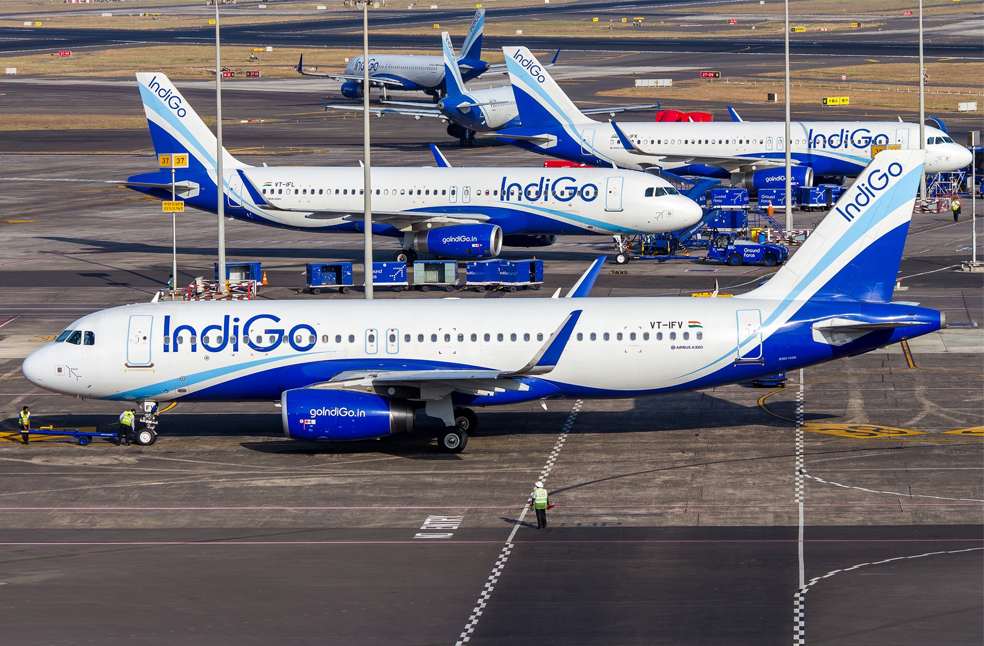
Bengaluru, India: IndiGo’s flight disruption has stretched into a third consecutive day, leaving thousands of passengers stranded nationwide as the airline struggles to adapt to new government regulations and mounting operational challenges.
By December 4, 175 flights had been cancelled, following 150 cancellations on December 3, triggering widespread frustration at major airports including Delhi, Mumbai, Hyderabad, Pune, and Bengaluru.
The crisis also rattled the stock market, with IndiGo’s shares falling 3.4 percent on December 4 and 6 percent for the week, threatening the reputation of a carrier known for punctuality.
STORY | IndiGo cancels over 180 flights from 3 major airports
Domestic carrier IndiGo has cancelled over 180 flights from three major airports on Thursday, as the Gurugram-based airline struggles to secure the required crew to operate its flights in the wake of new flight-duty… pic.twitter.com/Ep4Uh2gaqg
— Press Trust of India (@PTI_News) December 4, 2025
The Federation of Indian Pilots said that IndiGo failed to adjust its roster ahead of stricter duty-time rules adequately, regulations that mandate longer pilot rest periods and impose night-flying restrictions, effective since November 1. Meanwhile, other carriers, Air India, SpiceJet, and Akasa Air, reported no similar disruptions.
What the airline said
IndiGo issued a public apology on December 4, acknowledging the widespread inconvenience. The airline attributed the cancellations and delays to a convergence of ‘unexpected operational issues’ that placed its network under severe pressure.
According to IndiGo, the disruptions stemmed from a mix of technical glitches, winter schedule realignments, adverse weather, airport congestion, and new crew rostering rules. The airline said that it was an unusual overlap of challenges that it ‘could not have anticipated.’
To stabilise operations, IndiGo has implemented calibrated schedule adjustments for the next 48 hours, a temporary measure aimed at restoring punctuality. Affected passengers are being offered refunds or alternative flight options as the airline works to normalise services as soon as possible.

Severe impact at major airports
The worst effects were felt at key airports, especially Bengaluru and Hyderabad. In Bengaluru, passengers faced long delays with minimal communication from the airline. Travellers complained about unclear updates and inadequate seating inside the terminal, worsening the discomfort during extended wait times.
In Hyderabad, operations were equally strained. By 7:30 am, IndiGo had cancelled 35 incoming flights and 33 outgoing flights, creating significant congestion. The shortage of pilots and cabin crew added further pressure to already stressed operations.
The disruption spread beyond metro hubs as well.
- Chennai reported 26 IndiGo cancellations due to ‘operational reasons.’
- Delhi Airport saw 30 flight cancellations (domestic and international) since morning.
- Routes to Kolkata, Goa, Delhi, and Pune were also affected.
In northern India, Jammu Airport saw major operational setbacks due to nationwide crew shortages and technical issues. Out of IndiGo’s 11 scheduled flights, one was cancelled and five faced delays. At Srinagar Airport, of the 18 scheduled flights, two were cancelled and three were delayed by 11 am.
Across airports, frustration continued to rise. Travellers reported multi-hour delays with no clarity on departure timelines, forcing many to vent their anger on social media. Posts from stranded passengers flooded online platforms, highlighting long queues, scarce seating, and poor communication.
As the disruptions continued into the third day, passengers repeatedly called for clearer updates and better crisis management from India’s largest carrier.
ALSO READ | Netflix-HBO Max merger may slash streaming costs
