


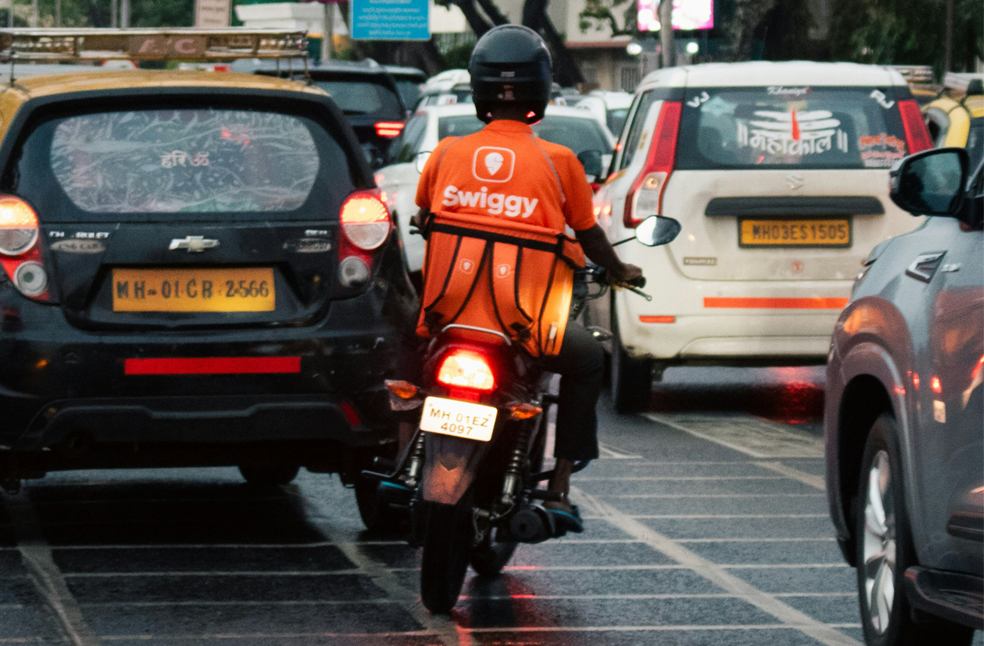
New Delhi: The Government of India has asked eCommerce and quick-commerce platforms to halt their widely promoted 10-minute delivery services, effectively challenging a business model that has reshaped urban consumption in recent years.
The directive comes in the wake of a massive New Year’s Eve strike by nearly 200,000 gig workers, escalating a conflict that has set start-up founders and venture capitalists against politicians, trade unions, and delivery riders.
The striking workers demanded a minimum wage framework, a ban on ultra-fast delivery timelines, greater transparency in how wages are calculated, and an end to what they allege is arbitrary algorithmic control over ratings, order allocation, and even contract termination. They argue that speed-based incentives compromise safety and leave workers vulnerable to opaque digital systems.
Since the pandemic, fleets of delivery riders, mostly men, racing through traffic in cities such as Mumbai and Delhi have become a defining feature of India’s streets.
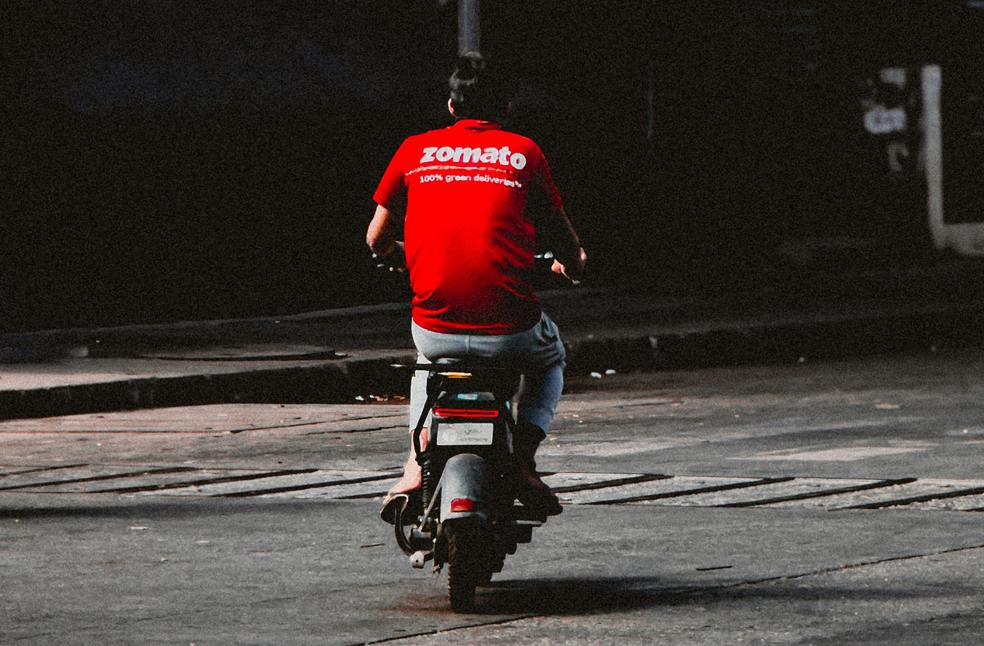
Millions of households now rely on app-based platforms, including Zomato, Swiggy, Blinkit, and Instamart for groceries, meals, grooming services, and household needs, embedding rapid doorstep delivery into everyday urban life in Asia’s third-largest economy.
While workers, who form the backbone of these platforms, are pushing for safer and fairer working conditions, companies warn that excessive regulation could undermine what they describe as one of the fastest-growing segments of India’s labour market. India’s gig workforce currently numbers about 12 million and is projected to double to 24 million by the end of the decade.
The strike on December 31, 2025, and the government’s move to curb 10-minute deliveries, though not yet fully enforced, come just as India prepares to implement new labour rules that formally bring gig work under the scope of labour laws for the first time.
A new labour code, due to take effect this year, introduces social security measures such as insurance coverage and welfare benefits for workers who complete at least 90 days on digital platforms annually.

These reforms place fresh financial pressure on delivery apps that have so far thrived on light-touch regulation and low labour costs. Investor confidence has already been shaken.
Swiggy’s share price has dropped by around 15 percent over the past month, while Eternal, the company that owns Zomato and quick-commerce platform Blinkit, has seen its stock trade flat as concerns mount over rising operating costs and union pressure.
With investors rattled and opposition politicians openly backing the workers’ protests, platform founders have been forced into crisis-management mode. Eternal CEO and Zomato founder Deepinder Goyal has taken to social media to defend the platform’s resilience and business model.
In a series of posts on X earlier this month, Goyal said that Zomato and Blinkit delivered 75 million orders to 63 million customers on New Year’s Eve alone, a ‘record pace’ that he claimed was unaffected by the strike, which he blamed on what he called ‘miscreants.’

The CEO rejected claims that the 10-minute delivery promise is inherently unsafe, arguing that riders meet delivery timelines not through reckless driving but due to the dense network of dark stores, or warehouses, that platforms have invested in.
According to Goyal, platforms already provide several forms of social protection, including insurance, periodic rest days, and access to pension schemes. He said most delivery partners work only a few hours a day and a few days each month, with an annual attrition rate of about 65 percent, suggesting that gig work is not a permanent occupation for many and therefore cannot offer the same benefits as full-time employment.
Critics remain unconvinced. Labour experts and worker representatives argue that these headline earnings figures hide significant social and economic costs borne by workers themselves, including expenses for onboarding, uniforms, vehicles, fuel, and maintenance.
They also say that incentive structures heavily reward speed, penalise delays or order rejections, and leave workers with little real flexibility if they want to earn a stable income.
The debate has created a policy dilemma for India. Gig work is, by definition, non-permanent, but unlike in Western economies, where it is often treated as a side hustle, in India, it has increasingly become full-time employment due to the lack of stable jobs in sectors such as manufacturing.
Without structured pathways for career progression, the report warned, India risks creating a ‘missing middle,’ a large workforce that fuels consumption but remains excluded from stability, social protection, and long-term economic mobility. It called for stronger social safeguards, minimum wages, and clearer pathways to higher-skilled, better-paying roles.
They operate on extremely thin margins, estimated at 2.5 percent to 4.5 percent in food delivery and negative returns in grocery delivery, according to HSBC research, and profitability is expected to come under further strain as welfare costs rise under the new labour code.
In India, delivery workers appear equally determined. As the standoff deepens, the convenience economy that urban consumers have come to rely on may become more expensive, signalling that the era of ultra-cheap, ultra-fast deliveries could be approaching its limits.
MOST READ | Artemis 2 Rocket rolls to launch pad ahead of lunar flight
