



New Delhi: In an era when keyboards dominate writing, handwriting remains crucial, especially for doctors. The Punjab and Haryana High Court recently underscored that ‘legible medical prescriptions are a fundamental right,’ emphasizing that unreadable prescriptions can have life-or-death consequences.
The order emerged during a bail hearing unrelated to handwriting, involving allegations of rape, cheating, and forgery. The case concerned a woman who accused a man of taking money under the promise of a government job, conducting fake interviews, and sexually exploiting her. The accused denied the allegations, claiming a consensual relationship and disputes over money.
Justice Jasgurpreet Singh Puri, reviewing the medico-legal report written by a government doctor who examined the woman, found it entirely illegible. “It shook the conscience of this court as not even a word or a letter was legible,” Justice wrote. A two-page prescription included with the report was similarly indecipherable.
“Even in an age of technology and computers, government doctors still handwrite prescriptions that only a few chemists can read,” Justice Puri observed. The court recommended incorporating handwriting lessons into medical school curricula and set a two-year deadline to implement digitized prescriptions. Until then, all doctors must write prescriptions clearly in capital letters.

Turning to digital prescriptions
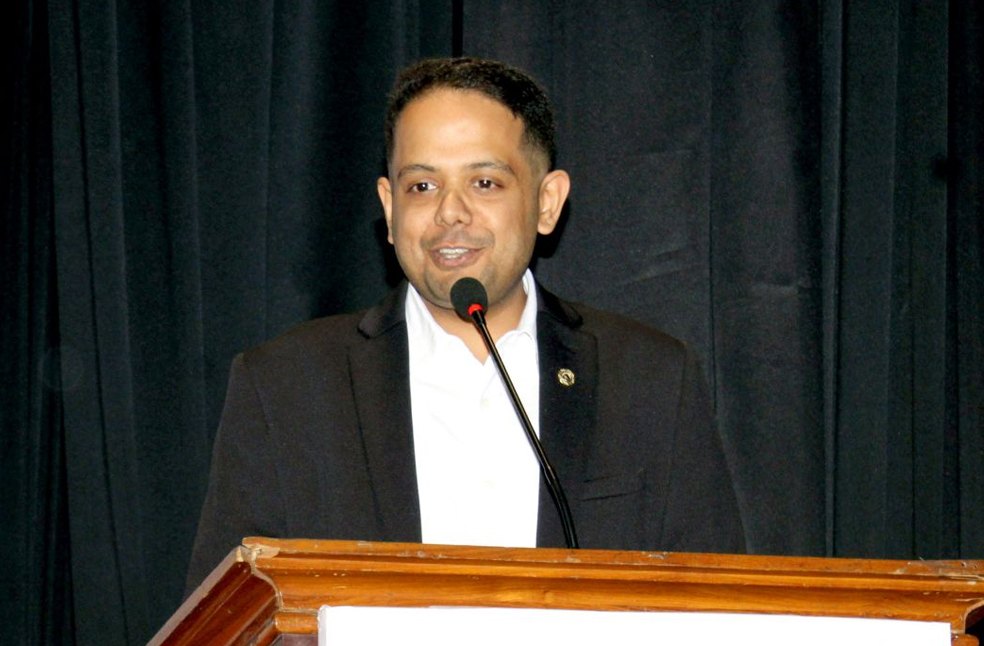
Dr. Dilip Bhanushali, President of the Indian Medical Association (IMA), acknowledged the issue but noted the heavy workloads of government doctors, particularly in overcrowded hospitals.
Digital prescriptions are common in cities and larger towns, but rural and small-town areas still largely rely on handwritten scripts. The IMA recommends writing prescriptions in bold, legible letters, though seeing dozens of patients daily makes this challenging.
Illegible prescriptions are a persistent problem across India. Past court interventions include the Odisha High Court criticizing the ‘zigzag style’ of doctors’ writing, and the Allahabad High Court lamenting prescriptions so unreadable that they could not be deciphered.
While studies have not conclusively proven that doctors’ handwriting is worse than average, experts emphasize that clarity is a matter of patient safety. Ambiguous prescriptions can cause serious, sometimes fatal, medical errors.
Not only in India
A 1999 report by the Institute of Medicine in the US estimated 44,000 preventable deaths annually from medical errors, 7,000 of which were attributed to illegible prescriptions. Similarly, in Scotland, a woman suffered chemical injuries after being given the wrong medication due to a prescription error. UK health authorities have noted that electronic prescribing could reduce such errors by 50 prescriptions.
In India, misreading prescriptions has resulted in health emergencies and fatalities. Pharmacists continue to report illegible prescriptions.
Ravindra Khandelwal, CEO of Dhanwantary Pharmacies in West Bengal, explained that while urban centers have shifted toward printed prescriptions, most rural and suburban prescriptions remain handwritten. Experienced staff can usually interpret them, but sometimes they must contact doctors to ensure correct medication delivery, highlighting the ongoing risk to patient safety.
The court’s order reinforces that legible handwriting in medical prescriptions is more than a formal requirement, it is a critical element of patient care and public health.
MOST READ | NMIA to ease Mumbai air traffic; Set for inauguration soon
