


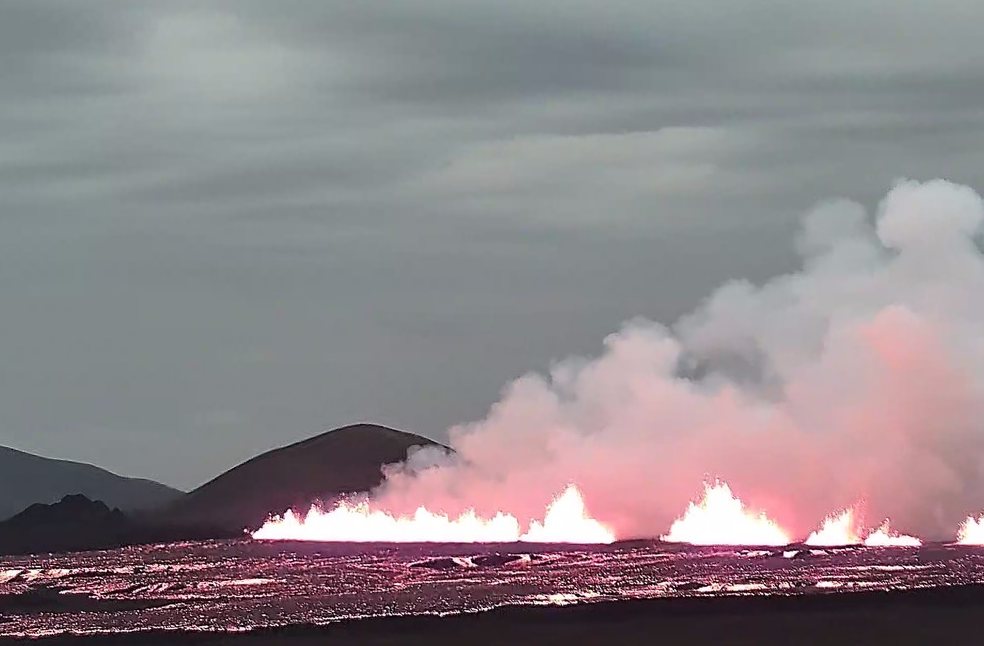
Copenhagen: The Iceland volcano eruption has marked the twelfth such event since geological activity on the Reykjanes peninsula resumed in 2021.
Authorities have confirmed that magma has forced its way through the earth’s crust, creating a fissure estimated to be between 700 metres and 1,000 metres long, producing glowing streams of lava and thick smoke.
Iceland, known as the land of ice and fire due to its active volcanic systems and vast glaciers, has experienced repeated volcanic activity in this region in recent years. According to Iceland’s meteorological office, this latest eruption did not provide significant warning signs before the fissure opened. Officials have said that the eruption currently does not pose any danger to critical infrastructure.
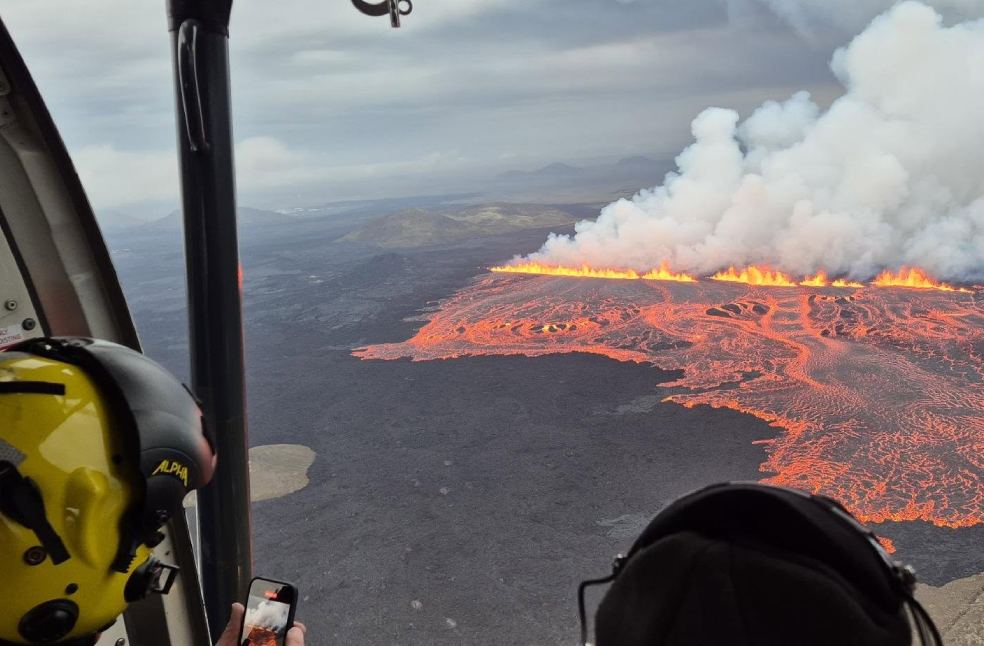
The Iceland volcano eruption has not disrupted flights at Keflavik airport near Reykjavik, which remains operational as shown on its official site. However, local media has reported that visitors at the popular Blue Lagoon spa resort and residents in Grindavik were safely evacuated. Grindavik, which had around 4,000 inhabitants before a 2023 evacuation order, remains largely uninhabited due to the ongoing risk from lava flows and earthquakes.
Experts believe that these fissure eruptions could continue to occur for decades, or even centuries, as the Reykjanes systems stay active. Unlike classic crater eruptions, these events release lava through long cracks in the ground, creating dramatic scenes but so far causing minimal disruption to air traffic or Reykjavik city itself.
The current Iceland volcano eruption’s relatively small scale, confirmed by GPS and deformation data, suggests that Iceland’s monitoring systems continue to help keep communities safe and informed. While there is no immediate ash threat to aviation, authorities continue to monitor conditions closely to ensure public safety in nearby regions.
ALSO READ | Global childhood vaccination progress still faces risks
