


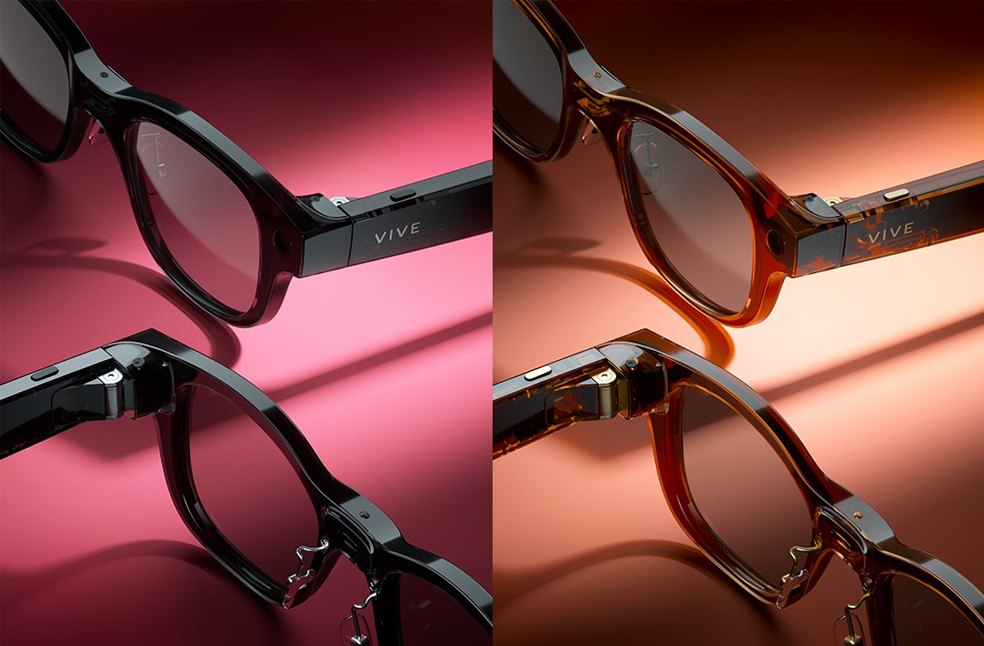
Taipei: Taiwan’s HTC is betting that an open platform strategy will help it gain market share in the fast-growing global smart glasses industry, as it launches new AI-powered eyewear that allows users to choose which artificial intelligence model they want to use.
Charles Huang, Senior Vice President of global sales and marketing at HTC, said that the rapid pace of AI development has created an intense ‘arms race’ among large language model developers, one that demands enormous resources. Rather than building a closed ecosystem, HTC aims to leverage the strengths of multiple AI platforms.
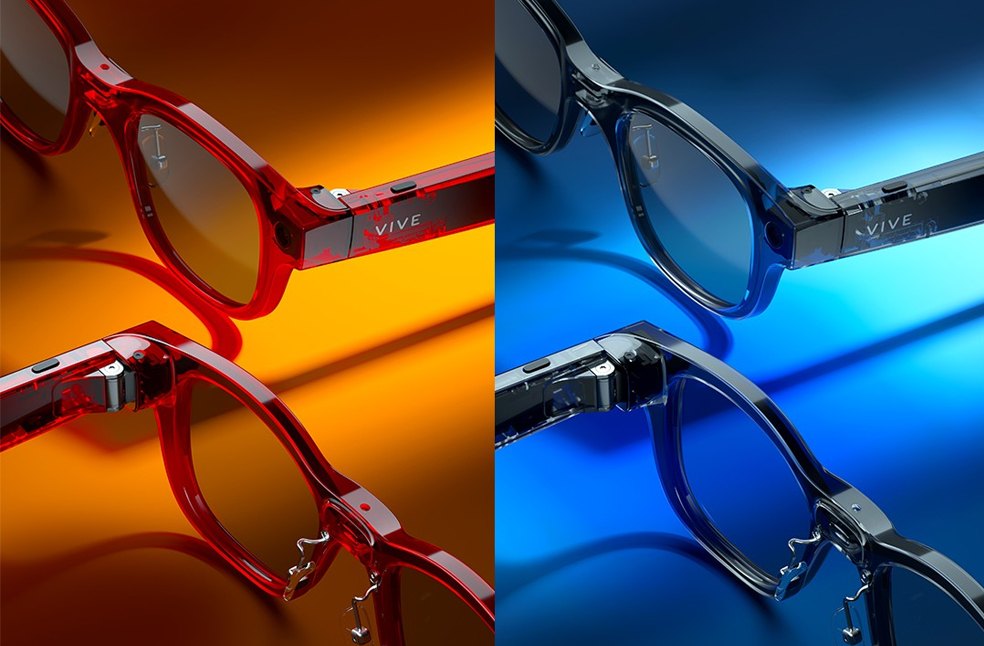
HTC’s newly launched VIVE Eagle smart glasses support several AI systems, including Google’s Gemini and OpenAI, enabling users to benefit from ongoing improvements across different models. This approach contrasts with competitors such as Meta, whose smart glasses rely on Meta AI, and Chinese smart glasses from brands including Xiaomi and Alibaba, which are built around domestically developed AI models.
The VIVE smart glasses were launched earlier this month in Hong Kong, priced at HK$3,988 (about $512). HTC plans to expand sales to Japan and Southeast Asia in the first quarter of next year, followed by launches in Europe and the United States later in 2026. Huang noted that the decision to prioritise Asia reflects regional design considerations, noting that many smart glasses currently on the market are designed with a ‘Western fit’ that may not suit Asian wearers.
When asked whether the Hong Kong launch was a step toward entering the Chinese mainland market, Huang noted that China presents additional complexities, as foreign AI services are restricted and data regulations require standalone servers within the country. The Senior Vice President stated that HTC would need to proceed cautiously and would require time to prepare.
According to research firm Counterpoint, global shipments of smart glasses surged 110 percent in the first half of this year, with Meta commanding 73 percent of the market. Meta, together with partner EssilorLuxottica, has drawn widespread attention since launching its ‘smart’ Ray-Ban and Oakley glasses in 2023, which allow users to answer calls, take photos, and play music.
However, analysts have warned that privacy concerns could become more prominent as adoption grows. Meta, which owns Facebook, Instagram, and WhatsApp, uses user data to power its AI tools, a practice that has drawn scrutiny over data protection and privacy. Huang remarked that HTC does not use user data to train its AI models, adding that privacy and data security are key differentiators for the company.
The launch of the VIVE AI smart glasses marks a renewed push by HTC into consumer-facing hardware, following the sale earlier this year of part of its extended reality headset and smart glasses unit to Google for $250 million.
MOST READ | Michaela Benthaus becomes first wheelchair user in space
