



Ankara, Turkey: Google has officially acknowledged that its Android Earthquake Alerts (AEA) system failed to deliver critical alerts ahead of the devastating 7.8 magnitude earthquake that struck southeastern Turkey on February 6, 2023.
Although the system was live and functioning at the time, it significantly underestimated the strength of the quake, resulting in a failure to issue appropriate warnings to those in harm’s way.
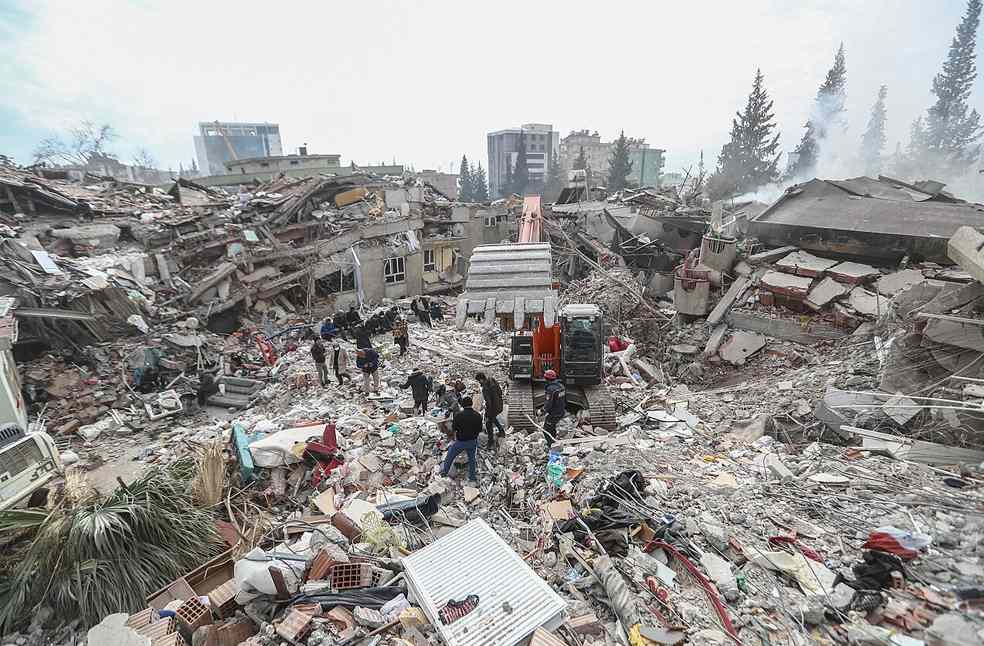
At least 55,000 people lost their lives, and over 100,000 were injured when two massive earthquakes hit the region. Many were sleeping in buildings that collapsed, with no timely warning to seek safety.
Google’s highest-level alert, called ‘Take Action,’ was sent to only 469 users, despite an estimated 10 million people living within 98 miles (approximately 157 kilometers) of the epicenter. This alert is designed to override Do Not Disturb settings, sound a loud alarm, and display a full-screen warning when severe shaking is detected.
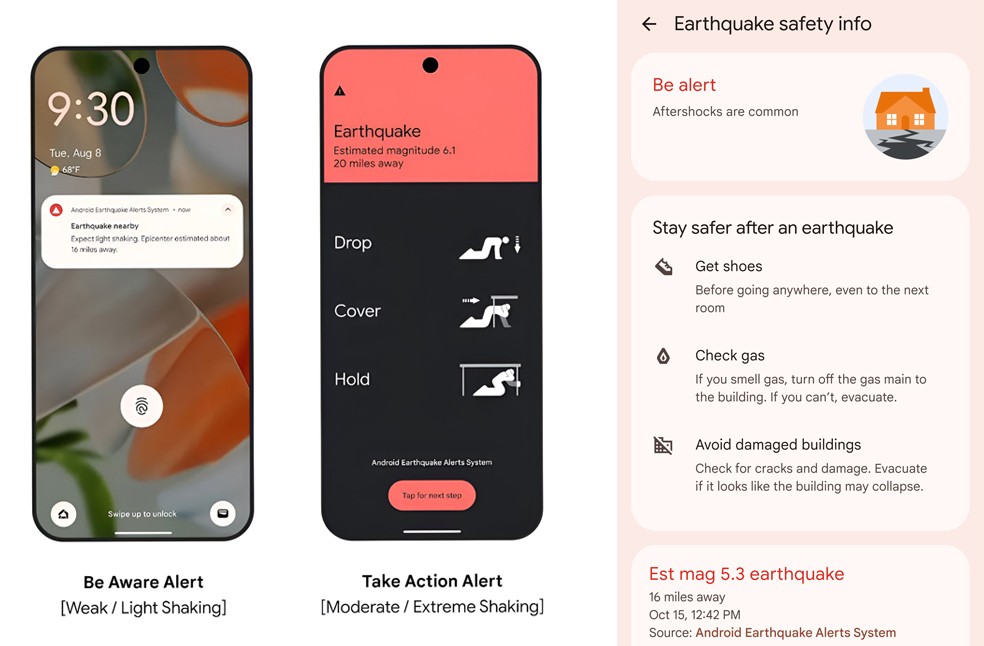
Instead, around 500,000 users received the less urgent ‘Be Aware’ alert, which is intended only for lighter shaking and does not bypass Do Not Disturb settings. This alert’s subtle nature rendered it ineffective during a nighttime quake, especially when the majority of users were asleep and in danger.
The AEA system functions by detecting ground movement through Android smartphones, which make up over 70 percent of mobile devices in Turkey. It relies on accelerometers built into phones to detect early signs of seismic activity and then pushes alerts before the shaking arrives, leveraging the lag in wave propagation through the Earth.
While Google had previously described the system’s performance during the earthquake as satisfactory, further internal analysis revealed serious flaws.
Researchers reported in the Science journal that the detection algorithms underestimated the magnitude of the first quake, initially categorizing it as between 4.5 and 4.9 MMS instead of the actual 7.8. As a result, the system was unable to issue the appropriate life-saving ‘Take Action’ alert.
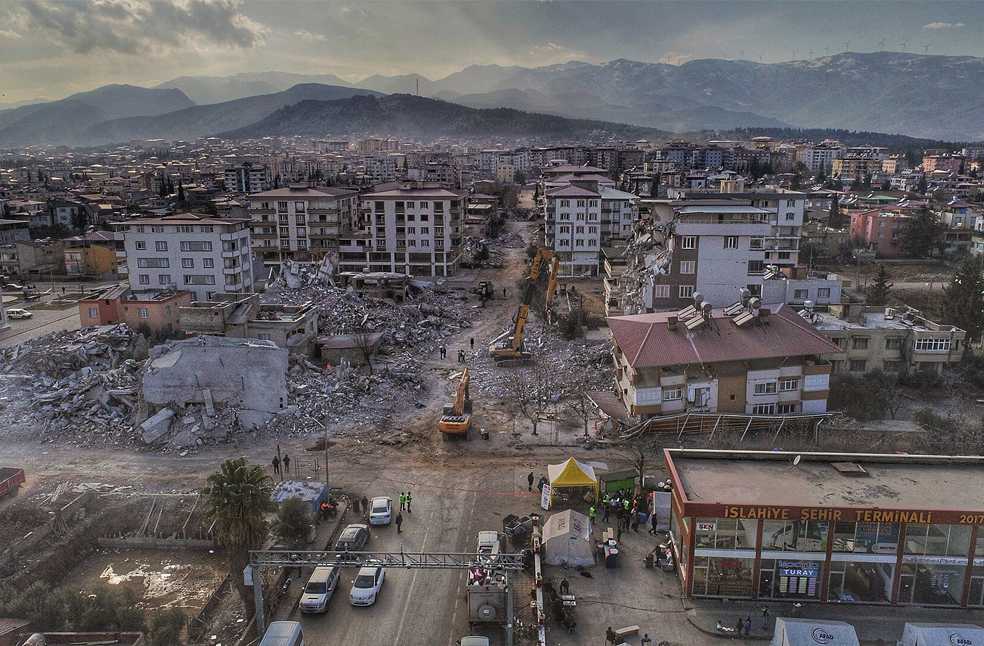
The second large earthquake that occurred later the same day was also underestimated. This time, 8,158 ‘Take Action’ alerts and just under 4 million ‘Be Aware’ messages were sent out.
Following these failures, Google engineers modified the algorithm and reran simulations of the February 6 quake. With the updated system, the first earthquake would have triggered 10 million ‘Take Action’ warnings and 67 million ‘Be Aware’ alerts, suggesting the improvements could have made a significant difference had they been in place at the time.
A Google spokesperson explained that the company is continuously learning from each seismic event and refining its technology. “Every earthquake early warning system grapple with the same challenge, tuning algorithms for large magnitude events,” the spokesperson said.
Despite these advancements, experts have raised concerns about the time it took to publicly recognize the system’s shortcomings and issue corrective measures.
Elizabeth Reddy, assistant professor at the Colorado School of Mines, emphasized the urgency of timely evaluation, particularly in the aftermath of a disaster of such scale. Reddy criticized the delay, and stated that, “People died, and we didn’t see a performance of this warning system in the way we would like.”
Google has also clarified that the AEA system is not intended to replace national earthquake warning systems, but rather to serve as a supplementary tool. Nonetheless, several scientists warn that overreliance on unregulated or inadequately tested private technology could leave populations vulnerable.
Harold Tobin, director of the Pacific Northwest Seismic Network, stressed the importance of transparency and accountability. He cautioned that some countries may assume Google’s system provides sufficient coverage, potentially sidelining the development of more reliable national infrastructure.
As of now, Google’s Android Earthquake Alerts system has been deployed in 98 countries. The company has been asked to provide performance data related to the recent 2025 earthquake in Myanmar, but no response has yet been issued.
ALSO READ | Wildfires rage across Greece as heatwave fuels destruction
