


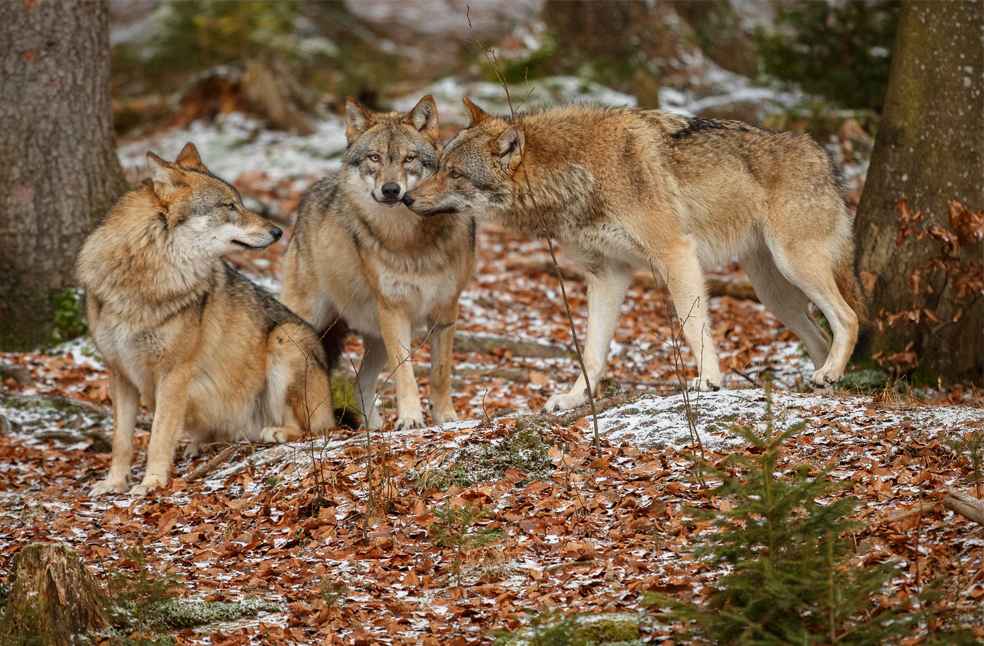
Berlin: Germany’s lower house of parliament, the Bundestag, has passed legislation allowing wolf hunting in response to the rapid growth of their population and the rising number of attacks on farm animals across the country.
The growing presence of roaming wolf packs has sparked political divisions, often setting left-leaning parties against conservative and far-right groups, and highlighting tensions between densely populated western regions and the more rural eastern areas where wolf populations are most concentrated.
The draft law, strongly opposed by animal protection organisations, was approved with support from the centre-right governing coalition led by the Christian Democratic Union (CDU) and the far-right Alternative für Deutschland (AfD), which has long advocated killing wolves to safeguard farmers’ livelihoods.
Hermann Färber of the CDU told parliament that Germany needed a new ecological balance. Färber argued that the suffering of grazing animals killed in wolf attacks should not be overlooked, saying the deaths of livestock in what he described as the wolves’ ‘bloodlust’ could no longer be considered consistent with animal welfare principles.

However, lawmakers from Alliance 90/The Greens and the far-left The Left voted against the bill. The legislation must still receive approval from the upper chamber of parliament, the Bundesrat, which is expected to vote later this month.
If the law takes effect, Germany’s 16 federal states will be permitted to authorise wolf hunting between July and October in areas where the animals’ populations are considered particularly dense. Wolves that have previously attacked or killed farm animals could be shot regardless of the season or their conservation status.
The legislation implements an amendment to European Union rules allowing exceptions to strict species protection measures. The debate intensified in 2022 after a wolf killed a pony named Dolly belonging to Ursula von der Leyen, President of the European Commission, near the city of Hanover. Following the incident, Leyen called for a review of the wolf’s protection status, which was later downgraded.
The latest legislation has been welcomed by the German Hunting Association. Meanwhile, the Working Group on Rural Agriculture, a lobbying organisation representing farming interests, described the measure as a modest but important step toward protecting sheep, goats, and calves, especially after a notable increase in wolf attacks.
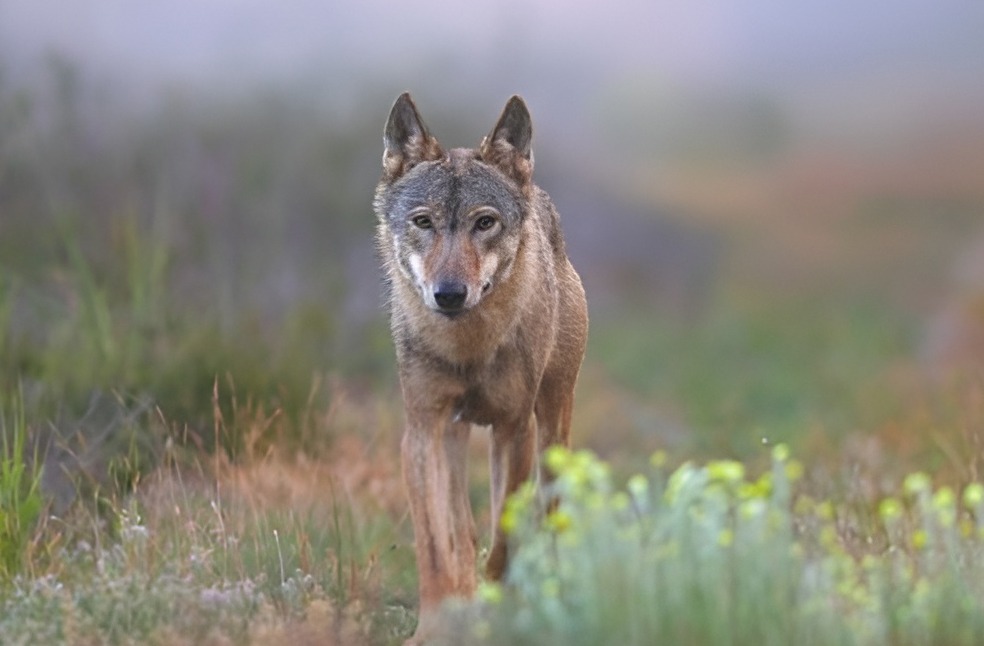
According to government statistics, approximately 4,300 farm animals were killed or injured by wolves in Germany in 2024. Environmental groups remain strongly opposed to the measure. The Nature and Biodiversity Conservation Union (Nabu), which describes itself as Germany’s oldest and largest environmental association, urged regional governments to block the legislation when it reaches the Bundesrat.
Nabu’s wolf expert, Marie Neuwald, said that wildlife conservation should not be sacrificed for what she called symbolic political action. Instead of culling wolves, Neuwald advocated stronger herd protection measures, including subsidies for fences and guard dogs.
The parliamentary vote comes three days before elections in the southwestern state of Baden-Württemberg, the first of five German states scheduled to hold regional polls this year.
The leading candidate in Baden-Württemberg is Manuel Hagel of the CDU, an enthusiastic hunter who is facing strong competition from Cem Özdemir of the Greens, a former federal agriculture minister, and AfD candidate Markus Frohnmaier.

Although the region is only slightly affected by wolf activity, Hagel has taken a firm stance on the issue during the campaign, saying that ‘buckshot and lead will help’ address the dangers posed by wolves.
Wolves were declared extinct in Germany during the 19th century, but have made a remarkable comeback since around 2000. An official study published last year recorded 219 wolf packs across the country, along with 36 breeding pairs and 14 individual wolves, while Baden-Württemberg currently hosts four solitary wolves.
Although shepherds are usually eligible for state compensation when wolves attack their flocks, many farmers say the aftermath of such incidents can be deeply distressing for those who live and work closely with grazing animals.
In rural areas, strict rules protecting wolves have often been criticised as excessive conservation policies, a narrative that the AfD has used effectively in political campaigns. A study published in 2022 found a predictive relationship between wolf attacks and increased support for far-right voting in affected regions of Germany.
ALSO READ | From Toy to Friends: Punch the monkey finds his place
