


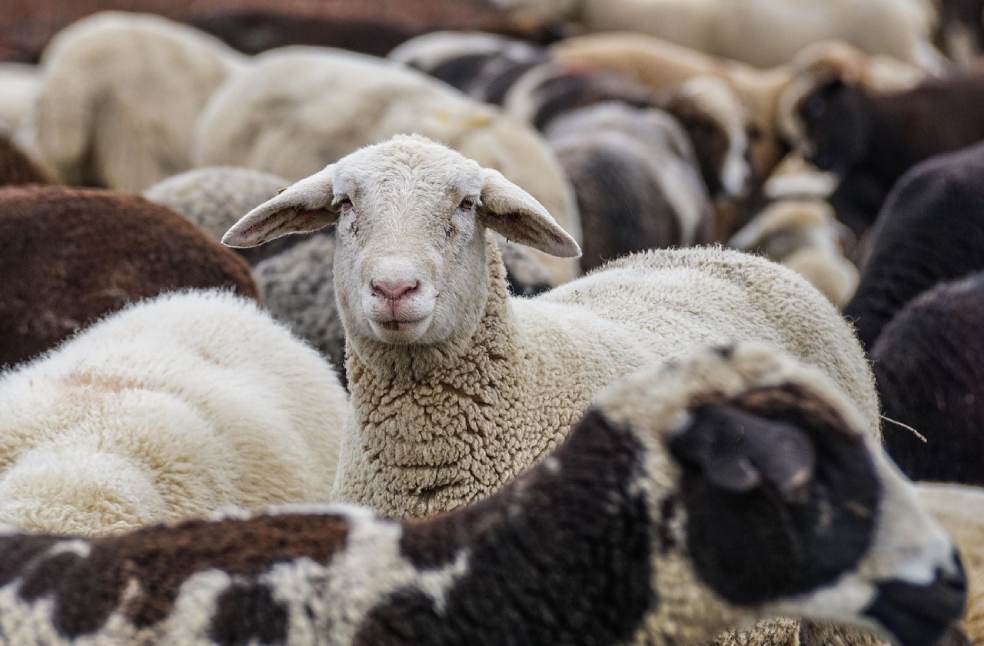
Karditsa: The feta cheese sector in Greece has come under severe pressure as authorities have culled hundreds of thousands of sheep and goats to slow the spread of sheep and goat pox.
The disease, first detected in northern Greece in August 2024, has since swept across multiple regions, raising fears of shortages in the country’s most recognizable dairy export. Data from the Ministry of Rural Development and Food has shown more than 1,700 recorded incidents by mid-November, triggering mandatory culls.
Detecting a single infection on a farm requires the destruction of the entire herd for preventive reasons, leading to the loss of around 417,000 animals so far, equivalent to 4–5 percent of Greece’s total population of sheep and goats. Since approximately 80% of Greece’s sheep and goat’s milk is used to make feta cheese, concerns have grown that production and exports may suffer if the outbreak is not brought under control.
Farmers in Thessaly have described devastating financial and emotional consequences. In Karditsa, veterinarian Anastasia Siourtou has lost all 650 animals on her family’s farm. Siourtou has said that witnessing the cull left her feeling unable to protect her flock, and noted that neighbouring farms had concealed early cases. Sheep’s milk, often referred to as Greece’s ‘white gold’, forms the backbone of a protected designation of origin product under EU law, meaning that authentic feta can only be produced using specific local milk.

Small dairies have already reported difficulty sourcing enough milk to maintain production levels. According to academic Dimitris Gougoulis from the University of Thessaly, limited supply has increased production costs and may reduce market availability if the situation worsens. Export figures underline the importance of the industry: Greece exported €785 million worth of feta last year, including €520 million to EU countries and €90 million to the UK.
The government has faced criticism for delays in its response. A national scientific committee for managing sheep and goat pox was only established in October 2025, more than a year after the first detection. Critics have also cited a lack of lockdown zones and an overstretched veterinary service. Meanwhile, authorities have arrested farmers transporting animals illegally into supposedly disease-free regions, and reports have emerged of infected livestock buried secretly.
Farmers across Thessaly, including those who have already endured severe flood damage in 2023, have urged the government to permit mass vaccination. Although allowed under EU rules in emergencies, officials have argued that such a step could result in Greece being classed as an endemic country, which would restrict the export of sheep and goat’s milk and potentially threaten feta cheese trade. They have also emphasised that no certified vaccine currently exists.
The situation has grown more complex as committee members have warned that up to one million illegal vaccinations may have taken place across Greece, complicating efforts to track the virus. Farmers have disputed these claims, calling the estimates arbitrary and damaging to their livelihood.
IMPORTANT | New policy restricts asylum seekers from using taxis widely
