


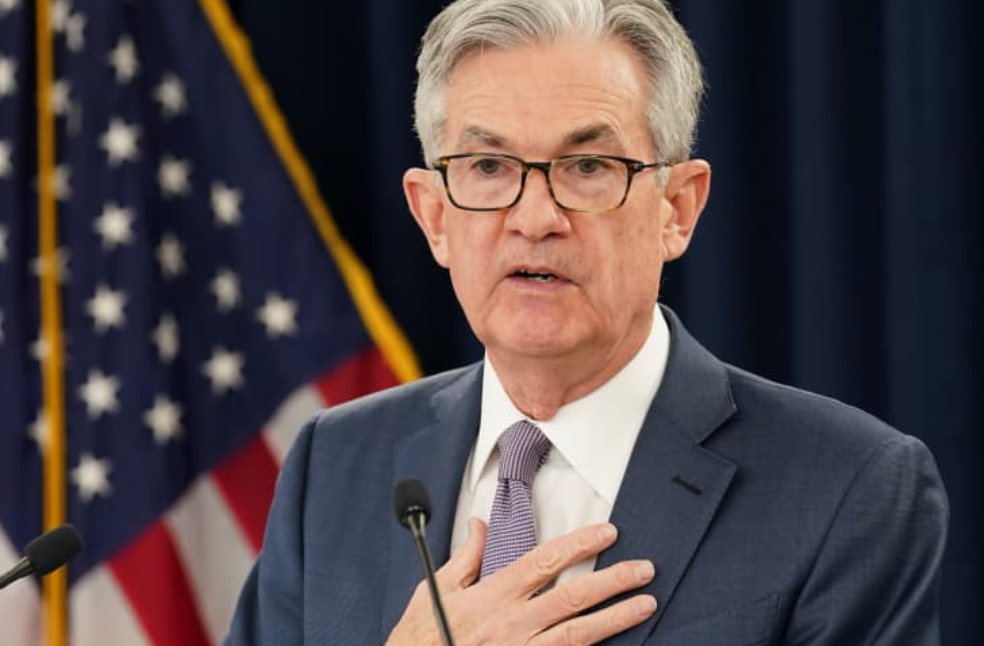
Washington: The US Federal Reserve has lowered interest rates for the third time this year, reducing its key lending rate by 0.25 percentage points to a range of 3.50 percent–3.75 percent, the lowest level since 2022.
The move underscores policymakers’ growing concerns about a weakening job market, despite inflation remaining stubbornly above the central bank’s 2 percent target. The decision revealed widening rifts among Fed officials, with three policymakers dissenting.
Stephen Miran, currently on leave from Donald Trump’s Council of Economic Advisers, pushed for a deeper 0.50-point cut, while Austan Goolsbee of the Chicago Fed and Jeffrey Schmid of the Kansas City Fed preferred holding rates steady.
Fed Chair Jerome Powell acknowledged the rare level of disagreement, calling it unusual but insisting the debate remains respectful. Jerome Powell stressed the need for time to assess how this year’s rate cuts filter through the economy, saying the Fed is well-positioned to wait and see how the economy evolves ahead of its January meeting.
Despite political pressure—particularly from President Donald Trump, who criticised the cut as insufficient- the Fed signalled just one rate cut expected next year, while leaving room for changes depending on incoming economic data.
A months-long data blackout caused by the US government shutdown has added uncertainty, but recent figures point to a labour market losing momentum. The unemployment rate edged up to 4.4 percent in September, while inflation hit 3 percent, still above target but easing slightly.
Analysts say the Fed is stuck navigating conflicting risks. Meanwhile, Trump’s ongoing search for Powell’s successor is creating further uncertainty. Front-runner Kevin Hassett, a loyal Trump adviser and former CEA chair, has raised questions among analysts about whether the next Fed chair will maintain the institution’s independence. Others reportedly under consideration include Kevin Warsh, Christopher Waller and Treasury Secretary Scott Bessent.
Powell dismissed suggestions that the succession process is affecting his decisions, responding with a firm no when asked whether the White House search was influencing his work.
As policymakers await fresh inflation and labour market data due next week, the Fed’s direction for 2025 remains highly dependent on whether signs of economic cooling intensify or inflation once again gains ground.
TRENDING | Trump unveils $1mn ‘Gold Card’ visa scheme for fast US residency
