



London: Adults in England are consuming the equivalent amount of salt found in 155 bags of crisps every week, according to analysis by the British Heart Foundation (BHF). The charity said that this equates to around 22 bags a day of ready-salted, lightly salted, or sea-salted crisps.
Dell Stanford, a Senior Dietitian at the BHF, said that most dietary salt is hidden in everyday foods such as bread, breakfast cereals, ready-made sauces, and ready meals, making it difficult for people to monitor how much they are consuming. Stanford warned that excessive salt intake poses serious risks to heart health, as it significantly raises blood pressure, a leading cause of heart attacks, strokes, and other serious diseases.
High salt intake consequences
Eating dangerously high levels of salt is estimated to contribute to at least 5,000 deaths every year in the UK from cardiovascular conditions. High blood pressure is described as the single biggest cause of heart attacks and strokes, with around three in 10 adults in the UK believed to have hypertension. However, an estimated five million people are unaware that they have the condition.
The BHF found that adults in England consume an average of 8.4 grams of salt per day, which is 40 per cent higher than the government’s recommended daily maximum of 6 grams. The excess intake alone is equivalent to the salt contained in six bags of crisps. A typical 32–40g bag of salted crisps contains about 0.38 grams of salt.
Action within food industry
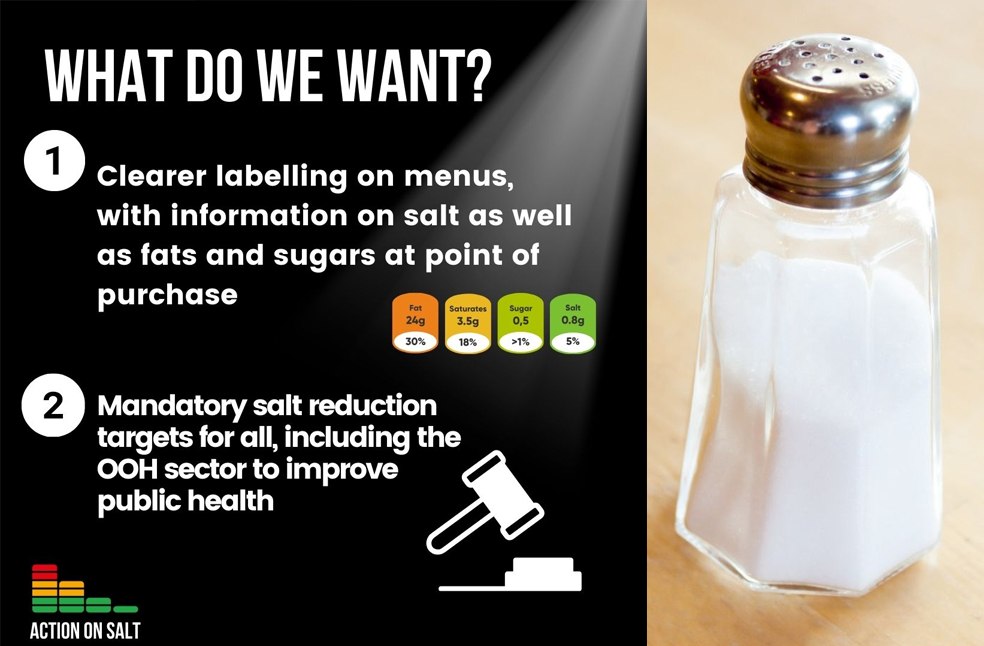
Sonia Pombo, Head of Impact and Research at the campaign group Action on Salt, remarked that reducing salt is one of the simplest and most cost-effective actions governments can take to improve population health. Pombo stressed that it requires minimal behaviour change from consumers because most salt comes from processed and packaged foods rather than what is added at the table. As a result, she said, action must focus on the food industry.
The Head called for legally binding salt reduction targets across all food categories, supported by clear timelines and penalties for non-compliance. Pombo also suggested fiscal measures, including a levy on foods that exceed maximum salt thresholds. In addition, she said compulsory front-of-pack labelling would help consumers clearly identify products high in salt.
Responding to the findings, the Department of Health stated that it was taking action to address health problems linked to poor diet as part of its 10-year health plan, which aims to shift care from treatment to prevention.
A spokesperson highlighted that the government is restricting junk food advertising on television and online, limiting volume price promotions on less healthy foods, including those high in salt, and introducing mandatory reporting on healthier food sales.
ALSO READ | Does cold weather really cause colds? Not quite
