


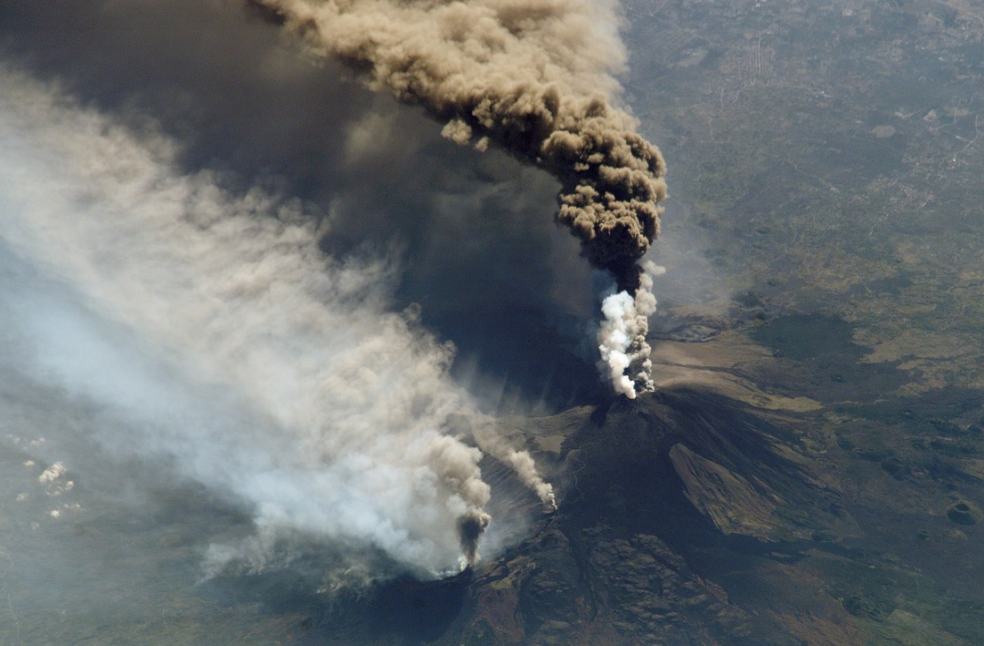
New Delhi: A powerful volcano eruption from Ethiopia’s Hayli Gubbi volcano has released a large ash plume that has travelled across the Red Sea, passing over Oman and Yemen before reaching Delhi.
The volcano, which has been dormant for several thousand years, began erupting on November 24, sending ash thousands of feet into the atmosphere. Flight operations in India have been disrupted as ash drifted into northern airspace.
Several international and domestic services have been cancelled, delayed or rerouted, with India’s aviation regulator directing airlines to strictly avoid affected zones. The regulator has warned operators to remain alert and report any suspected ash encounters, including engine performance changes or cabin odour.
Experts have said the level of contamination remains unclear due to limited preparation time. Despite the impact on aviation, the plume is unlikely to worsen Delhi’s air quality, which has remained in the ‘very poor’ category according to official measurements. Meteorological officials have stated that the ash has reached altitudes between 8.5 kilometres and 15 kilometres above sea level and may temporarily affect satellite functions along with aircraft operations.

India Meteorological Department director general Mrutyunjay Mohapatra told that the plume has moved into northern India and appears to be drifting towards China. Private forecaster Skymet Weather has said that dispersion timelines are difficult to predict, though the IMD expects Delhi’s skies to clear by Tuesday evening.
Major airlines have faced operational challenges. Air India has cancelled 11 flights, while IndiGo, Akasa Air and KLM services have also been affected. IndiGo has said that coordination with international aviation bodies is underway to monitor the evolving situation. Mumbai Airport has urged travellers to verify flight status before heading to the terminal.
The Directorate General of Civil Aviation has instructed carriers to inspect any aircraft operating near the affected zones and suspend or delay operations if conditions deteriorate. Guidance exists for low, medium and high volcanic ash contamination, but meteorologists have said that no definitive measurement has been made for this event due to the unexpected nature of the eruption.
Volcanic ash clouds are relatively rare in this region. However, aviation authorities recall the severe global disruption during the 2010 eruption of Iceland’s Eyjafjallajökull volcano, which led to widespread European airspace closures and the worst aviation shutdown since World War Two. While the current situation is less severe, officials remain cautious as assessment efforts continue.
DON’T MISS | Max Verstappen dominates Las Vegas GP to stay in title fight
