



London, UK: A growing number of children are starting reception without essential school readiness skills, according to a new survey, raising serious concerns among educators about early childhood development.
An annual survey conducted by early years charity Kindred Squared, involving 1,000 primary school staff, found that nearly 37 percent of children are beginning reception without adequate school readiness, up from 33 percent in 2024.
The findings highlight increasing challenges in basic life skills that are critical for school readiness, such as toileting, independent eating, and handling books.
Excess screen exposure
The survey revealed that 26 percent of children were not able to use books correctly, with some attempting to swipe or tap pages like a smartphone, a behaviour educators link to excessive screen exposure affecting school readiness.
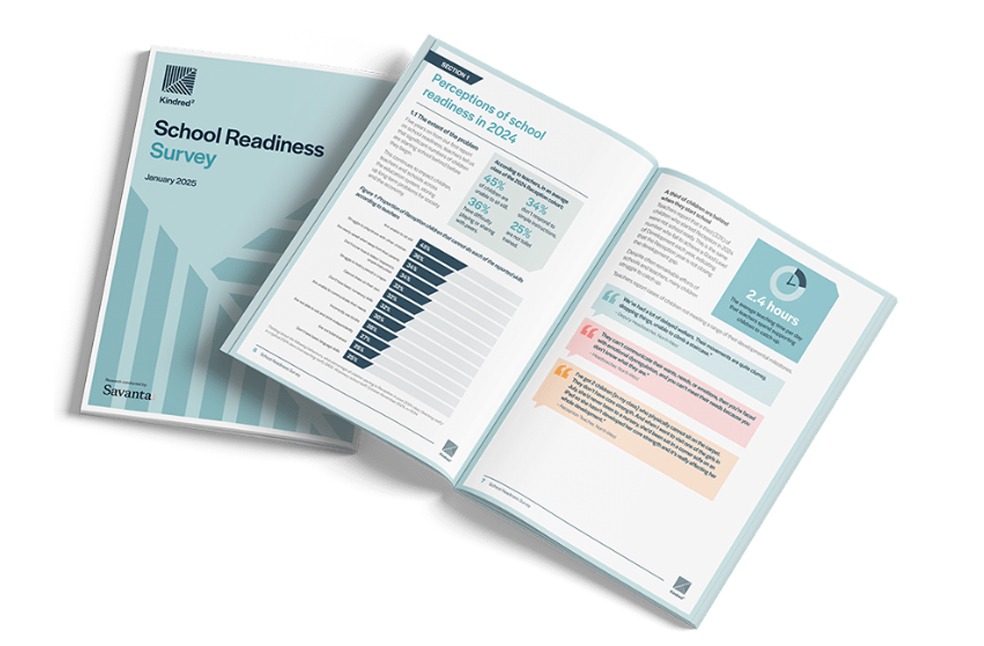
Additionally, around one in four children were not toilet trained, experiencing frequent accidents, a figure that rises sharply to 36 percent in the North East, further undermining school readiness in classrooms.
Teachers also reported that approximately 28 percent of children could not eat and drink independently, another key indicator of school readiness. More than half of school staff identified excessive screen time among children and parents as a major contributor to poor school readiness levels.
Regional disparities were also evident, with educators in the North East, West Midlands, and North West reporting the most significant declines in school readiness.
Lacking basic life skills
On average, staff said that they spend 1.4 hours per day changing nappies or assisting children who are not toilet trained, while an estimated 2.4 hours of teaching time is lost daily due to children lacking basic school readiness skills.
Commenting on the findings, Felicity Gillespie, Chief Executive of Kindred Squared, described the issue as ‘a systemic crisis,’ stating that declining school readiness is being driven by stretched school resources, rising living costs, low expectations, and parents not receiving timely guidance to support early development.
The findings come as the government intensifies efforts to improve school readiness, with a target of 75 percent of children being school-ready by 2028. Developmental milestones linked to school readiness include basic language skills, independent toileting, dressing, and eating.
According to the latest Department for Education data, 68.3 percent of children achieved a good level of development by the end of reception in 2024/25, a slight improvement year-on-year. However, this figure still falls short of national school readiness ambitions.
In contrast, a separate survey of 1,000 parents of four- and five-year-olds found a significant perception gap around school readiness.

While 88 percent of parents believed their child was school-ready, 35 percent felt their child was more prepared than most peers, highlighting a disconnect between parental confidence and classroom realities of school readiness.
Parenting Support Programmes
Almost all parents surveyed (94 percent) said they would welcome clear national guidance on how to improve school readiness, underscoring the need for consistent information and support.
In response, the government has invested £12 million across 65 local areas to establish Best Start family hubs, aimed at strengthening school readiness through parenting support, early years education, and youth services.
Meanwhile, Paul Whiteman, General Secretary of the school leaders’ union NAHT, emphasised that improving school readiness requires stronger early intervention. Whiteman noted that parents often struggle to know where to focus their efforts and stressed that earlier identification and support for children with SEND would significantly improve school readiness outcomes nationwide.
MOST READ | Cheating in Britain’s driving tests surges; DVSA warns
