


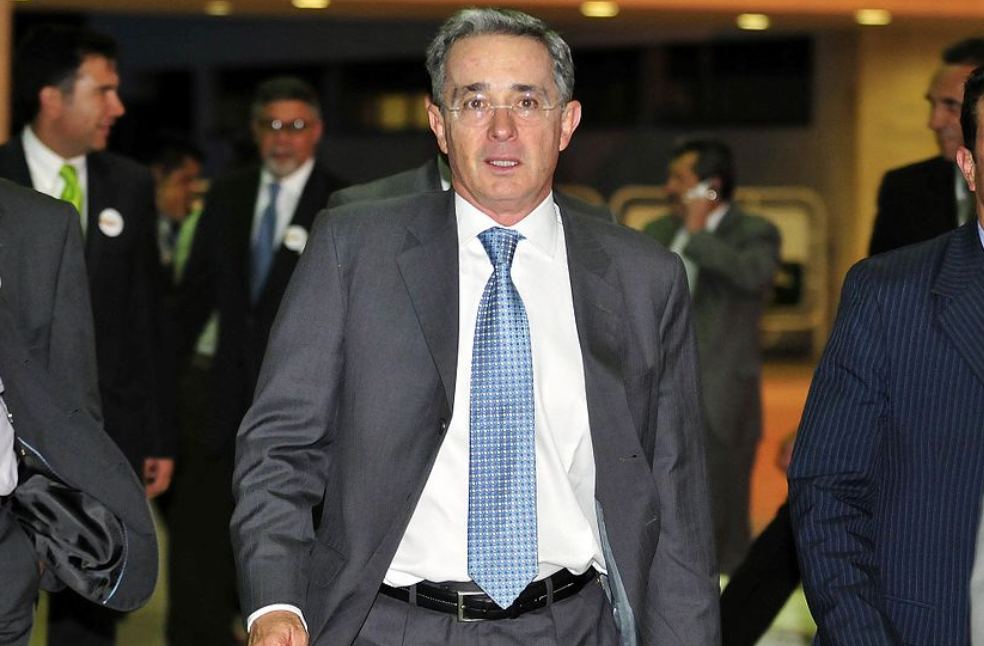
Colombia: Colombia’s former President Álvaro Uribe has become the first ex-head of state in the country to be convicted of criminal charges.
Uribe has been sentenced to 12 years of house arrest after being found guilty of witness tampering and fraud. In addition to the sentence, the 73-year-old has been barred from holding public office and ordered to pay a fine of $578,000 (£435,000).
Uribe, who served as president from 2002 to 2010, remains a polarising figure in Colombian politics. Uribe has maintained his innocence and said that he will appeal the conviction, claiming the charges were politically motivated.
The conviction stems from a lengthy legal battle that began more than a decade ago. It centers around allegations that Uribe’s legal team, particularly his former lawyer Diego Cadena, attempted to bribe and manipulate witnesses to defend Uribe against earlier accusations of ties to paramilitary groups.

Cadena has denied all wrongdoing and is himself facing legal proceedings. Multiple other former paramilitaries also testified on Uribe’s behalf, although the court ultimately found evidence of witness tampering compelling enough to convict.
Uribe, a key figure in Colombia’s modern political history, was widely praised during his presidency for his tough stance on left-wing guerrilla groups like the Farc. However, Uribe’s legacy remains controversial, as critics argue he did not do enough to address widespread inequality and social injustices in Colombia.
The ruling has sparked both domestic and international responses. US Senator Marco Rubio criticised the verdict and questioned the impartiality of Colombia’s judiciary, describing it as weaponised against political figures like Uribe. Rubio also praised Uribe as a staunch defender of Colombian national interests.
The roots of the case are deeply intertwined with Colombia’s violent past. Paramilitary groups, which gained strength during the era of Álvaro Uribe’s political rise in the 1980s and early 2000s, were formed to counteract Marxist guerrilla movements but were themselves often implicated in human rights abuses and linked to the drug trade.
YOU MAY LIKE | Apple revenue forecast beats estimates despite $1.1bn tariff hit
