


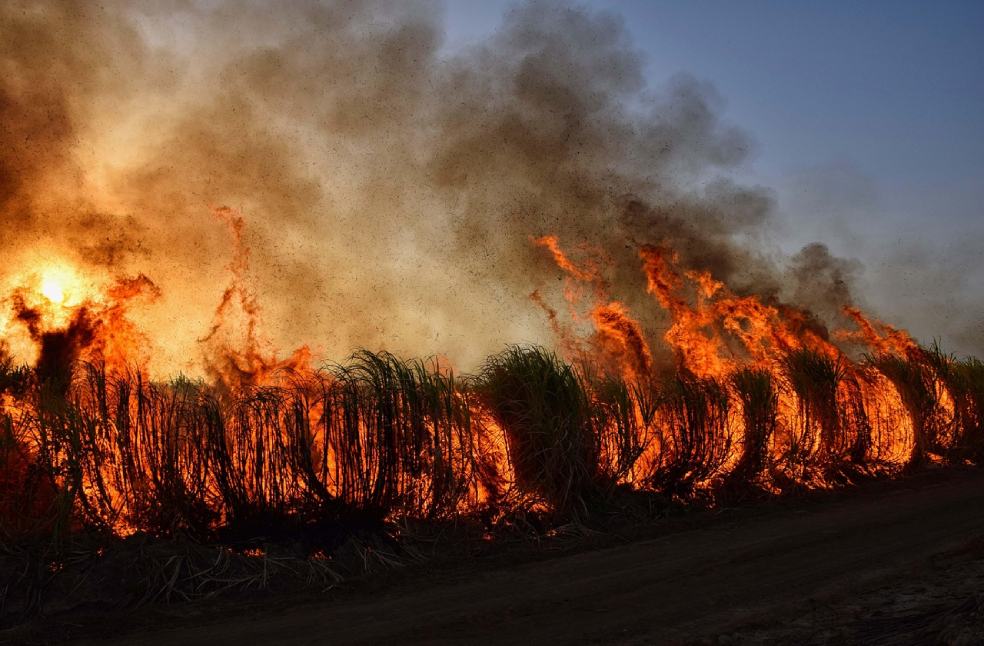
London: Climate-related disasters have dominated 2025, with cyclones, floods and wildfires inflicting some of the highest losses ever recorded, according to an annual report by Christian Aid.
The charity has estimated that the 10 costliest climate-related disasters of the year alone resulted in more than $120 billion (£95 billion) in insured losses, while the true cost in lives, displacement and destroyed livelihoods has remained far higher.
South-east Asia has been among the worst affected regions. Cyclones and floods during the autumn months have killed more than 1,750 people and caused damages exceeding $25 billion (£19 billion). In China, widespread flooding has displaced thousands and resulted in losses of around $12 billion (£9 billion), with at least 30 people confirmed dead.
Wildfires in California have also featured prominently among climate-related disasters in 2025. Fires across the state have killed more than 400 people and caused an estimated $60 billion (£47 billion) in damage, making them the single most expensive disaster of the year. The Philippines has faced repeated typhoons that have displaced more than 1.4 million people and led to losses of approximately $5 billion (£4 billion).

Africa and south Asia have continued to bear severe human costs. Flooding in the Democratic Republic of the Congo and Nigeria has killed hundreds, while floods in India and Pakistan have resulted in more than 1,860 deaths and affected millions. Pakistan alone has seen over 7 million people impacted by flooding linked to climate-related disasters.
Experts have warned against describing such events as ‘natural disasters’. Joanna Haigh, emeritus professor at Imperial College London, has said that human-driven climate change has intensified extreme weather, making destructive events more frequent and severe. According to the report, while wealthier nations tend to record higher insured losses, poorer countries suffer deeper long-term damage due to limited resources for recovery.
The findings have come as global leaders have discussed climate finance and adaptation at Cop30 in Belém. Although richer nations have agreed to increase funding for climate adaptation to $120 billion (£95 billion) by 2035, Christian Aid has warned that this will fall far short of what is required.
Patrick Watt, chief executive of Christian Aid, has said that climate-related disasters will continue to escalate until greenhouse gas emissions are sharply reduced and fossil fuels are phased out. Without urgent action, the economic and human toll of extreme weather is expected to rise further in the coming years.
POPULAR | India’s solar boom raises concerns over growing waste challenge
