


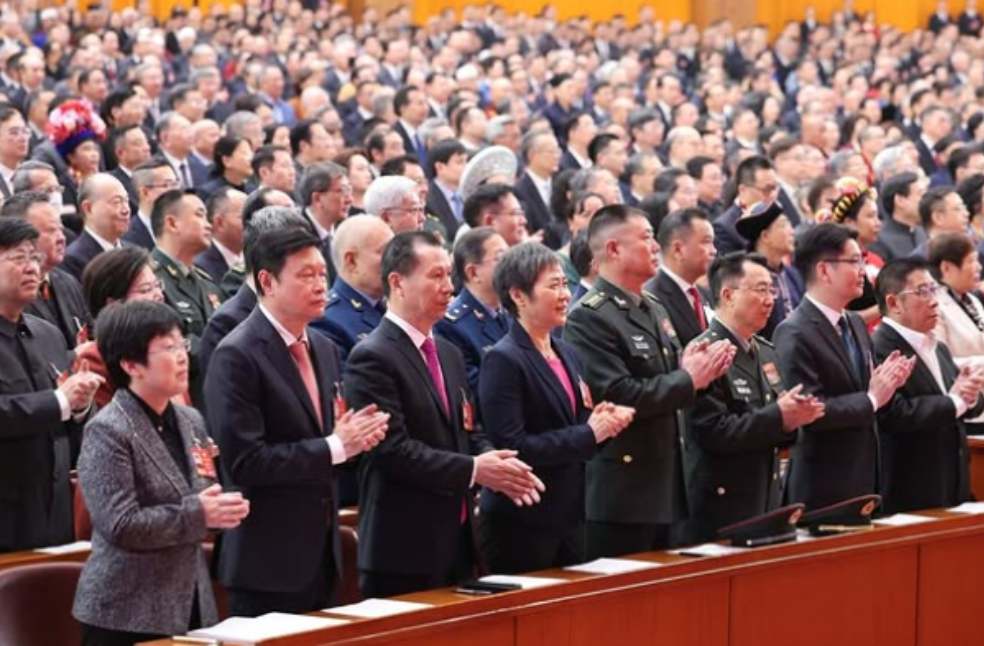
Beijing: China is set to roll out its 15th Five-Year Plan for 2026–2030 during the annual meeting of the National People’s Congress (NPC), outlining its economic, industrial and social priorities for the next five years.
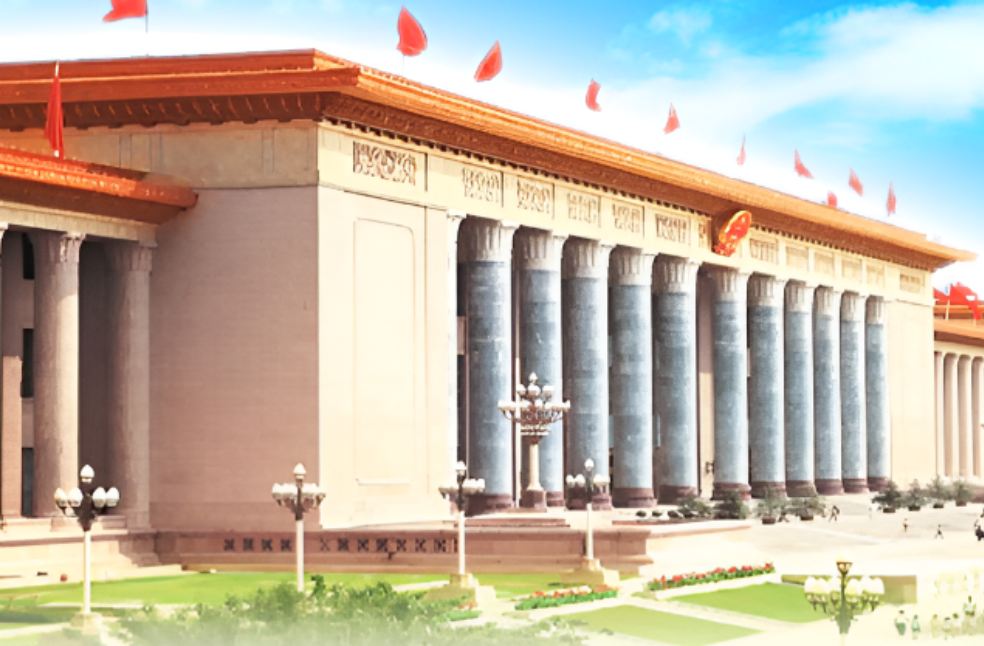
The week-long session at the Great Hall of the People in Beijing, brings together nearly 3,000 delegates from across the country. The plan will be unveiled as part of one of China’s most significant political gatherings of the year.
The NPC runs alongside the Chinese People’s Political Consultative Conference (CPPCC), with the two events collectively known as the ‘Two Sessions’. While the CPPCC serves in an advisory capacity, the NPC is regarded as China’s supreme organ of state power and the highest legislative body. Though formally separate from the Chinese Communist Party (CCP), the congress operates in line with the party’s policy direction.
According to Changhao Wei, founder of NPC Observer, this year’s meeting is expected to further formalise the CCP’s role in drafting national development strategies through a forthcoming ‘Law on National Development Plan’.
Growth target and economic strategy
Chinese Premier Li Qiang is scheduled to present the Government Work Report, reviewing economic performance over the past year and setting growth targets for 2026.
China is widely expected to announce a gross domestic product (GDP) growth target between 4.5 percent and 5 percent. Policymakers are also likely to signal adjustments to interest rates and fiscal measures in response to inflation, unemployment and deficit pressures.
Unlike the Soviet-style planning model of the past, China’s five-year plans now serve as midterm strategic blueprints guiding reforms, industrial policy, fiscal spending, energy goals and technological development.
Analysts say this year’s plan comes at a critical juncture. Beijing must address the lingering effects of the COVID-19 pandemic, declining consumer confidence and external pressures, including trade tensions with the United States that intensified under President Donald Trump.
Industrial self-reliance is expected to feature prominently, as China seeks to compete with the US in advanced technologies. Experts anticipate new initiatives focused on next-generation artificial intelligence, semiconductor manufacturing, industrial upgrades and renewable energy expansion.
Observers will also watch for policies addressing ‘involution’, a term used to describe excessive and counterproductive competition among Chinese firms.
The phenomenon has seen companies engage in aggressive price wars, often sacrificing quality and profit margins to capture market share. Analysts warn that such practices risk undermining the long-term competitiveness of entire industries.
Another concept likely to gain attention is China’s ‘low-altitude economy‘ a strategy aimed at expanding the use of drones and other low-flying vehicles to strengthen logistics and delivery networks.
Shift toward consumer-led growth
A key challenge for Beijing will be detailing how it intends to pivot toward consumption-driven growth. For decades, China’s economy has relied heavily on manufacturing, real estate and infrastructure investment. However, weak consumer confidence and slower growth have highlighted the need to strengthen domestic demand.
Economists expect measures aimed at boosting household spending and expanding the services sector. Potential steps could include minimum wage adjustments, higher pension payments and policies to narrow the income gap between urban and rural populations.
Loyalty and political signals
This year’s delegate list has also drawn attention after at least 19 delegates had their credentials revoked ahead of the sessions, including nine senior military officials. The dismissals are part of a broader anti-corruption drive under President Xi Jinping, who removed presidential term limits in 2018. More than 100 military officers have been dismissed in recent years.
Analysts interpret the moves as efforts to consolidate leadership authority and reinforce party discipline within China’s governance system.
Social and ethnic policy in focus
Beyond economic issues, the NPC will address social and environmental legislation. One closely watched draft law is the Law on Promoting Ethnic Unity and Progress, which seeks to codify Beijing’s approach to managing China’s 56 officially recognised ethnic groups.
While more than 90 percent of the population is ethnic Han, the country is home to numerous minority communities, languages and cultures. Observers say the legislation could emphasise the promotion of a unified national identity. As China navigates economic headwinds and geopolitical competition, the 2026–2030 Five-Year Plan is expected to serve as a critical roadmap shaping the country’s development trajectory in the years ahead.
MOST READ | US Embassy in Riyadh hit by drones as Iran claims strike on base in Bahrain
