


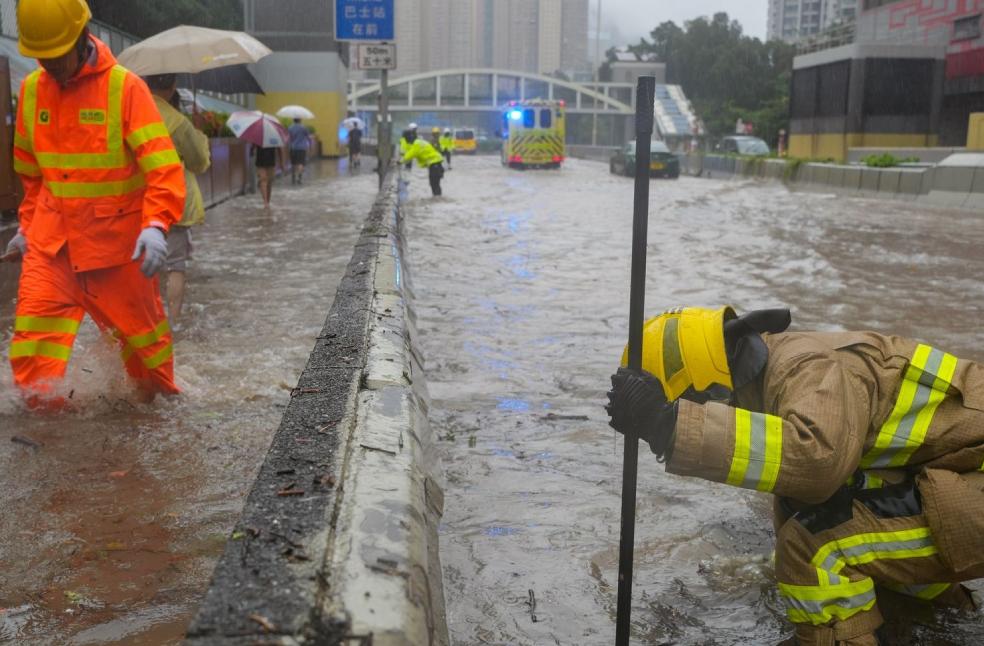
Beijing: Southern China has faced heavy rain and flood warnings as Typhoon Wipha has weakened to a tropical storm but continues to bring risks of flash floods and landslides.
Typhoon Wipha has battered Hong Kong and moved into southern China, bringing strong winds and torrential rain. The storm has hit the cities of Yangjiang, Zhanjiang and Maoming in Guangdong province, triggering warnings for flash floods and landslides. After brushing past Hong Kong, Wipha has weakened but remains a threat for coastal areas.
Hong Kong issued its highest hurricane signal for the first time since 2023 as Wipha approached, bringing winds of up to 175 kilometers per hour. Trees and scaffolding were brought down, hundreds of flights were rescheduled, and nearly 280 people took shelter.
Typhoons which required the T10 hurricane storm signal since 1946. Source: HKO. pic.twitter.com/VhZf6sd7vE
— Hong Kong Free Press HKFP (@hkfp) July 20, 2025
China’s national forecaster has said that the system will continue moving southwest into the Gulf of Tonkin and strengthen again before hitting Vietnam’s northern coast. Heavy rain is forecast for Guangdong, Guangxi, Hainan and Fujian provinces until July 22.
Wipha is the sixth typhoon of 2025 and has highlighted the risks of summer storms across the region. Authorities have urged residents to stay alert as heavy rain could bring more flooding and wind damage. Hong Kong and Macau have resumed operations, but recovery is expected to take days in some areas still clearing debris and restoring flights.
The region continues to monitor Wipha’s path as it moves closer to Vietnam’s coast. Emergency teams remain on standby to handle any severe flooding or landslides that may occur as Wipha’s remnants move on toward Vietnam.
RELATED POST | Typhoon Wipha triggers No.10 warning; Halts transport in HK
