


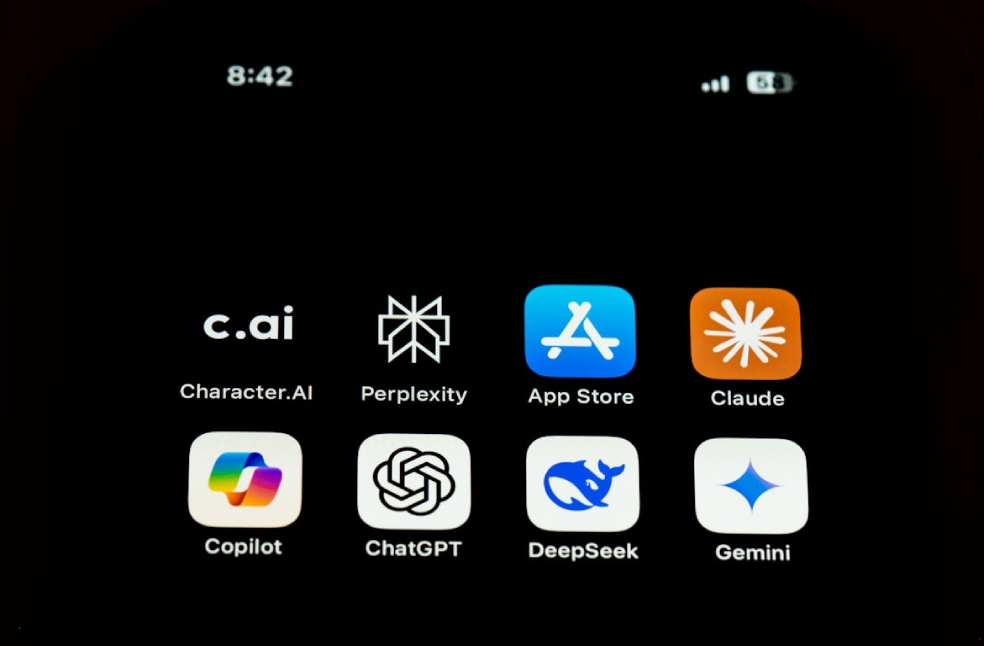
San Francisco: AI race competition is no longer defined only by massive investments from American technology firms, as Chinese artificial intelligence models have increasingly shaped how major global companies build their products.
Platforms such as Pinterest have adopted Chinese models to refine recommendation engines, improve accuracy, and reduce operational costs, demonstrating how open-source tools from China are becoming central to commercial AI strategies.
The adoption of models such as DeepSeek R-1 has marked a turning point in the AI race. These models have been released as open-source technology, allowing companies to freely download, modify, and integrate them into existing systems.
This flexibility has appealed to businesses that require greater control over performance and data security, something that is not always available with proprietary AI platforms. Chinese competitors including Alibaba’s Qwen, Moonshot’s Kimi, and ByteDance’s emerging models have become prominent alternatives to US-developed tools.
Pinterest executives have explained that open-source AI models have delivered improved accuracy while reducing costs significantly. These efficiencies have helped transform recommendation engines into highly personalised shopping assistants, highlighting how the AI race is increasingly driven by accessibility and adaptability rather than exclusivity.

The influence of Chinese models extends beyond Pinterest. Airbnb has also relied heavily on Alibaba’s Qwen model for its customer service AI agent, describing it as fast, effective, and economical. According to industry observers, these characteristics explain why Fortune 500 companies and emerging startups alike are integrating Chinese-developed technology into core operations.
On platforms such as Hugging Face, which hosts a vast library of downloadable AI models, Chinese tools have consistently ranked among the most downloaded and used. In several periods, a majority of the most popular models originated from Chinese research labs.
Analysts have noted that Chinese AI models have achieved strong performance parity with Western alternatives. A recent Stanford University report has stated that Chinese systems have caught up, and in some cases surpassed, global competitors in both capability and adoption.
Former UK deputy prime minister Sir Nick Clegg has observed that while US companies pursue highly ambitious artificial intelligence goals, China has focused on democratizing AI access. By promoting open-source development, China has encouraged widespread experimentation and adoption, accelerating progress across industries.
Meanwhile, American firms such as OpenAI have remained under strong commercial pressure to generate revenue, leading to greater focus on proprietary systems and paid services. Although some open-source releases have emerged, most investment continues to flow toward closed models that support profitability.
POPULAR | US exit from WHO; Sparks fears for global disease response
