


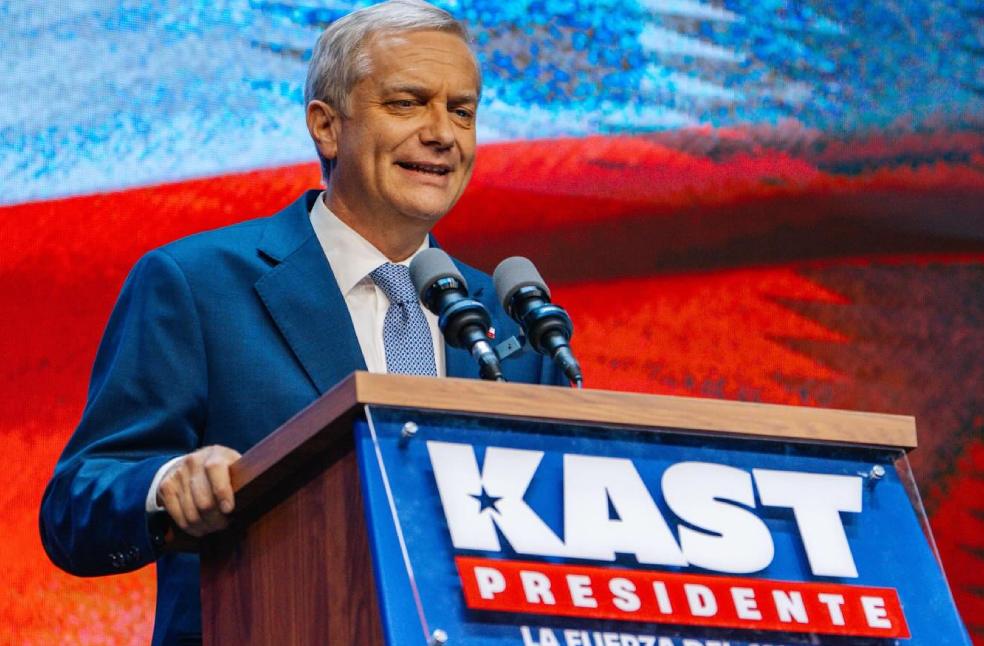
Santiago: Chile has elected far-right politician José Antonio Kast as its next president, marking the country’s sharpest shift to the right since the end of the military dictatorship in 1990.
Kast defeated left-wing coalition candidate Jeanette Jara with over 58 percent of the vote in his third presidential run, campaigning heavily on themes of security, immigration, and crime.
In his first address as president-elect, Kast pledged a hardline approach to crime. Kast stated that, “Chile will once again be free from crime, free from anguish, free from fear. Criminals, delinquents – their lives are going to change. We’re going to look for them, find them, judge them and then we’re going to lock them up.”
Kast, who has openly praised former dictator Augusto Pinochet, portrayed Chile as descending into chaos during his campaign, promising to restore order, implement sharp spending cuts, and crack down on irregular immigration. Kast also indicated plans for maximum-security prisons, mass deportations of undocumented migrants, and a border wall along Chile’s frontier with Peru and Bolivia. Kast’s admiration for US President Donald Trump suggests potential alignment with similar policies.
Supporters celebrated Kast’s victory with chants and Chilean flags. Many voters cited perceived insecurity and rising crime as key reasons for backing Kast, despite data showing falling murder rates and studies suggesting lower crime rates among migrants.
Critics warn Kast’s rhetoric exaggerates the problem. Santiago voter Javiera Carrasco said she voted for Jara, citing a ‘false sense of insecurity‘ sweeping the country. Others recalled the human rights abuses under Pinochet and fear a return to far-right authoritarianism.
Kast’s conservative stances extend to social issues as well. Kast opposes abortion, even in cases of rape, and has expressed opposition to environmental protection policies. Economically, he has promised free-market reforms, deregulation, and shrinking the state, which is expected to be welcomed by investors.

Chile’s current left-wing President Gabriel Boric, unable to run again due to term limits, leaves office with low approval ratings. Jara faced challenges being perceived as a continuity vote, and her supporters expressed concern over Kast’s hardline agenda.
This election marks the first in Chile with mandatory voting and automatic registration for all eligible voters. Analysts note Kast’s victory aligns with a broader trend of rightward political shifts in Latin America, following recent elections in Argentina, Ecuador, Costa Rica, and El Salvador.
José Antonio Kast is scheduled to be inaugurated on March 11, 2026. In the meantime, he has urged undocumented immigrants to leave Chile before his term begins.
MOST READ | JetBlue flight avoids near-midair collision with US air force tanker
