


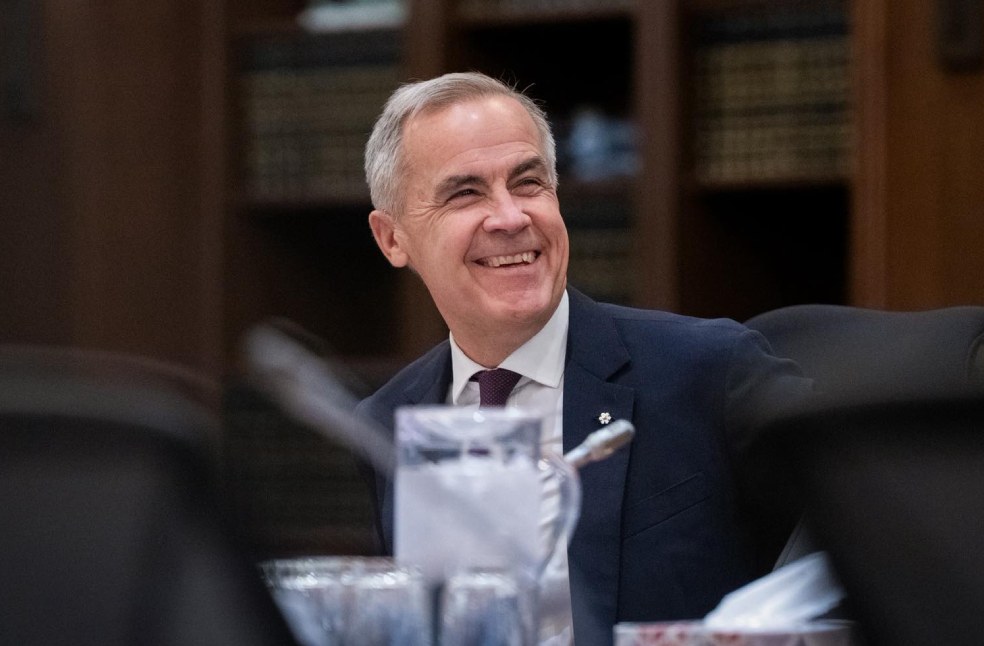
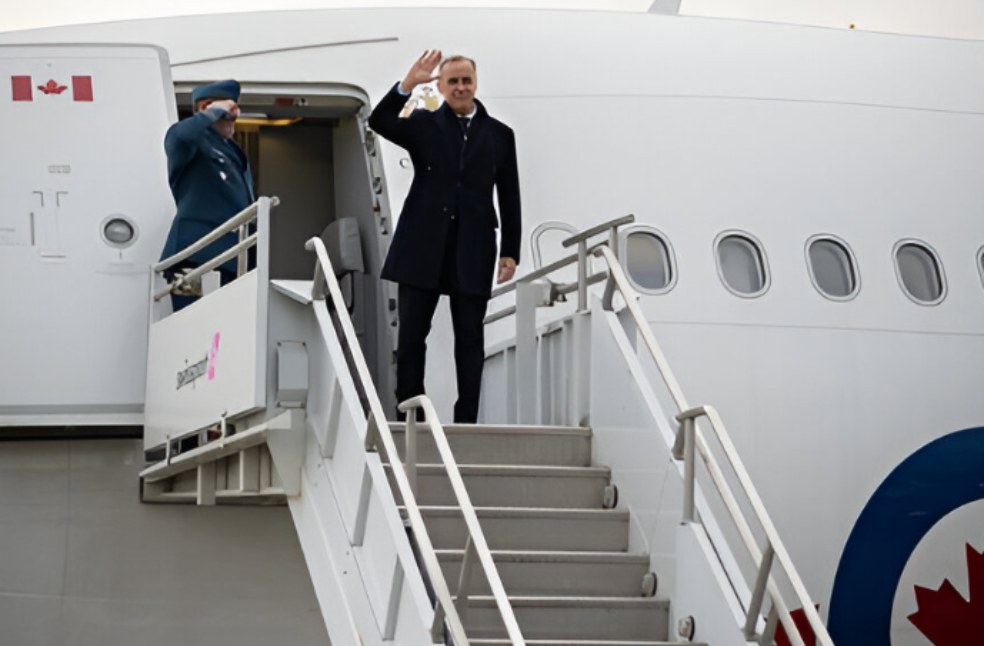
Beijing: Canadian Prime Minister Mark Carney has begun a landmark visit to China aimed at repairing strained bilateral relations and opening new economic pathways beyond Canada’s heavy reliance on the United States.
The trip, the first by a Canadian prime minister since 2017 comes at a delicate moment for Ottawa. Carney must balance the pursuit of expanded trade opportunities with Beijing while avoiding fallout with Washington and safeguarding Canada’s commitments to national security and human rights.
Senior officials have described the visit as historic and consequential, framing it as part of a broader strategy to double Canada’s non-US exports over the next decade. With uncertainty surrounding Canada’s trade future with the US, officials argue that re-engagement with China has become economically unavoidable.
Trade, agriculture and international security are central to the agenda. Carney is scheduled to meet Premier Li Qiang and Zhao Leji, chairman of China’s top legislative body, before holding a one-on-one meeting with President Xi Jinping. The two leaders last met briefly at an Asia-Pacific summit in 2025.
A fragile relationship
Canada-China relations deteriorated sharply in 2018 following the arrest of Huawei executive Meng Wanzhou in Vancouver at the request of US authorities. China responded by detaining two Canadian citizens on espionage charges. All three were released in 2021 after a diplomatic resolution, but trust between the countries has remained fragile.
Tensions have also been fueled by allegations of Chinese interference in Canadian politics, claims Beijing denies and by Ottawa’s assessment of China as a disruptive global power that often challenges international norms.
Despite these concerns, Carney’s government has made clear that economic diversification cannot be achieved without renewed engagement with the world’s second-largest economy.
Tariffs and farmers at the centre
A key objective of the visit is to seek relief from Chinese tariffs on Canadian canola, which have severely affected farmers in western Canada. Beijing imposed the duties after Canada introduced tariffs on Chinese electric vehicles, mirroring similar measures taken by the US.
Chinese state media has openly criticised Ottawa’s alignment with Washington on trade policy, urging Canada to pursue a more independent foreign policy. At the same time, China views Canada as a valuable economic partner, with bilateral trade reaching approximately $118 billion in 2024.
US reaction closely watched
Washington will carefully scrutinise any progress made in Beijing. Canada’s economy continues to suffer from US tariffs on steel, aluminium and automotive exports, while negotiations on easing those measures remain stalled.
Further complicating the landscape is the upcoming review of the North American free trade framework between Canada, the US and Mexico, scheduled to conclude later this year.
Former diplomat Colin Robertson described Carney’s approach as pragmatic, suggesting the reset could lead to a more stable relationship if both sides are transparent about their red lines.
TOP PICKS | Australia captain Alyssa Healy announces retirement from cricket
