


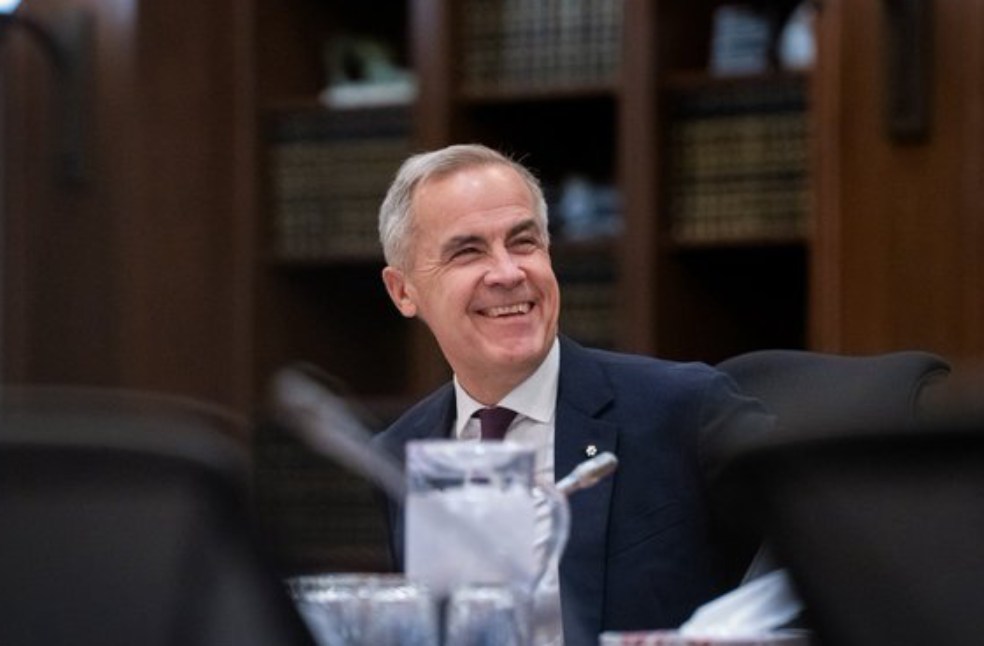
Ottawa: Canada’s parliament has narrowly approved Prime Minister Mark Carney’s first federal budget, allowing his minority Liberal government to avoid an early election after a tense and closely watched vote.
The fiscal plan, which projects a $55.3 billion (C$78-billion) deficit, passed 170–168 with help from a handful of opposition MPs and several strategic abstentions. Carney has defended the package, one of the largest in Canadian history as a ‘generational investment’ to strengthen productivity, competitiveness and long-term economic resilience.
The Liberals, two seats short of a majority, needed outside support even with full backing from their caucus. That support came after Green Party leader Elizabeth May voted in favour, saying she received assurances from Carney on meeting Canada’s climate targets. Two NDP MPs also abstained, along with House Speaker Francis Scarpaleggia, while Conservatives Shannon Stubbs and Matt Jeneroux did not vote, the latter having announced his resignation.
Aujourd’hui, les députés de tous les partis ont la possibilité d’appuyer le Budget 2025 afin que l’on puisse miser gros sur le Canada et réaliser des investissements majeurs dans les infrastructures, le logement et les grands projets que les Canadiens et les Canadiennes méritent. pic.twitter.com/ccxtMGJ49z
— Mark Carney (@MarkJCarney) November 17, 2025
The Conservative Party, led by Pierre Poilievre, and the Bloc Québécois opposed the plan, arguing it fails to address affordability pressures. Poilievre labelled it a ‘credit card budget’ that does little to ease the cost-of-living crisis. Some Liberals also expressed reservations, with MP Nathaniel Erskine-Smith warning that the plan does not go far enough on housing or climate action.
The budget outlines $99.7 billion (C$140 billion) in new spending over five years, including major investments in trade infrastructure and support for businesses hit by US tariffs. Carney’s government expects the measures to help attract $712.2 billion (C$1 trillion) in private-sector investment. To balance the plan, Ottawa proposes cutting the federal workforce by 10 percent, a move strongly criticised by public sector employees who warn of slower government operations.
The vote followed weeks of political friction, including the defection of Nova Scotia MP Chris d’Entremont from the Conservatives to the Liberals and the resignation of Conservative MP Matt Jeneroux. The developments fuelled questions around Poilievre’s leadership, which he dismissed, insisting he will continue fighting for a more affordable Canada.
The budget’s passage gives Carney a crucial, if narrow, victory and keeps his minority government in place as debates over affordability, climate commitments, and public-sector reform continue to intensify.
MOST READ | At least 32 killed after bridge collapses at cobalt mine in DRC
