


Canberra: Canada has indicated that it could potentially participate militarily in the escalating Middle East conflict, though officials stressed that no decision has been made and the scenario remains hypothetical.
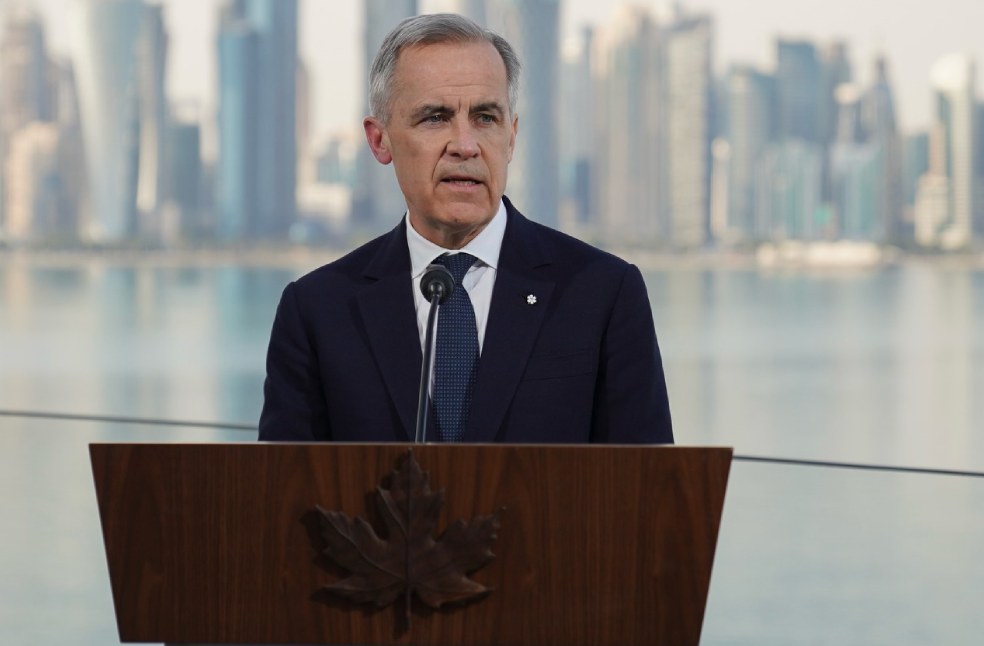
Speaking in Canberra alongside Anthony Albanese, Canadian Prime Minister Mark Carney said his government could not completely dismiss the possibility of involvement in the conflict sparked by US-Israeli strikes on Iran.
Carney remarked that, “One can never categorically rule out participation.” However, the prime minister reiterated concerns about the legality of the attacks, describing them as appearing inconsistent with international law. The Prime Minister noted that Canada was not informed in advance of the strikes conducted by the United States and Israel against Iran.
Carney stressed that the operations had taken place without consultation with allies or engagement with the United Nations. Despite supporting the strikes with some regret, Carney described the conflict as an example of a deteriorating global order and urged all parties to respect international rules and avoid targeting civilians.
J’ai atterri à Canberra pour rencontrer le premier ministre @AlboMP.
C’est la première visite d’un PM canadien en Australie depuis deux décennies. Dans un monde incertain, nous nous tournons vers nos partenaires de longue date qui partagent nos valeurs et notre ambition de… pic.twitter.com/Jr2MNtUrmT
— Mark Carney (@MarkJCarney) March 4, 2026
Meanwhile, Canada has begun efforts to evacuate citizens from the region as the crisis disrupts air travel across the Middle East. Foreign Affairs Minister Anita Anand said more than 2,000 Canadians had requested assistance to leave since the conflict erupted.
According to the minister, roughly half of those requests came from Canadians in the United Arab Emirates, while more than 230 were from Qatar, at least 160 from Lebanon, more than 90 from Israel and 74 from Iran.
Canada’s foreign ministry is planning charter flights out of the UAE in the coming days, pending approval from Emirati authorities to use national airspace.
Air travel across the region has been severely disrupted by the conflict, with major aviation hubs including Dubai International Airport – the world’s busiest airport for international passengers – largely shut down. The disruption is considered the most significant since the COVID-19 pandemic.
Several governments, including those of the United Kingdom and France, have also arranged repatriation flights as countries race to bring their citizens home. Meanwhile, the UAE has opened limited safe air corridors to facilitate departures and returns during the crisis. Under normal conditions, thousands of commercial flights depart Middle Eastern airports daily, highlighting the scale of the disruption caused by the ongoing conflict.
MOST READ | China to unveil 2026–2030 economic roadmap at 2 sessions
