


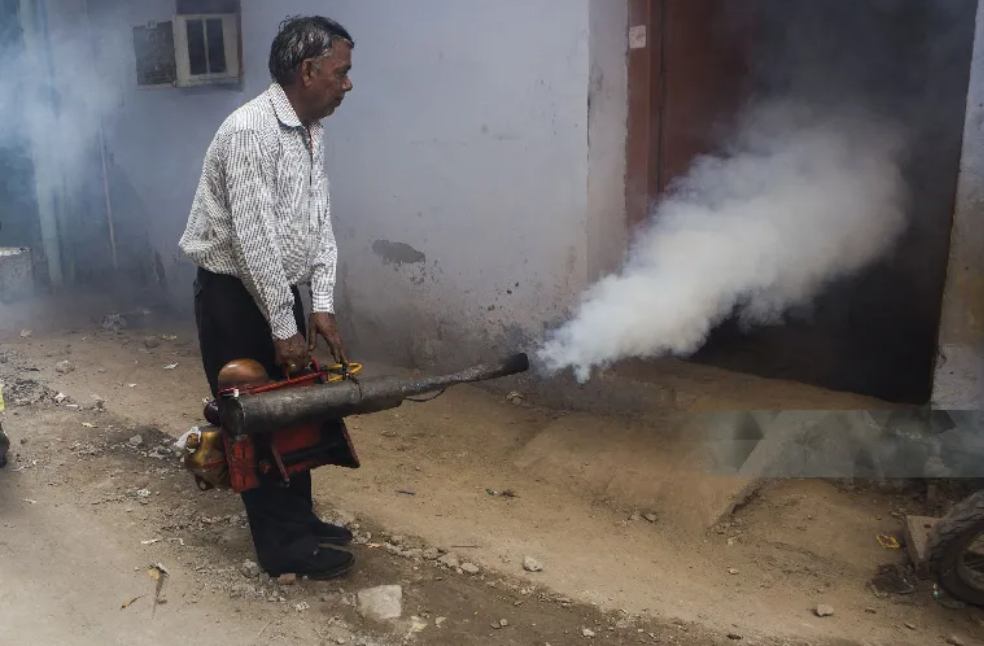
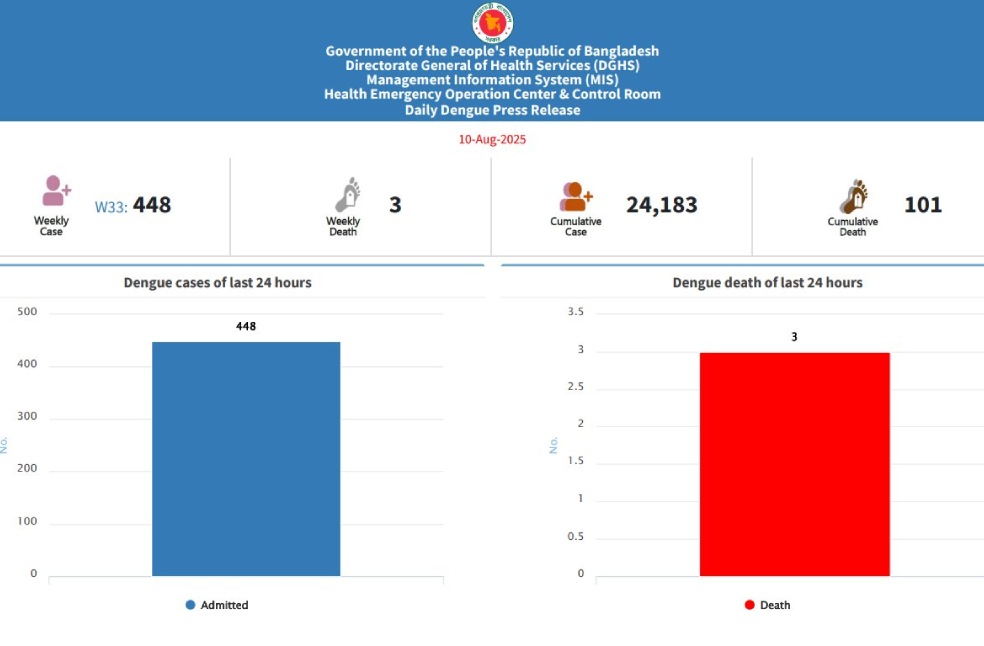
Dhaka: The Bangladesh dengue outbreak has escalated sharply this year, claiming 101 lives and infecting 24,183 people, according to official data.
Health authorities have warned that without urgent intervention, the mosquito-borne disease could worsen in August and peak in September.
Fatalities have been rising rapidly, with 19 deaths already recorded in August, following 41 in July, more than double the 19 deaths seen in June. Experts have noted that the outbreak has spread widely across the country, intensifying pressure on both urban and rural healthcare facilities.
Kabirul Bashar, an entomologist at Jahangirnagar University, has stated that the situation is critical and that the virus is now widespread. Bashar has warned that August could bring at least triple the number of cases seen in July. Officials have urged the public to take preventive measures such as using mosquito repellents, sleeping under nets, and eliminating stagnant water where mosquitoes breed.
Public health specialists have stressed the need for coordinated mosquito control operations, including spraying and community clean-up campaigns in high-risk areas. They have pointed to climate change, combined with warm and humid conditions and intermittent rainfall, as key factors creating ideal breeding grounds for Aedes mosquitoes, the dengue carriers.
Although Dhaka remains a hotspot, a growing share of infections is being reported outside the capital. This has placed a severe burden on rural hospitals, many of which have limited capacity for treating severe dengue cases.
Doctors have emphasised that early treatment is crucial, advising immediate hospital visits for symptoms such as severe abdominal pain, persistent vomiting, bleeding, or extreme fatigue.
With the peak season still ahead, authorities have reiterated the importance of community participation alongside government-led vector control to curb the spread. Failure to act decisively could make 2025 one of Bangladesh’s most severe dengue years, second only to 2023, when 1,705 deaths and over 321,000 infections were recorded.
ALSO READ | Public alarm grows over China Chikungunya virus outbreak
