


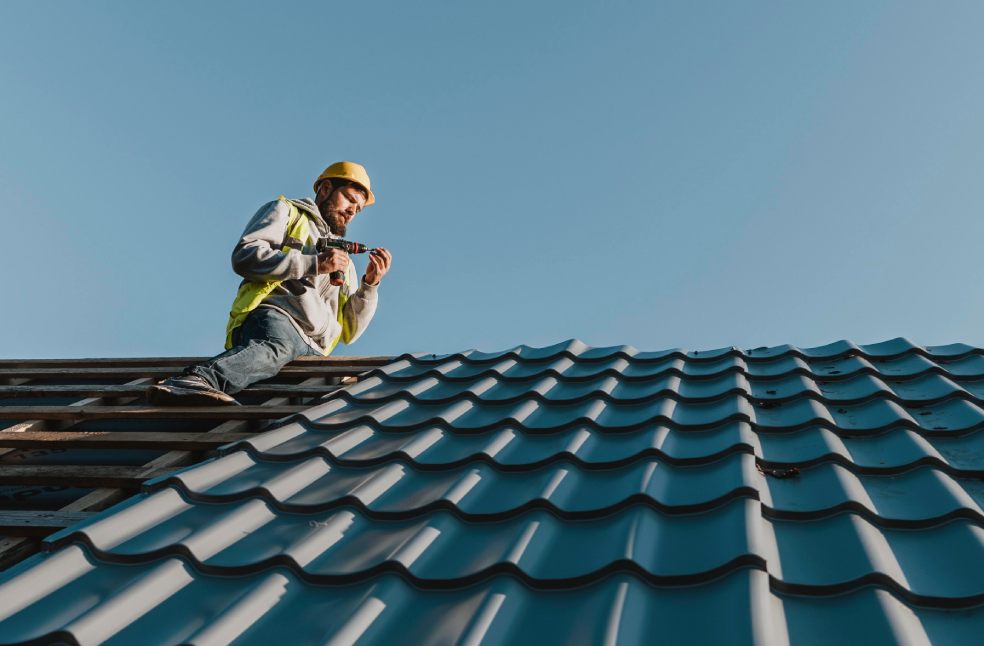
Australia: A breakthrough from Australian researchers could transform how homes handle extreme heat. Scientists at the University of Sydney have developed innovative roof coatings that can cool surfaces by up to 6°C below the surrounding air temperature while harvesting water from the atmosphere, a dual benefit that could reduce indoor heat and provide an alternative water source.
The study describes a porous, paintable film that reflects 96 percent of incoming solar radiation and emits heat efficiently into outer space, a process known as passive radiative cooling. When tested for six months on the Sydney Nanoscience Hub’s roof, the coating paired with a UV-resistant top layer also condensed atmospheric moisture, collecting as much as 390 millilitres of water per square metre per day for roughly a third of the year.
According to Professor Chiara Neto, who led the study, the paint remains cooler than the surrounding air even during the day, allowing dew to form for longer periods, extending condensation by up to 4 hours. This could provide up to 70 litres of water daily from an average-sized Australian roof on favourable days.
Neto stated that, “The cooling aspect and the water go hand in hand when we talk about impact.” Neto added that the technology could reduce the urban heat island effect, in which city surfaces absorb more heat than natural landscapes, making urban areas several degrees warmer than rural areas.
While the initial prototype used materials unsuitable for large-scale production, the team is now commercialising a water-based paint that offers similar cooling and condensation properties and costs about the same as standard premium paints.
Professor Sebastian Pfautsch from Western Sydney University, who was not involved in the study, said cool coatings have been in development for years but are now close to mainstream adoption. Sebastian Pfautsch remarked that, “The great application of these coatings is that you can retrofit existing buildings. Three or four watering cans you get for free from your roof, that’s fantastic as a principle.”
Pfautsch noted, however, that dew collection efficiency would drop during droughts due to low humidity. Still, the research marks a major step toward sustainable, climate-resilient architecture suited for Australia’s warming future.
TOP PICKS | India, US sign 10-year defence cooperation framework
