


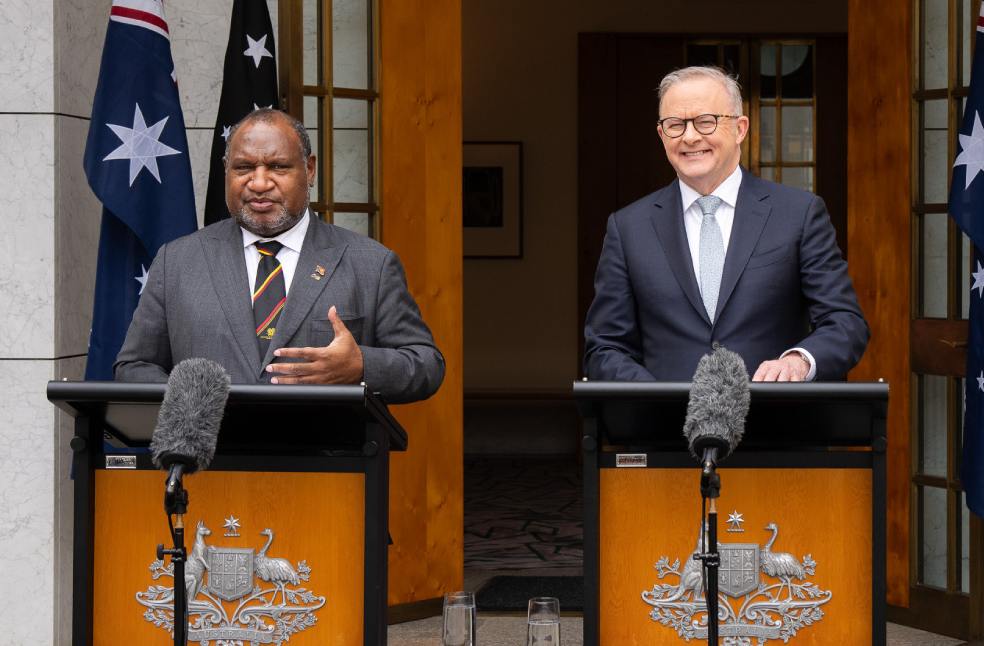
Canberra: Australia and Papua New Guinea (PNG) have signed a defence deal granting both countries access to each other’s military facilities and mutual defence support in case of an attack.
The Australia-PNG defence agreement, signed by Australian Prime Minister Anthony Albanese and PNG Prime Minister James Marape in Canberra, has been described as rooted in geography, history, and regional cooperation rather than geopolitics.
The pact, known as the Pukpuk Treaty, allows up to 10,000 Papua New Guineans to serve in Australia’s military, with the option of obtaining Australian citizenship. Marape emphasised that the agreement has been transparent to China and does not compromise other bilateral relations. Albanese noted that the deal reinforces regional stability and safeguards security interests.
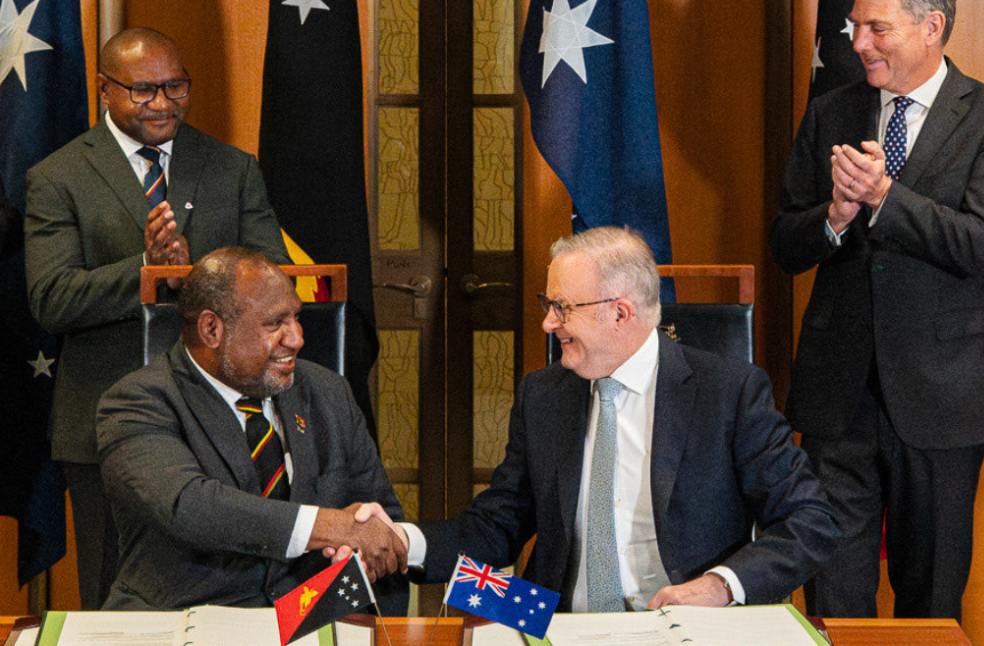
The treaty outlines joint responses to any armed attack, including greater collaboration in cyberspace and electromagnetic warfare. PNG Defence Minister Billy Joseph said that forces from both nations would be fully integrated, ensuring interoperability and readiness for external threats.
Experts say the agreement signals to the United States that Australia and PNG can manage regional stability independently. Annual joint military exercises are expected to demonstrate operational readiness and strategic capabilities. However, some PNG observers have raised concerns that the pact may challenge the country’s ‘friends to all, enemies to none’ foreign policy stance.
The Australia-PNG defence deal is also part of Canberra’s hub-and-spokes security strategy, placing Australia at the centre and Pacific nations as strategic partners. While the pact modernises PNG’s military and boosts morale, both governments must clarify expectations and commitments to maintain transparency and mutual trust.
MOST READ | Trump authorizes National Guard deployment to US border
