


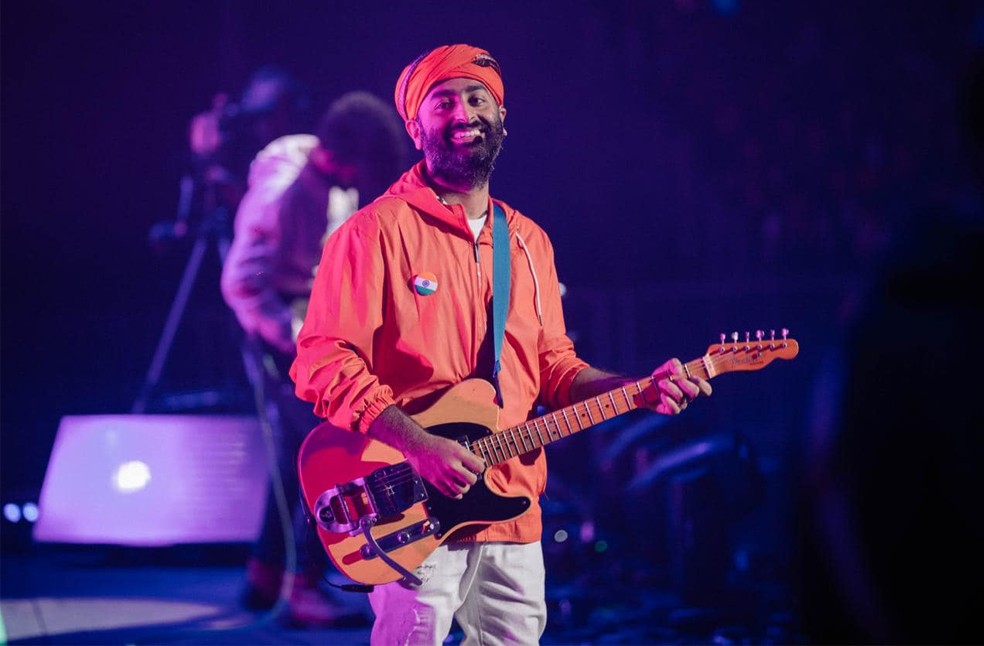
Bengaluru: Fans of celebrated Indian singer Arijit Singh have been sharing emotional tributes after he announced that he will no longer take on new playback singing assignments, signalling the close of a defining era in contemporary Bollywood music.
Many described his voice as “the sound of our heartbreaks and celebrations,” while others said it felt present “in every corner of our lives.”
Playback singing, the practice of recording songs in studios for actors to lip-sync on screen, remains a foundational element of Indian cinema. Over the years, Singh’s voice became deeply intertwined with this tradition, shaping romantic ballads and chart-topping soundtracks that defined a generation of films.
View this post on Instagram
The 38-year-old singer, who has collaborated with global pop stars including Ed Sheeran, announced the decision on Instagram, writing: “I am calling it off. It was a wonderful journey.”
While Singh did not explain the reason for stepping away, reports indicate he will complete existing commitments and continue making music independently, exploring creative projects outside mainstream commercial cinema.
The move is widely seen as an unusually bold decision for an artist still at the peak of his career. Arijit Singh recently performed to a sold-out audience at Wembley Arena in London, an achievement few Indian playback singers attain. For more than a decade, his voice, bruised, buttery, and deeply intimate, has been an inescapable presence in Bollywood, narrating stories of heartbreak, longing, and reconciliation for millions.
Despite his immense popularity, Singh has consistently distanced himself from celebrity culture. He rarely gives interviews, avoids publicity stunts, and often appears understated in public, soft-spoken and dressed casually, sometimes with his face hidden beneath a hoodie. In an early interview with Forbes India, he admitted, “I hate being a celebrity,” describing himself as someone who stumbled into fame by accident.

Early life in music
Arijit Singh was born in 1987 in Jiaganj, a small town in West Bengal, into a household where music was woven into everyday life rather than treated as an ambition.
Sing’s mother and grandmother were trained classical singers, his aunt also taught music, and his training began early. Alongside vocal lessons, he learnt the tabla and was exposed to both classical and popular music.
Singh first gained national attention in 2005 when he appeared on the reality television show Fame Gurukul (also known as Fame Academy). He did not win the competition and made little impact at the time.
However, the experience proved formative. Singh returned to Kolkata, where he worked as a music programmer and assistant, learning the technical side of studio production and spending several years on the fringes of an industry he would later dominate.

Tum Hi Ho – the breakthrough
His breakthrough arrived in 2013 with the song Tum Hi Ho from the film Aashiqui 2. Released during a period when Bollywood romantic music leaned toward spectacle and grandeur, Singh’s inward, raw delivery had the opposite effect. The song reintroduced vulnerability as a powerful emotional language in mainstream cinema.
Tum Hi Ho quickly transcended the film, becoming a national obsession. It dominated radio airwaves, weddings, and reality shows, its slow-building, aching melody articulating romantic devotion that felt both cinematic and deeply personal. For months, it was nearly impossible to move through cities and towns without hearing it.
What followed was an extraordinary rise. Singh became Bollywood’s most relatable voice, recording songs in multiple languages, including Hindi, Bengali, Tamil, and Telugu, and often singing several tracks for a single film. He collaborated extensively with leading composers such as Pritam, AR Rahman, Vishal–Shekhar, and Amit Trivedi.
Even as his success soared, Arijit Singh appeared uneasy with fame. He frequently skipped award ceremonies and avoided media attention. On stage, Singh remained informal and unpolished, chatting with audiences, taking requests, pausing mid-song to adjust arrangements, or gently scolding fans for focusing too much on recording performances instead of being present.

In his personal life, Singh has chosen simplicity. He works with a small team and remains largely based in his hometown rather than relocating to major entertainment hubs. Locals often spot him riding a scooter to buy groceries or spending time with old friends. International artists, including Dutch DJ Martin Garrix and Ed Sheeran, have reportedly visited his Jiaganj home.
In recent years, Arijit Singh has become more selective in his output, increasingly focusing on independent music. However, his dominance also drew criticism, with some listeners and critics arguing that his signature husky, introspective style led to a sense of sameness across songs and genres.
Singh himself acknowledged this discomfort in a 2017 interview, admitting he was trying to reduce his workload. “Of course, people will be exhausted if you continue to sing 100 songs a year,” he said, adding that he found it unsettling to hear his voice everywhere.
As fans now speculate about what lies ahead, some view the announcement as a natural evolution for an artist constrained by fame. In contrast, others see it as a commentary on the pressures of commercial music or a step toward deeper self-exploration. Whatever the motivation, Arijit Singh’s voice, etched into India’s cultural and emotional landscape, is set to continue defining its music for years to come.
ALSO READ | Amazon email error exposes planned layoffs ahead of time
