


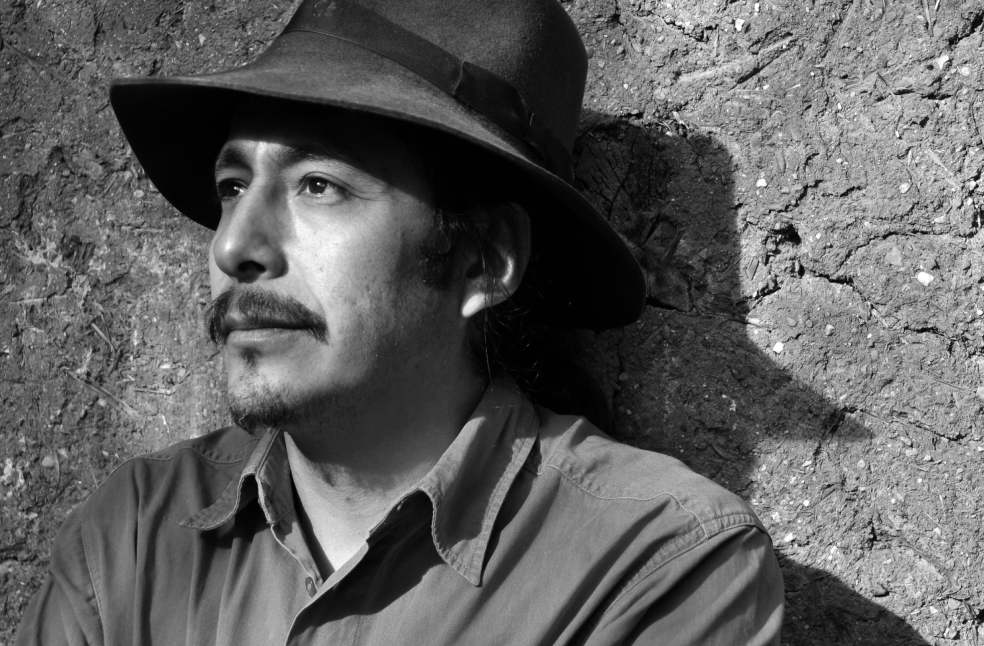
Wales: An artist and beekeeper from a remote region of the Peruvian Andes has won one of the UK’s most prestigious Artes Mundi Prize and announced plans to invest the $53,528 (£40,000) prize in creating a cultural centre in the mountains of his homeland.
Antonio Paucar was named the winner of the biennial Artes Mundi Prize, based in Wales, after presenting a body of work that blends indigenous philosophy, environmental activism and deeply personal performance. His pieces range from a large spiral made of alpaca wool to a video performance in which he writes a poem using his own blood, addressing the climate crisis affecting Andean glaciers.
Speaking in Cardiff before the award ceremony, Paucar said the recognition was not just personal but symbolic for his community. Paucar described the journey of an artist as difficult and said the prize gives him the strength to continue developing projects that reflect his culture and protect his region.
Paucar comes from Aza, a village near Huancayo in central Peru’s Junín region, where his family has long created traditional masks and figures. Before pursuing art professionally, he worked as a beekeeper in the highlands. Paucar later studied art in Berlin but continues to divide his time between artistic practice and rural life, caring for bees, keeping hens and growing vegetables.
His work often draws on Andean philosophy. One of the featured installations, a black-and-white alpaca wool spiral titled La Energía Espiral del Ayni, is inspired by the Quechua concept of ayni, which expresses reciprocity and interconnectedness between people and nature. Paucar explained that life, in this worldview, is circular rather than linear and that humans have a responsibility to give back to the natural world that sustains them.
While sourcing materials, Paucar also highlighted the environmental and cultural impact of industrial practices. Paucar noted that black alpaca wool has become increasingly rare because the textile industry prioritises white wool for dyeing, a trend he says threatens biodiversity.
Another work, El Corazón de la Montaña, features Paucar seated in the mountains, writing a poem with blood drawn from his body. The text speaks directly to climate change and pollution, referencing the rapid melting of Andean glaciers.
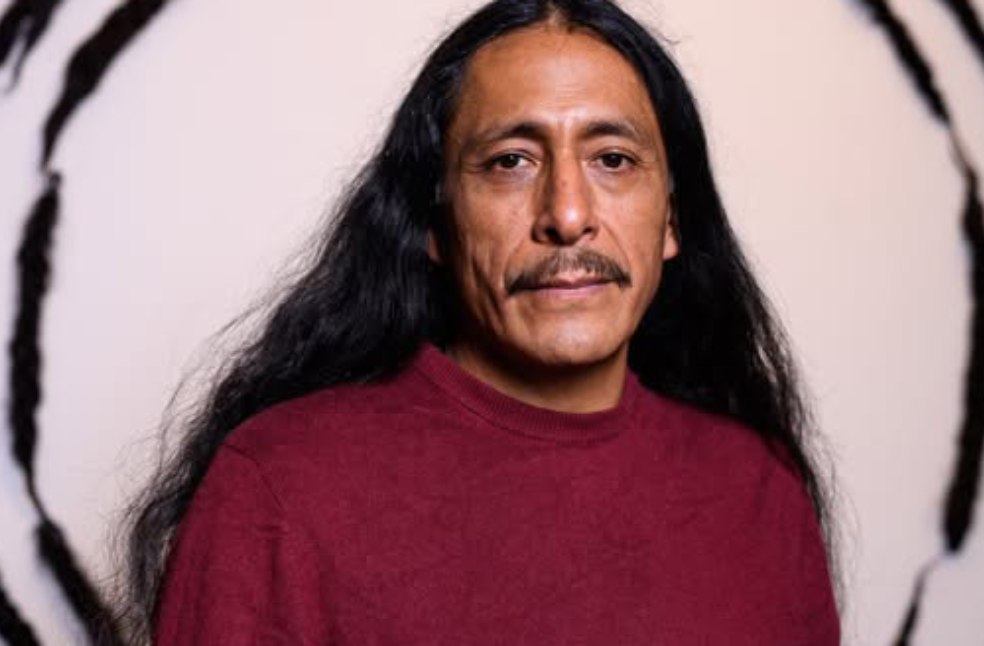
His performances have extended beyond Peru. At an exhibition in north Wales, Paucar walked barefoot across the limestone headland of the Great Orme before performing a handstand inside the gallery, leaving faint imprints of his feet on the wall as part of the artwork.
Paucar has said he feels a cultural connection between the Andes and Wales, pointing to shared traditions of respect for nature and the importance of preserving indigenous languages. Not all responses to his work have been positive. Some critics have questioned a performance in which he buried and burned a reproduction of Marcel Duchamp’s Bicycle Wheel.
Paucar has explained that the piece was not an attack on Western art but a personal reference to a wheel he played with in childhood, reinterpreted through his own cultural lens. The director of Artes Mundi, Nigel Prince, said the exhibition is expected to reach around 150,000 visitors across Wales. Nigel Prince added that the emerging dialogue between different cultures is central to the prize’s mission, emphasising the importance of shared understanding in a divided global landscape.
TRENDING | Machado presents Nobel Peace Prize medal to Trump
