


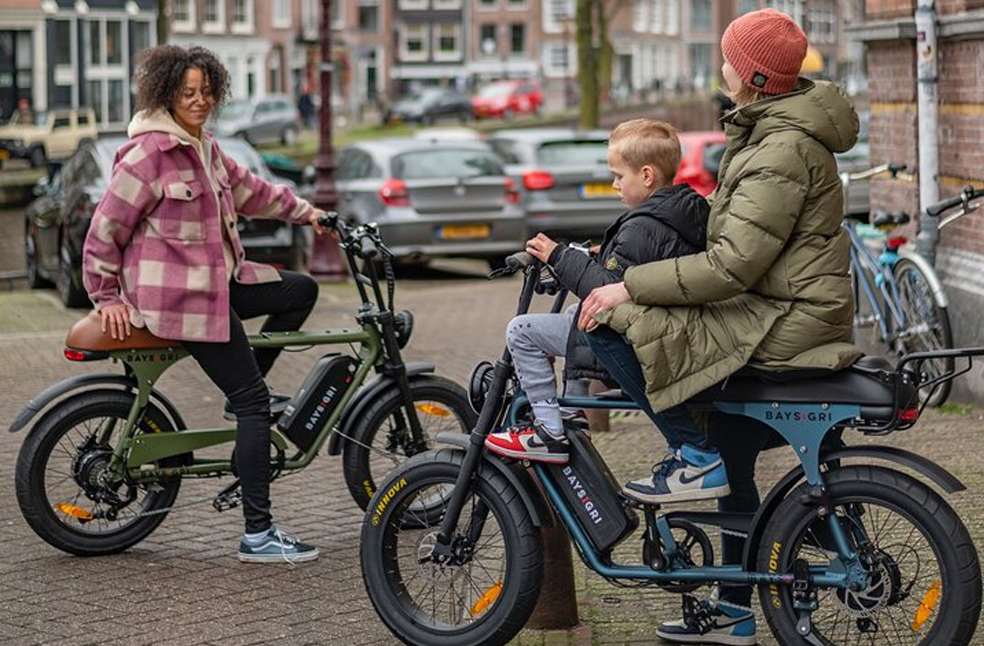
Amsterdam: Fatbikes, the wide-tyred electric bicycles, zoom through Amsterdam’s Vondelpark during busy lunchtimes, but a surge in accidents, especially involving children, has led to plans to ban them in parts of the Netherlands.
The proposed restrictions have sparked debate among riders. Henk Hendrik Wolthers, 69, speaking while riding his electric Mate fatbike, described the plan as ‘nonsense.’ Wolthers remarked that he has driven cars, ridden motorbikes and mopeds, and now uses a fatbike because it is the fastest way to get around the city, adding that people should be free to use it.
However, an increasing number of road safety experts, doctors, and politicians disagree. Although electric bikes are legally restricted to speeds of just over 15mph, many fatbike riders reportedly alter factory settings to reach speeds of up to 25mph, creating risks in crowded public spaces such as Vondelpark.
Safety organisation VeiligheidNL estimates that around 5,000 fatbike riders are treated in accident and emergency departments every year, based on data from a recent hospital sample. Spokesperson Tom de Beus said that the highest number of accidents involves young riders aged between 12 and 15.
Amsterdam’s Head of Transport, Melanie van der Horst, has said that ‘unorthodox measures’ are now required. Melanie announced plans to ban heavy electric bikes from city parks, beginning with Vondelpark, which will become a fatbike-free zone once the measures are implemented. She said she had received a steady stream of requests urging her to take action. The city of Enschede is also preparing a ban in its city centre.
Public reaction in the park has been mixed. While many riders declined to stop and comment, 31-year-old Joost questioned the effectiveness of the move, arguing that the real issue is speed control rather than the type of bicycle being used. In contrast, Muriel Winkel, 33, who was running in the park with her dog Joop, welcomed the ban. Winkel said many fatbikes are modified and ridden carelessly, often frightening pedestrians and pets.
Observers warn that similar tensions around electric bikes are likely to spread to other countries, particularly as governments increase efforts to promote active mobility. The Netherlands is an early adopter of e-bikes: in 2024, 48 percent of all bicycles sold were electric, while 13 percent were fatbikes, according to figures from RAI Vereniging and BOVAG. In Amsterdam, cycling accounts for around one-third of all journeys.
Roadside assistance organisation ANWB said the issue lies not with wide-tyred bikes themselves, but with how easily they can be modified to reach higher speeds and used like mopeds, combined with risky rider behaviour.
Florrie de Pater, Chair of the Fietsersbond Amsterdam Cycling Association, said the rise in illegal bikes and weak enforcement is discouraging older people and children from cycling. She said many people over the age of 55 or 60 are leaving their bikes at home due to safety fears, and parents are increasingly reluctant to allow their children to cycle to school.
Medical professionals have also voiced concern. Marcel Aries, a brain injury specialist at Maastricht University Medical Center, stated that authorities should consider controversial measures such as bans, alongside the planned introduction of a helmet requirement for children riding electric bikes from 2027. He described these steps as necessary public health responses to increasingly congested streets and widening speed differences between cars, cyclists, and pedestrians.
Marlies Schijven, a professor of surgery at Amsterdam University Medical Center, agreed the ban is a positive step but said it does not go far enough. Her 2024 LinkedIn post criticising dangerous riders attracted 2.9 million views. She warned that limiting fatbikes in just one park fails to address a much wider issue, adding that hospitals continue to see daily cases of serious injuries and deaths.
Even Wolthers acknowledged that allowing children to ride powerful electric bikes is problematic. Wolthers noted that young riders often ignore traffic lights, fail to signal, and cannot assess danger, noting that hospitals use a stark term to describe them: ‘potential donors.’
ALSO READ | UK Govt to launch ‘British FBI’ in biggest Police reform
