


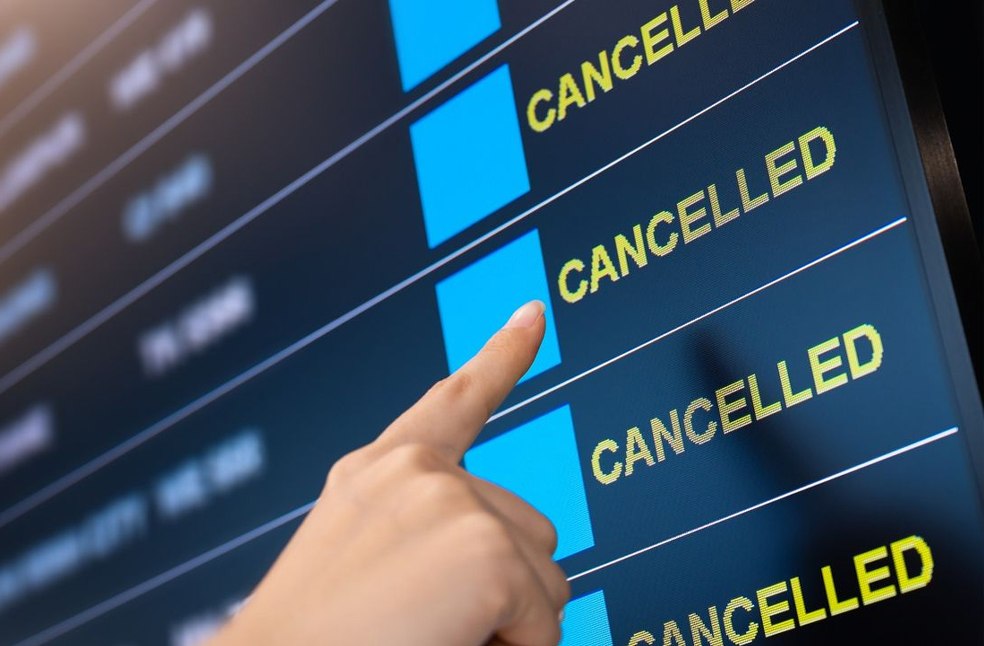
Caracas, Venezuela: Six major international airlines have suspended their flights to Venezuela after the United States issued a warning to civilian carriers about a ‘potentially hazardous situation’ caused by increased military activity around the country.
According to the reports, Spain’s Iberia, Portugal’s TAP, Chile’s LATAM, Colombia’s Avianca, Brazil’s GOL, and Trinidad and Tobago’s Caribbean Airlines halted services, as confirmed by Marisela de Loaiza, President of the Venezuelan Airlines Association.
TAP announced the cancellation of its scheduled flights for November 22 and the following Tuesday, while Iberia stated that it would suspend flights to Caracas indefinitely. TAP said that its move was directly related to the US aviation alert, which stated that safety conditions in Venezuelan airspace ‘are not guaranteed.’
Despite the suspensions, several carriers, including Panama’s Copa Airlines, Spain’s Air Europa and PlusUltra, Turkish Airlines, and Venezuela’s LASER, continue to operate flights, according to reports.
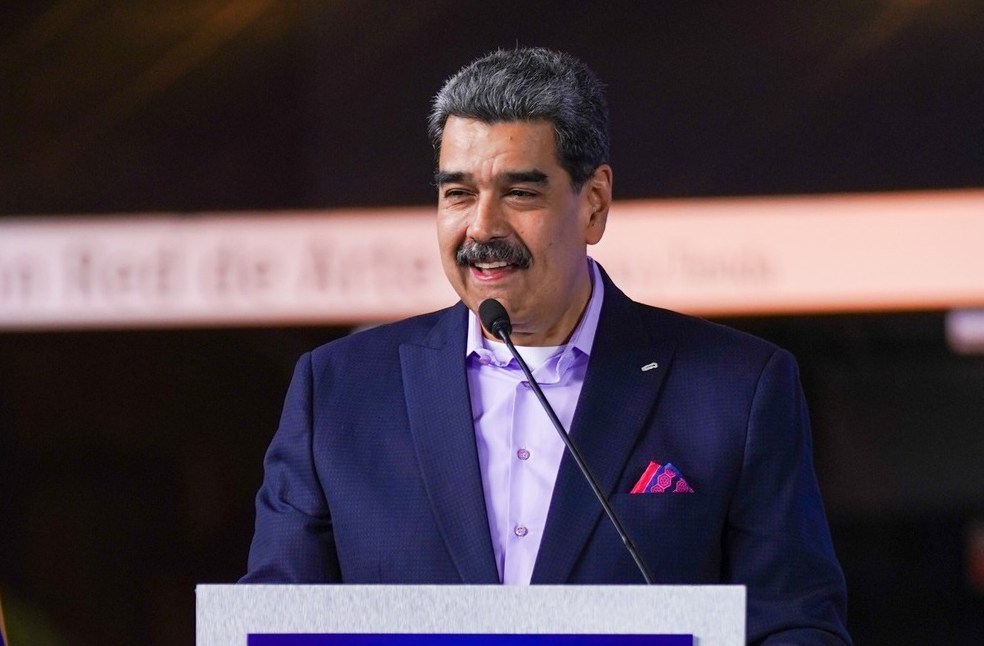
The cancellations come amid escalating tensions between Washington and Caracas. The US has deployed troops and the world’s largest aircraft carrier to the Caribbean as part of what it describes as an anti-narcotics mission. Venezuela sees the operation as an attempt to remove President Nicolas Maduro from power.
US military forces have launched at least 21 strikes on alleged drug-trafficking vessels in the Caribbean and Pacific, resulting in at least 83 deaths. The campaign intensified after the Trump administration raised its reward for information leading to Maduro’s arrest or conviction to $50 million, labeling him the ‘global terrorist leader of the Cartel de los Soles.’
President Donald Trump has offered conflicting statements on Venezuela. Earlier this month, he told CBS he did not believe the US was heading toward war with Caracas, yet suggested Maduro’s time in office was ‘numbered.’
Days later, Trump indicated he might be willing to open dialogue with Maduro, but also said he would not rule out sending US troops, adding, “We just have to take care of Venezuela.” The US Federal Aviation Administration urged all aircraft in the region to remain vigilant due to risks at ‘all altitudes,’ affecting overflights, take-offs, landings, and even aircraft stationed on the ground.
US–Venezuela relations have been fraught since Hugo Chávez came to power in the early 2000s and worsened after Maduro assumed office in 2013. Washington has questioned Maduro’s legitimacy, accusing him of authoritarianism, corruption, and election fraud, and has imposed heavy economic sanctions.
Under Trump, the US adopted an even harder line, recently designating the Venezuelan drug-trafficking network known as Cartel de los Soles as a ‘terrorist’ organisation and accusing Maduro of leading it, claims presented without evidence.
Meanwhile, Maduro has accused Washington of fabricating excuses for war. He has expressed openness to dialogue but warned that Venezuela would defend itself if attacked, saying that any aggressor ‘will face a monumental surprise.’
Opposition leader Maria Corina Machado, recently awarded the Nobel Peace Prize, reiterated that removing Maduro would not constitute regime change, asserting that he lost last year’s election and manipulated the results. Machado, 58, has advocated for privatising the oil sector and welcoming foreign investment.
ALSO READ | Digital Detox: Rediscovering life beyond the screen
