


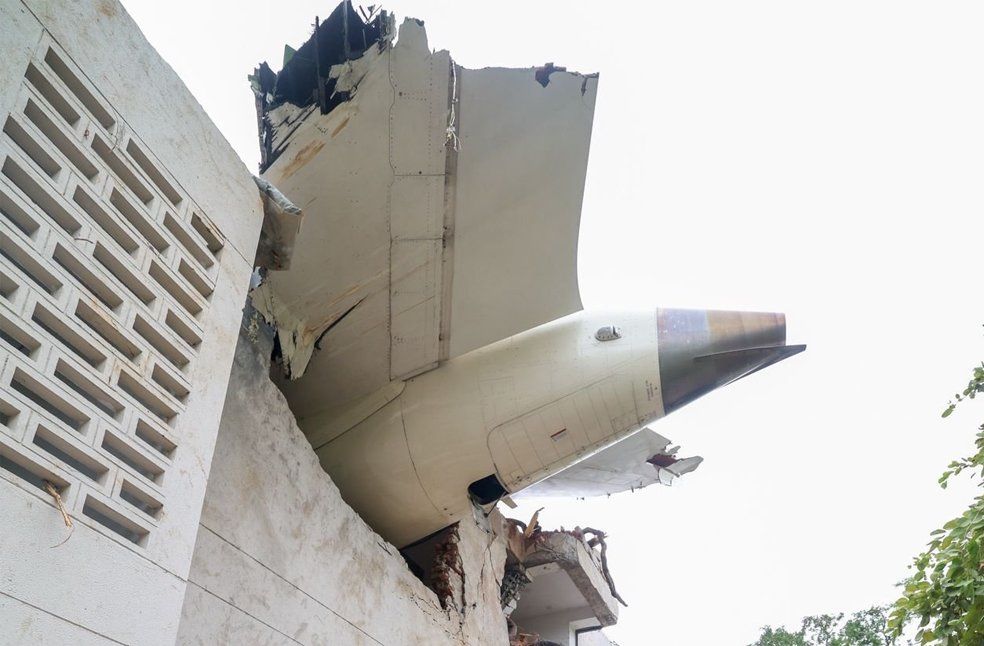
New Delhi: The Air India crash report has revealed that confusion in the cockpit contributed to last month’s crash that killed 260 people.
The Aircraft Accident Investigation Bureau’s preliminary findings show that both engine fuel cutoff switches flipped almost simultaneously shortly after takeoff, starving the engines of fuel.
The Boeing 787 Dreamliner, which departed from Ahmedabad for London, immediately began losing thrust after lift-off when the switches moved from run to cutoff. CCTV footage confirmed that the aircraft’s backup power source, the ram air turbine, deployed due to the sudden loss of engine power.
The AAIB preliminary report into crash of Air India flight AI171 found that both engine fuel control switches had been set to CUTOFF momentarily before the crash.
CVR recordings captured one pilot asking the other why he cut off fuel. The other pilot responded that he did not do… pic.twitter.com/PUVPym0hNq
— AviationSource (@AvSourceNews) July 12, 2025
According to the Air India crash report, cockpit voice recordings captured 1 pilot questioning why the fuel had been cut off, with the other replying that he did not do so. The report did not clarify which statements came from Captain Sumeet Sabharwal or First Officer Clive Kunder.
The commander, Sabharwal, had logged 15,638 flying hours and was also an instructor, while the co-pilot had accumulated 3,403 hours. Investigators have not found any direct fault with Boeing or GE, the engine manufacturer, but the placement and security of the switches are now under scrutiny.
The tragedy poses a major challenge for Tata Group, which has been working to restore Air India’s reputation and modernize its fleet since taking over the carrier in 2022.
The Air India crash report did not explain how both switches could have flipped to cutoff unintentionally during climb-out, and more detailed findings are expected as the investigation continues.
This incident marks the world’s deadliest aviation accident in a decade, underscoring the need for clearer cockpit design and pilot training on critical controls.
MOST READ | Smart glasses with autofocus lenses aim to redefine vision care
