


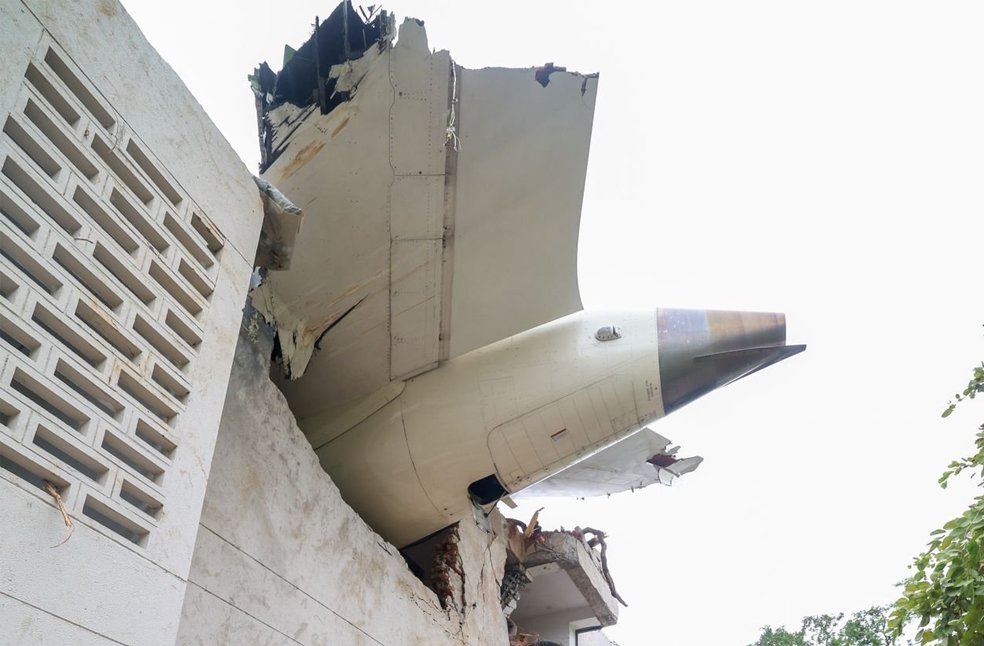
Ahmedabad: India’s Aircraft Accident Investigation Bureau (AAIB) has not yet finalized whether the flight data and cockpit voice recorders, commonly known as black boxes, from the Air India Boeing 787-8 Dreamliner crash on June 12 will be sent overseas for decoding and analysis.
The aircraft, en route to London, crashed within a minute after takeoff from Ahmedabad airport in western India, killing at least 270 people, most of whom were passengers.
Although several media outlets reported that the recorders are being sent abroad, the Ministry of Civil Aviation has clarified that no decision has been made yet. It stated that the AAIB will determine the location for data decoding only after a complete assessment of technical, safety, and security parameters.
Investigators recovered both sets of Enhanced Airborne Flight Recorders (EAFRs) from the crash site on June 13 and 16. These devices, which combine flight data and cockpit voice recordings, are crucial in reconstructing the final moments of the flight and identifying what caused the crash. The Boeing 787 model carries two such sets to ensure comprehensive analysis.
EAFRs record extensive technical parameters such as gear and flap lever positions, engine thrust levels, fuel flow, engine performance, and even fire handle activations. However, some outlets reported that the devices were severely damaged in the fire that engulfed the aircraft after impact, potentially complicating data recovery efforts within India.
There is speculation that the recorders may be sent to the United States, where advanced data recovery facilities are available. Captain Kishore Chinta, a former accident investigator with the AAIB, said that one set of recorders could also be sent to the US “to compare the data downloaded in India with that provided to the National Transportation Safety Board (NTSB).”
Captain said that, although the new AAIB lab in Delhi was inaugurated in April, “it’s unclear whether it is fully operational for EAFR data downloads.”
Meanwhile, Air India’s Chairman, N. Chandrasekaran, disclosed that one of the engines on the crashed aircraft was newly installed and the other was not due for servicing until December. The Chairman noted that both engines had ‘clean’ maintenance histories and no known performance issues.

In a related move, Air India confirmed that 26 of its 33 Boeing 787-8 and 787-9 aircraft have undergone special safety inspections ordered by India’s Directorate General of Civil Aviation (DGCA) following the crash. All 26 aircraft cleared the checks and were approved for continued service.
As a precautionary measure, Air India has announced that it will temporarily reduce operations on 16 international routes and suspend service on three overseas destinations between June 21 and July 15.
The airline attributed these schedule changes to two key factors: the decision to carry out enhanced pre-flight safety inspections across its wide-body fleet, and extended flight durations resulting from ongoing airspace restrictions in the Middle East.
These adjustments follow Air India’s earlier announcement that it will temporarily cut its wide-body flight operations by 15 percent in light of the crash and ensuing safety reviews.
RELATED POST | Ahmedabad Air India Crash: 1 Engine new and other cleared for use
