


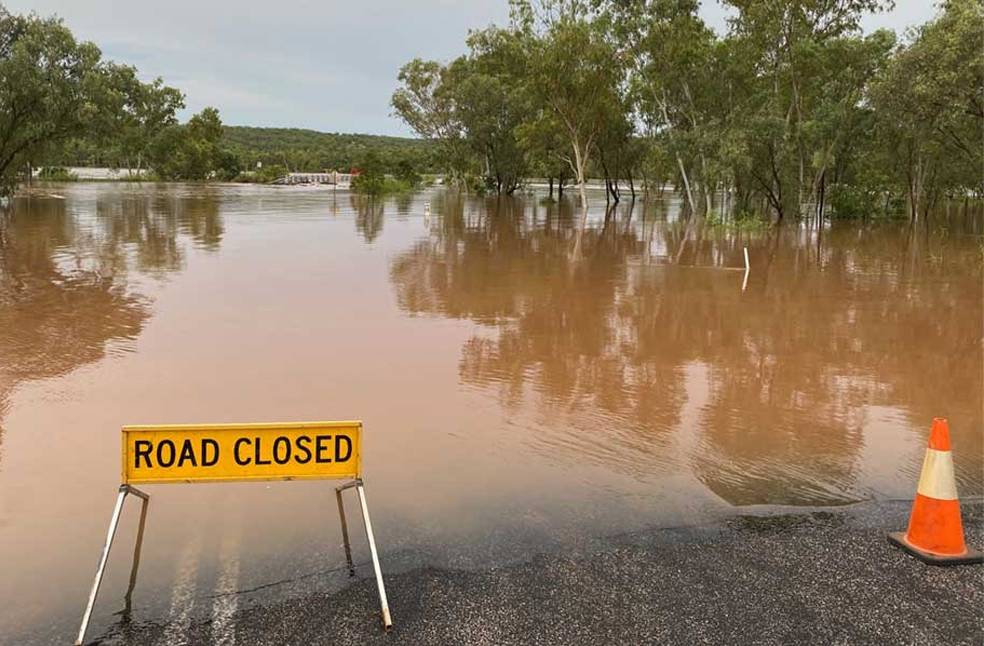
Northern Territory, Australia: Residents in Australia’s Northern Territory (NT) have been warned to stay out of floodwaters as tropical lows continue to bring heavy rainfall and major flood warnings across the Top End and parts of Queensland.
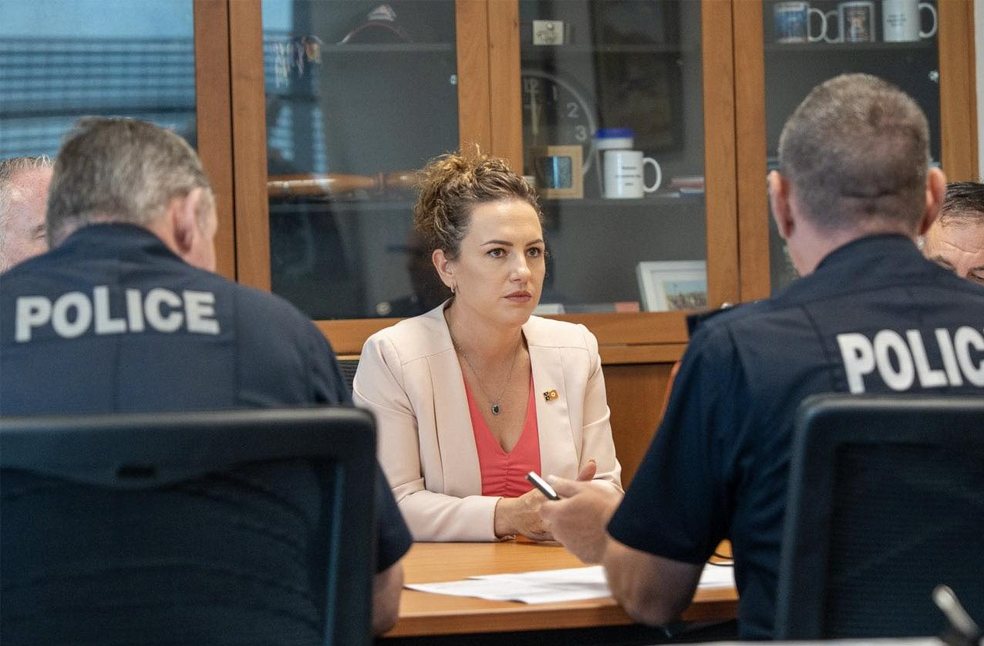
Authorities have stressed that crocodiles are present throughout the flooded areas, making the waters extremely dangerous. Hundreds of people were evacuated over the weekend, including the entire town of Nauiyu/Daly River, confirmed NT Chief Minister Lia Finocchiaro.
The Katherine River peaked at 19.2 metres at 10:45 pm on March 7, marking its highest level since the 1998 floods, which claimed three lives. The Daly River continues to rise and is expected to surpass its 1957 record of 15.3 metres over the coming week.
NT Incident Control Acting Commander Shaun Gill strongly urged residents not to enter the floodwaters, highlighting the dangers posed by fast-flowing rivers and active crocodiles. “There are crocs absolutely everywhere … please don’t go in the water. Don’t swim for two reasons: the river is fast-flowing, and crocs are most active now,” Gill said.
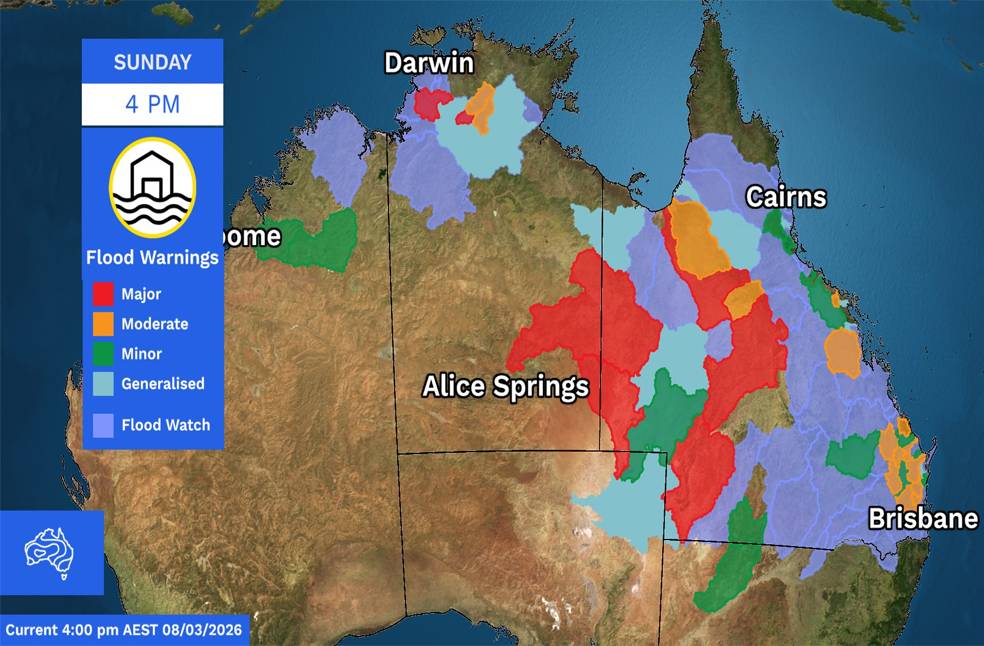
Approximately 1,000 people are currently sheltering after evacuations from Nganmarriyanga (formerly Palumpa), Nauiyu, Katherine, and Jilkminggan. Six aircraft and 18 helicopters were deployed for rescues over the weekend. On Sunday, 80 residents who could not leave on Saturday due to weather conditions were taken to higher ground by boat overnight and then airlifted to safety.
The federal and territory governments have activated assistance payments for affected families, capped at AUD 1,537 per family, alongside a re-establishment assistance fund of up to AUD 8,847 for eligible households in the Katherine local government area.
The Bureau of Meteorology’s (BoM) Jude Scott warned that the Daly River could remain at major flood levels for at least this week and into next, explaining that the river holds enormous volumes of water and will continue to rise gradually. BoM senior meteorologist Angus Hines noted that while water levels in Katherine had begun to drop slightly as rainfall eased, isolated heavy rainfall could push levels back up.
Queensland is also preparing for severe weather, with a tropical low expected to move southeast over March 8 into 9. Isolated six-hourly rainfall totals could reach 100mm, with accumulations up to 170mm along the Sunshine Coast.
Flood watches are in effect for most of Queensland, including major rivers such as the Georgina, Lower Flinders, and Thomson, with minor to moderate flooding expected across the southeast. Hines said that while preemptive flood warnings had already been issued, heavier rain could trigger major flooding.
Government offices, courts, and several schools in affected areas remain closed, with some schools serving as shelters. At Katherine Hospital, two patients were evacuated to Darwin, while 21 patients were treated at a temporary emergency department in the industrial area. Twenty pregnant women were airlifted to other hospitals as a precaution.
The Stuart Highway remains closed on both sides of Katherine, isolating the town and making travel hazardous. However, train services from Alice Springs to Darwin have resumed, providing critical supply routes for food and essentials.
Telecommunications issues and power outages have affected emergency services and at least 90 homes. Around 120 emergency calls were recorded, despite reports of difficulties contacting triple zero.
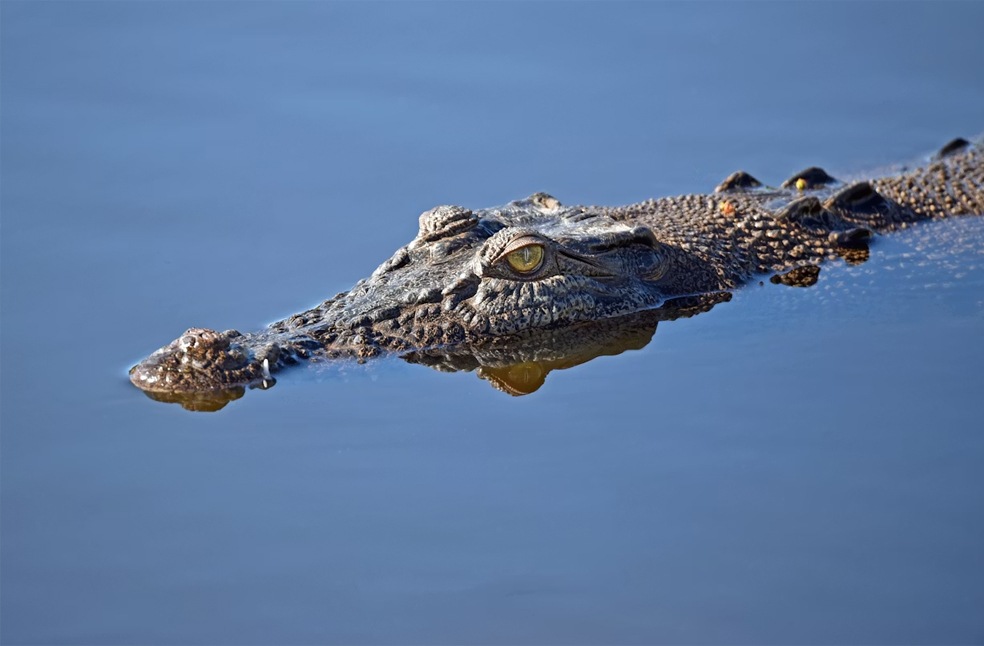
Social media posts have highlighted the unusual presence of crocodiles in flooded streets. One resident reported seeing a crocodile floating down a street, while another video showed a crocodile crossing a road in town.
In response, the NT government issued a #BeCrocwise advisory, urging residents to stay away from floodwaters, keep children and pets safe, and assume that any waterway may contain crocodiles.
Crocodiles can move into unexpected areas, including creeks, drains, flooded roads, and other waterways during floods, increasing the risk to humans.
The combined effects of heavy rainfall, major river flooding, and the presence of crocodiles have created a highly hazardous situation in the NT, prompting mass evacuations, airlifts, and emergency measures to protect residents from both natural and wildlife hazards.
MOST READ | Germany moves to allow wolf hunting to protect farmers
