


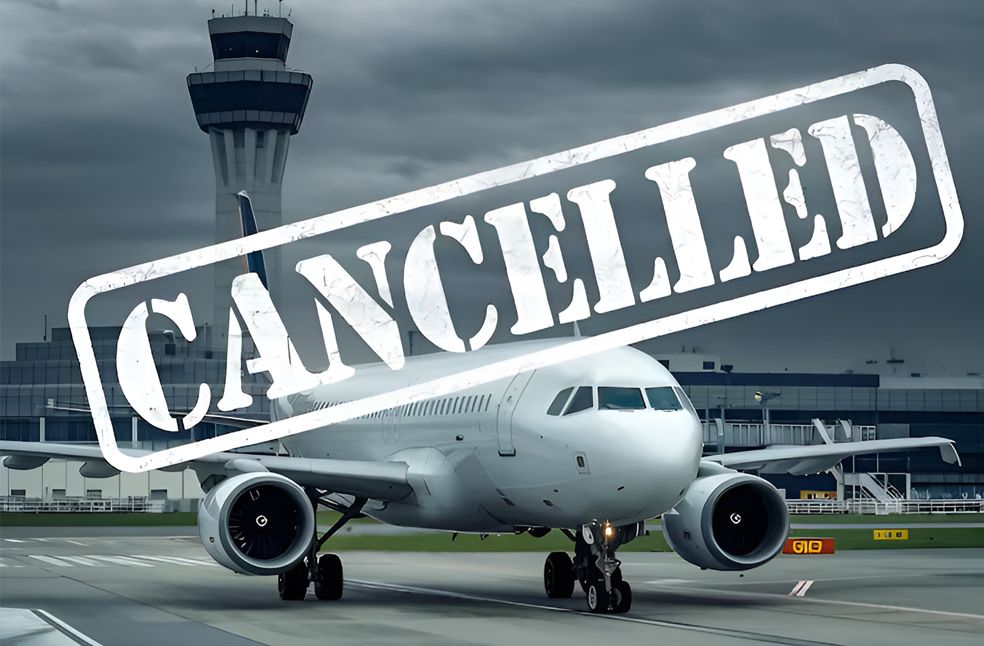
Dubai: Air travel across the Middle East and far beyond was severely disrupted after the United States and Israel launched strikes on Iran, prompting widespread airspace closures and airport shutdowns across the region.
Countries throughout the Middle East suspended civilian flights, while three of the most critical aviation hubs linking Europe, Africa, and the West to Asia — Dubai, Abu Dhabi, and Doha temporarily halted operations.
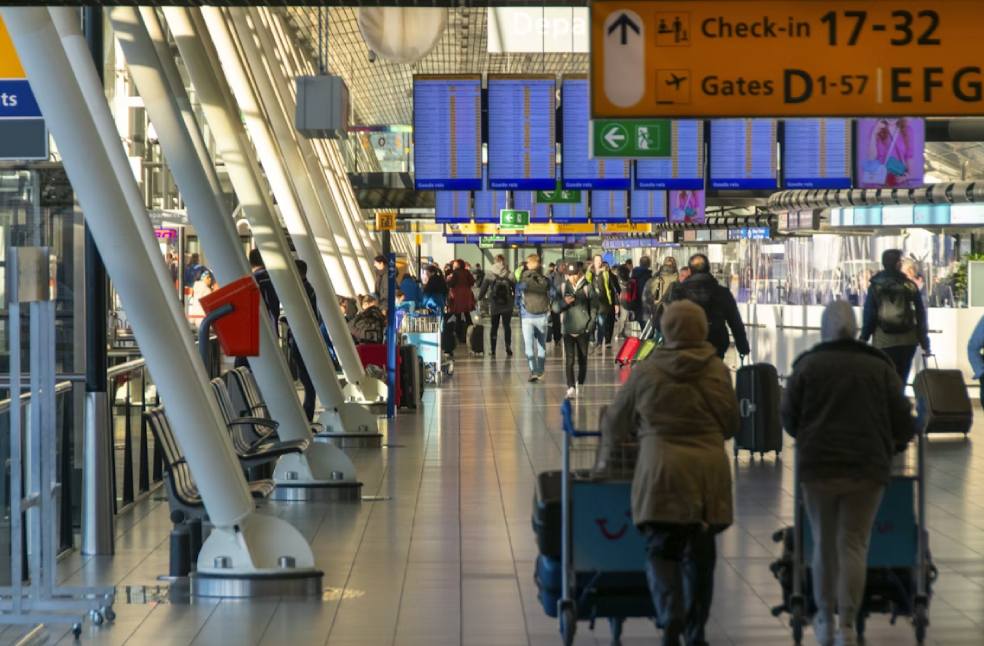
Israel, Qatar, Syria, Iran, Iraq, Kuwait, and Bahrain closed their airspace, stranding or diverting hundreds of thousands of passengers. According to flight tracking platform FlightRadar24, there was no air traffic over the United Arab Emirates after authorities announced a ‘temporary and partial closure’ of the country’s skies.
Regional Airspace Disruption – Operational Update
Regional airspace closures continue to impact Etihad’s operations, and all flights to and from Abu Dhabi are suspended until 02:00 UAE time on Monday 2 March.
Passengers due to travel are advised to:
-Check their flight status…
— Etihad Airways (@etihad) March 1, 2026
The disruption led to the shutdown of major hub airports in Dubai, Abu Dhabi, and Doha, and the cancellation of more than 1,000 flights by leading Middle Eastern carriers.
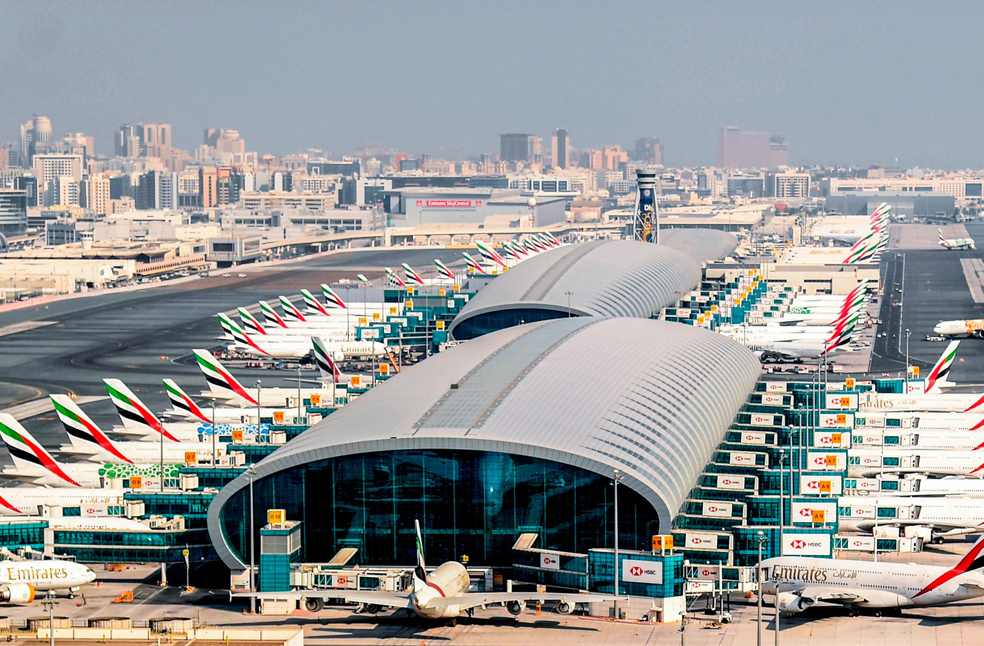
The three primary airlines operating through these hubs, Emirates, Qatar Airways, and Etihad Airways, typically carry around 90,000 passengers daily through their transit networks, according to aviation analytics firm Cirium. Dubai International Airport, the world’s busiest airport for international passenger traffic, was among the affected facilities.
Strikes and damage
Major infrastructure in the region also became targets of Iran’s retaliatory strikes. Dubai International Airport and the iconic Burj Al Arab reportedly sustained damage, with four people injured.
Abu Dhabi Airports posted on X that an incident at Zayed International Airport in the UAE capital resulted in one fatality and seven injuries, though the statement was later deleted.

Scale of disruption
Data from Cirium showed that of 4,218 flights scheduled to land in Middle Eastern countries on February 28, 966, approximately 22.9 percent were cancelled. Including outbound services, total cancellations surpassed 1,800.
For March 1, 716 of 4,329 scheduled inbound flights to the region were cancelled. Meanwhile, flight tracking service FlightAware reported that by 10.30 pm GMT on February 28, more than 18,000 flights had been delayed worldwide and over 2,350 cancelled globally.
At least 145 aircraft en route to destinations such as Tel Aviv and Dubai early February 28, were diverted to cities including Athens, Istanbul, and Rome, according to FlightAware. Other flights returned to their departure airports. One aircraft departing Philadelphia remained airborne for nearly 15 hours before turning around after reaching Spain and flying back to its origin.
Rerouting and rising costs
Airlines crossing Middle Eastern airspace began rerouting flights around the conflict zone, with many aircraft redirected south over Saudi Arabia. These detours add several hours to journey times and significantly increase fuel consumption, raising operational costs. Analysts warn that if the conflict persists, ticket prices could rise.
The additional rerouted traffic is expected to place strain on Saudi air traffic controllers, who may need to slow air traffic flows to ensure safety. Countries that closed their airspace will also lose overflight revenue, fees airlines typically pay for using their airspace.
Mike McCormick, a former senior air traffic control official at the US Federal Aviation Administration (FAA) and now a professor at Embry-Riddle Aeronautical University, suggested that partial airspace reopening could occur once US and Israeli authorities share details with airlines about military operations and Iran’s missile capabilities.
McCormick added that adjustments could take shape within 24 to 36 hours as military activity becomes clearer and risks potentially diminish. However, the duration of disruption remains uncertain. For comparison, the US and Israeli strikes on Iran in June 2025 lasted 12 days.

Airline cancellations and suspensions
Airlines urged passengers to check flight statuses online before travelling to airports. Some carriers issued waivers allowing travellers to rebook without extra charges or fare differences.
- India’s civil aviation authority classified much of the Middle East, including airspace over Jordan, Saudi Arabia, and Lebanon, as a high-security risk zone at all altitudes. As a result, Air India cancelled all flights to Middle Eastern destinations.
- Turkish Airlines suspended services to Lebanon, Syria, Iraq, Iran, and Jordan until Monday, and also halted flights to Qatar, Kuwait, Bahrain, the United Arab Emirates, and Oman.
- US carriers Delta Air Lines and United Airlines suspended flights to Tel Aviv through at least the weekend.
- KLM had earlier in the week paused services to and from Tel Aviv.
- Airlines, including Lufthansa, Air France, Transavia, and Pegasus Airlines, cancelled all flights to Lebanon.
- American Airlines suspended services between Philadelphia and Doha.
- Virgin Atlantic confirmed it would avoid Iraqi airspace, potentially lengthening flights to India, the Maldives, and Riyadh. The airline had already been avoiding Iranian airspace and said flights would carry sufficient fuel in case rerouting becomes necessary at short notice.
- British Airways suspended flights to Tel Aviv and Bahrain until next week and cancelled services to Amman on February 28.
Regional Airspace Closures
Iran closed its airspace ‘until further notice,’ according to a spokesperson for its Civil Aviation Organisation cited by Tasnim news agency. Israel also shut its airspace to civilian flights, Transport Minister Miri Regev announced.
Qatar’s civil aviation authority temporarily closed the country’s airspace. Iraq shut down its skies, state media reported. Kuwait also suspended air traffic. The United Arab Emirates confirmed a partial and temporary closure of its airspace.
Syria closed part of its southern airspace along the border with Israel for 12 hours, according to its Civil Aviation Authority. Meanwhile, Jordan’s air force conducted drills aimed at defending the kingdom’s airspace.
With the situation evolving rapidly, airlines and aviation authorities continue to monitor developments closely, while travellers across the globe face ongoing delays, cancellations, and uncertainty.
ALSO READ | Joint US–Israel strikes hit Tehran as region braces for escalation
