


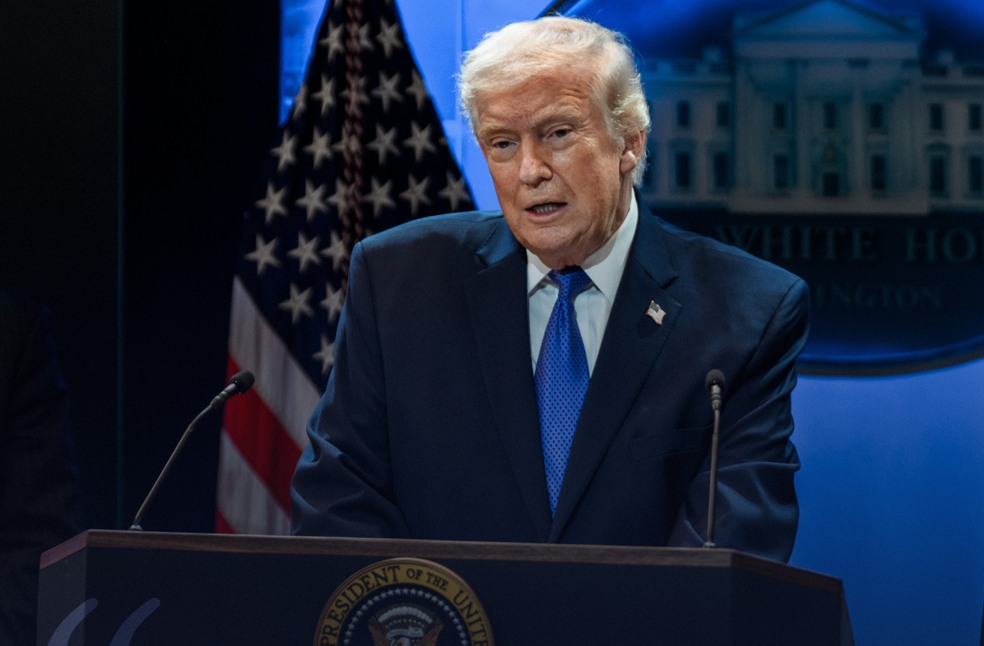
Washington: Tariff measures introduced by President Donald Trump have faced a major legal setback after the Supreme Court ruled that the administration exceeded its authority in imposing sweeping global import taxes. In response, Trump has unveiled a new 10 percent global tariff to replace the duties that were invalidated.
The Supreme Court, in a 6-3 decision, has held that the president overstepped powers granted under the 1977 International Emergency Economic Powers Act. The White House had relied on that statute to justify tariffs first aimed at Mexico, Canada and China before expanding to dozens of countries during what the administration described as ‘Liberation Day’ last April.
Chief Justice John Roberts has written that Congress has delegated tariff authority only in explicit terms and with strict limits. Roberts stated that, had Congress intended to grant extraordinary power to impose tariffs, it would have done so expressly in statute. The ruling has been viewed as a significant victory for US states and businesses that challenged the duties.
🚨 President Donald J. Trump imposes a 10% global tariff on all countries. pic.twitter.com/42ZGDnMxbR
— The White House (@WhiteHouse) February 20, 2026
The decision has opened the possibility of billions of dollars in refunds for companies that paid the now-invalidated tariff charges. However, President Trump has indicated that any reimbursement would likely face prolonged legal proceedings and could remain tied up in court for years.
Trump has criticised the ruling and signalled that alternative legal avenues would be used to pursue trade measures. The administration has maintained that tariff tools encourage domestic manufacturing and investment, even as critics have warned that higher import taxes risk raising consumer prices and unsettling global trade flows.
The court battle has intensified uncertainty in international markets, with trade partners and businesses assessing the implications of shifting tariff frameworks. The ruling has underscored constitutional limits on executive trade authority while leaving open the prospect of renewed legal challenges as the administration explores other statutory options.
POPULAR | Gold prices face weekly loss as dollar strengthens
