


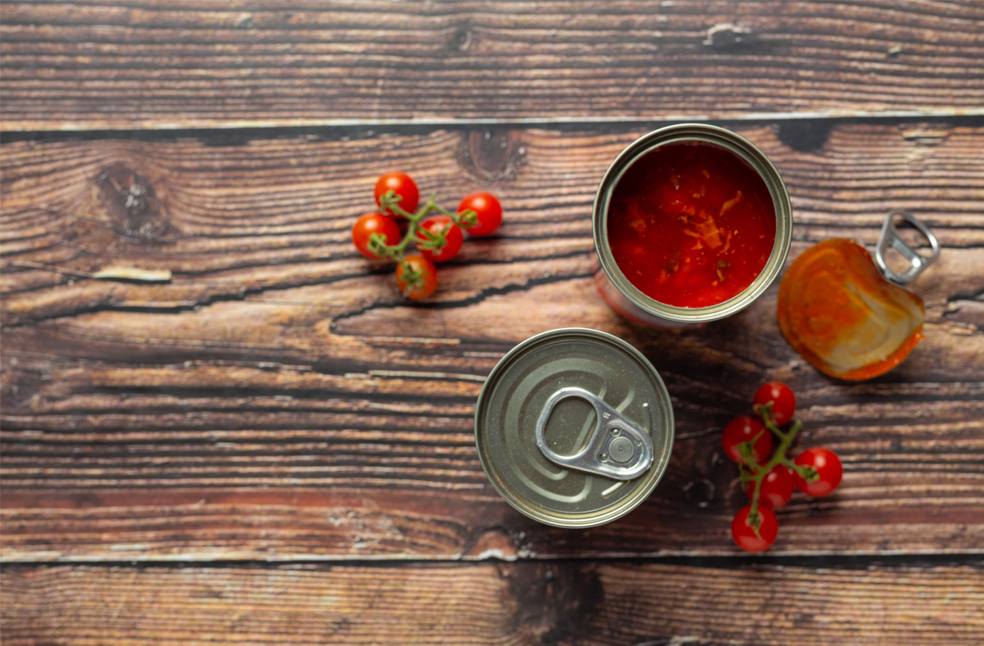
London: Nearly one in four soups sold in supermarkets contains excessive amounts of salt, with one brand found to be saltier than eating two McDonald’s cheeseburgers, according to new research.
Soup has long been promoted as a healthy lunchtime option, but an analysis of almost 500 tinned and chilled soups revealed that 23 percent contain more salt than recommended. The study examined 481 soup products sold in supermarkets and was carried out by Action on Salt and Sugar (AoSS).
The findings showed that 48 percent of branded soups and 6 percent of supermarket own-brand soups exceeded the government’s voluntary salt target of 0.59g per 100g.
The saltiest product identified was Soup Head’s Tom Yum soup, which contains 3.03g of salt in a 300g pack. This is more than half of an adult’s recommended daily salt intake and higher than the salt content of two McDonald’s cheeseburgers.
Other soups flagged for high salt levels included Daylesford Organic minestrone at 1g per 100g and Baxters Luxury Cullen Skink at 0.95g per 100g.
Health experts warn that consuming too much salt can lead to high blood pressure, significantly increasing the risk of heart attacks and strokes. The World Health Organization estimates that just under 2 million deaths globally each year are linked to excessive salt intake.
The NHS advises adults to consume no more than 6g of salt per day, roughly equivalent to one level teaspoon. However, adults in England consume an average of 8.4g daily, around 40 percent more than the recommended maximum. Separate research has previously highlighted that this amount of salt is equivalent to that found in 22 bags of crisps a day.
AoSS also found that nearly 90 percent of Mr Organic soups, just under 70 percent of Heinz soups, 40 percent of Daylesford Organic soups, and 27 percent of Crosse & Blackwell soups exceeded the voluntary maximum salt level. Based on front-of-pack nutrition labelling rules, AoSS calculated that one in six soups would receive a red label for high salt, while only 11 soups would qualify for a green label.
In contrast, every soup tested from Tesco, Sainsbury’s, Morrisons, Waitrose, Co-op, Lidl, and Covent Garden met or fell below the government’s salt target.
Salt reduction efforts
Sonia Pombo, Head of Impact and Research at AoSS, said that the results showed a clear need for stronger government intervention. Pombo noted that the UK had once led global efforts on salt reduction but warned that progress had stalled, calling for tougher incentives and accountability to ensure healthier options become the standard rather than the exception.
A spokesperson for the Department of Health and Social Care noted that the government is introducing a modernised food nutrient scoring system that includes salt criteria to improve diets and health outcomes.
The spokesperson added that restrictions on junk food advertising, limits on price promotions for less healthy foods, and mandatory reporting on healthy food sales would also help reduce salt levels in foods.
ALSO READ | Nike faces US inquiry over race discrimination allegations
