


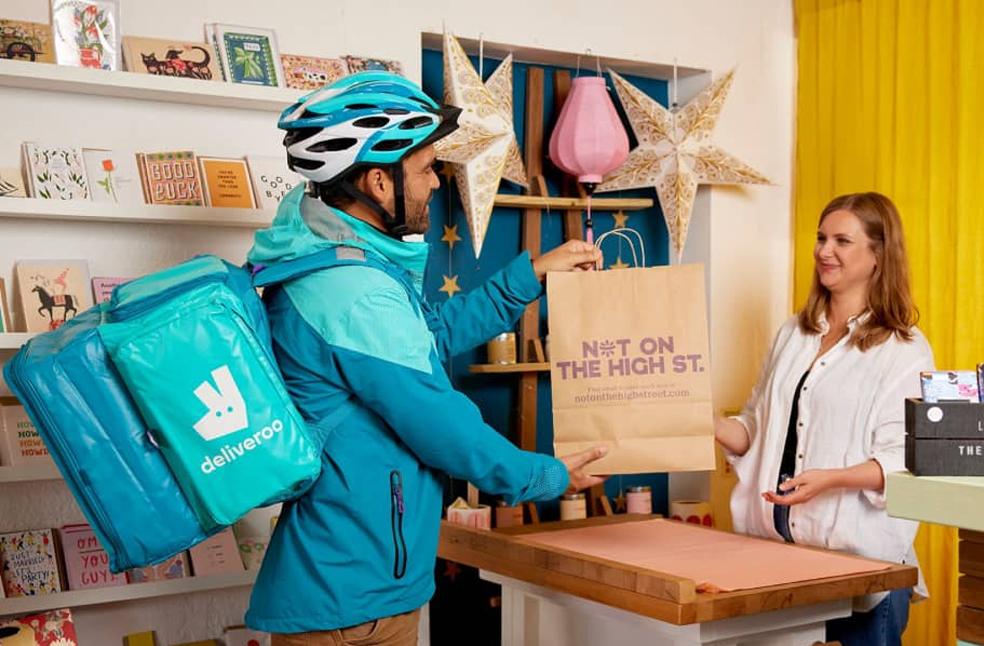
London: A university study has found that one in seven food businesses operating on major delivery platforms such as Deliveroo, Just Eat, and Uber Eats is now a ‘dark kitchen,’ highlighting the scale of the rapidly growing but largely hidden takeaway industry.
The research revealed that 15 percent of all online food retailers in England operate as delivery-only kitchens with no customer-facing premises. Also known as cloud, ghost, or virtual kitchens, these businesses prepare food solely for delivery.
Despite their rapid expansion, dark kitchens have until now lacked a clear and consistent definition, creating regulatory challenges for local authorities, food safety officers, industry stakeholders, and consumers.
Dr. Lucie Nield, co-lead investigator from the University of Sheffield, said the findings underline the need for greater transparency in online food ordering. Lucie stressed that consumers deserve to know where their food is coming from and that these businesses must meet appropriate regulatory standards.
Without clearer oversight, she warned, dark kitchens risk falling through regulatory gaps, with potential consequences for public health. These include encouraging increased reliance on online takeaways, greater availability of food high in fat, salt, and sugar, and higher overall consumption.
Lucie added that poor definition and limited research have previously made the impacts of dark kitchens difficult to fully assess, and that adopting a shared definition is essential for effective regulation, inspection, and public health policy.
The study was commissioned by the National Institute for Health and Care Research and involved collaboration between multiple university teams.
Researchers worked with academics, public health professionals, local authorities, national governing bodies, industry workers, and consumers to develop the first industry-wide framework for defining and identifying dark kitchens in a way that accurately reflects how they operate.
The final agreed definition describes dark kitchens as “technology-enabled commercial kitchen(s) operating primarily for delivery, to fulfil remote, on-demand, consumer online orders of food for immediate consumption.”
To examine their scale, the research team used data-scraping techniques across major delivery platforms, including Deliveroo and Uber Eats. They identified clusters of multiple food brands registered to the same postcode, a key indicator of delivery-only kitchen hubs. Locations were also cross-referenced using tools such as Google Maps, demonstrating how difficult these sites can be for both consumers and regulators to identify.
While the dark kitchen model offers commercial advantages, including lower operating costs and flexible locations, the study raised concerns about wider public health implications.
Unlike traditional takeaways, which can be regulated through local authority planning policies, dark kitchens are far less visible. Management zones around schools, designed to limit the density of takeaways and support healthier food environments, do not apply to dark kitchens and may be undermined by their operations.
Researchers also highlighted food safety and transparency concerns, particularly for customers with allergies or dietary sensitivities. As multiple businesses can operate from the same kitchen space, consumers may be unaware of shared preparation areas and the potential risk of allergen cross-contamination.
The study referenced a 2023 survey, which found that 40 percent of participants purchased takeaway food at least once a week, most commonly through delivery apps and mainly for convenience or as an occasional treat.
Awareness of dark kitchens was low, with only a quarter of respondents having heard of them and just 9 percent knowingly ordering from one. However, after reading a working definition, more than half said they would consider buying from a dark kitchen, although most wanted this information to be made explicit.
The newly established industry-wide definition aims to bring delivery-only kitchen hubs under clearer planning, regulatory, and public health oversight, supporting more effective inspection processes and improving consumer understanding of where their food is prepared.
ALSO READ | Epic Five-Set Victory: Alcaraz beats Zverev at Australian Open
