


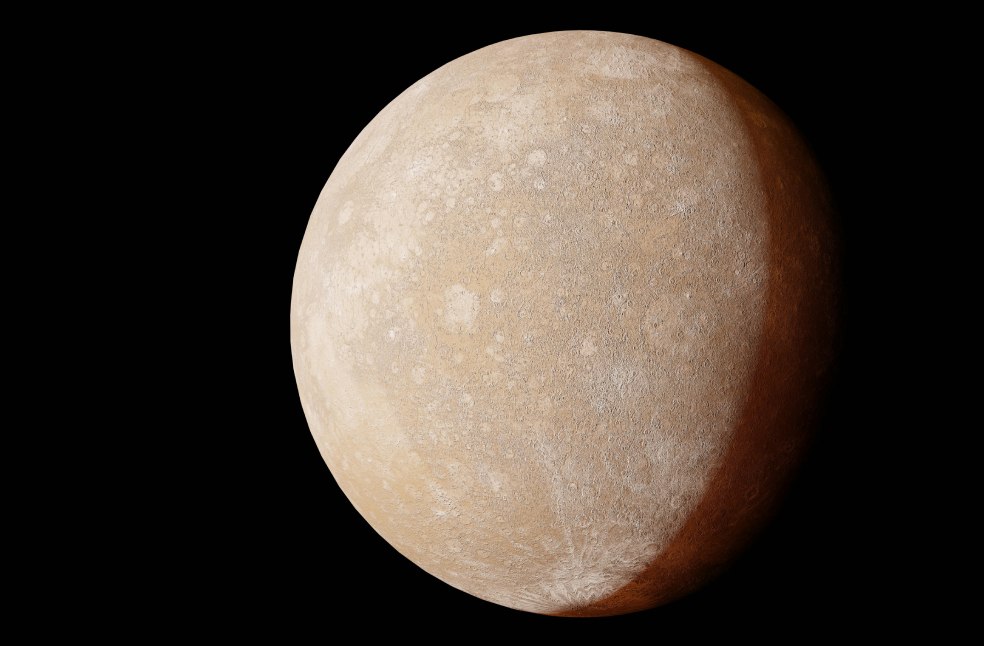
Australia: Astronomers have identified a potentially habitable, Earth-sized planet located about 146 light-years from Earth, raising fresh hopes in the search for life beyond our solar system.
The candidate planet, named HD 137010 b, is estimated to be around 6 percent larger than Earth and orbits a star similar to the Sun. The discovery was made by an international team of scientists from Australia, the UK, the US and Denmark, using data collected in 2017 by NASA’s Kepler Space Telescope during its extended K2 mission.
According to Dr. Chelsea Huang from the University of Southern Queensland (USQ), the planet completes one orbit around its star in approximately 355 days, closely resembling Earth’s orbital period. Researchers estimate that HD 137010 b has about a 50 percent chance of lying within the habitable zone of its star, the region where conditions could allow liquid water to exist on the surface.

Huang remarked that, “What’s very exciting about this particular Earth-sized planet is that its star is only about 150 light-years away from our solar system.” The planet was detected using the transit method, when it briefly passed in front of its host star, causing a tiny but measurable dip in brightness.
Remarkably, the initial signal was first identified by a group of citizen scientists through the Planet Hunters project. Among them was Dr. Alexander Venner, who later led the research team and discovered the signal while he was still a high school student.
Venner stated that, “I contributed to this citizen science project back when I was in secondary school, and it played a huge role in my journey into research. Coming back to this data years later and uncovering such an important discovery was incredible.”
The research team initially reacted with scepticism. Huang added that, “We thought, this cannot possibly be true. But after double and triple checking the data, it turned out to be a textbook example of a planetary transit.”
Scientists believe the planet’s host star is cooler and dimmer than the Sun, meaning the planet’s surface temperature could be closer to that of Mars and potentially below -70°C. However, experts caution that more evidence is required before the planet can be officially confirmed. Dr. Sara Webb, an astrophysicist at Swinburne University, explained that only one transit has been detected so far, while at least three are typically required for confirmation.
While the planet is considered relatively close in astronomical terms, Webb noted that reaching it with current technology would still take tens of thousands to hundreds of thousands of years. The findings were published this week in the journal Astrophysical Journal Letters.
TOP PICKS | Passenger plane crashes in Northern Colombia; Killing all 15 on board
